
Every major camp worth knowing, organised by area, with verified 2026 rates and the one structural decision that matters more than any other: reserve or conservancy. An honest directory, not a marketing list — including which famous claims to treat with caution.
The single most important question before you book
Before comparing prices, before reading lodge descriptions, before deciding on dates, the single most important decision in any Maasai Mara booking is this: national reserve or private conservancy? Every other accommodation decision flows from this one, because the reserve and the conservancies operate under fundamentally different rules that produce categorically different experiences. Inside the reserve: designated tracks only, no off-road driving, no night drives, no walking safaris, and no enforced cap on vehicles at a sighting. Inside the conservancies: off-road access wherever the guide judges it safe, night drives as standard, walking safaris available, and vehicle limits of typically three to five vehicles per sighting, actively enforced.
The wildlife is the same ecosystem. The Mara River, the lion prides, the migrating herds move freely between the reserve and the conservancies without reference to the administrative categories humans have drawn. What changes is your access to them. A conservancy guide can follow a cheetah off-track into deep grass; a reserve guide cannot leave the designated road.
This distinction is real and measurable: research indicates lion densities in the conservancies are comparable to or higher than in the adjacent reserve, and predator behaviour is observably more natural in the low-vehicle conservancy areas. The conservancy experience is not just more comfortable — it is structurally different. (The companion articles on conservancy vs reserve and on how conservancies saved the Mara’s lions cover the evidence, including where the popular statistics are solid and where they are softer than marketing suggests.)
With that established, here is every major Maasai Mara Lodges and Camps worth knowing, organised by area, with verified 2026 rate guidance and honest positioning. Rates are indicative per-person-per-night, all-inclusive unless noted, and shift through the year — confirm at booking.
Decide reserve-versus-conservancy first. Then pick the area. Then pick the camp. Getting that order right is the difference between a safari constrained by reserve rules and one with the full range of access — and it matters far more than the décor, the pool, or the thread count that accommodation marketing emphasises.
| PRICE RANGE ~$180/night (budget) to $2,600+/night (ultra-luxury), per person | RESERVE PARK FEES 2026 Seasonal: ~$100/day low, ~$200/day peak (Jul-Dec) — confirm, fees in flux |
| CONSERVANCY FEES ~$80-150/day per person, usually bundled into all-inclusive rates | NIGHT DRIVES & WALKING Conservancies only — not permitted in the national reserve |
| BOOK AHEAD (PEAK AUGUST) 9-12 months for top conservancy camps; they sell out fully | BALLOON SAFARI ~$450-550 per person, available from most areas |
| PRIVATE VEHICLES IN RESERVE Restricted/intermittently enforced — most visitors use operator vehicles | BEST-VALUE CONSERVANCY ENTRY From ~$240/night (Ol Kinyei), with full conservancy activities |
How the Mara is structured — what the maps don’t show clearly
The Maasai Mara is not a single place with clear boundaries. It is an ecosystem of roughly 1,500 square kilometres of national reserve surrounded by approximately 180,000 hectares of private conservancies, and map labels rarely make the distinction clear. This matters because lodge addresses can mislead: a camp described simply as ‘in the Maasai Mara’ may sit in the busy national reserve, in a private conservancy where night drives and off-road access apply, or in a community group ranch at the ecosystem’s edge. The same three words cover three very different experiences.
The main areas, west to east: the Mara Triangle (the western section of the reserve, managed separately by the non-profit Mara Conservancy, with better anti-poaching, better road infrastructure, and lower vehicle density than the central reserve); Olare Motorogi Conservancy (northeast of the reserve, documented among the highest lion densities in the ecosystem).
Mara North Conservancy (north of the Mara River, the largest conservancy, with the best migration positioning); Naboisho Conservancy (east of the reserve, 500-plus Maasai families, the most-studied conservancy lion population); Olderkesi (southeast, smallest and most exclusive, single-camp model); Ol Kinyei (northeast, the best-value conservancy access); Lemek (northwest, least visited, most remote feel); and the national reserve’s central and eastern sections (Talek River, Keekorok, Sekenani Gate) where the famous riverside camps sit but where the open-access rules apply.
A RECURRING ERROR WORTH CORRECTING andBeyond Bateleur Camp is frequently listed under different conservancies in safari directories — sometimes Olare Motorogi, sometimes the Mara Triangle, occasionally both in the same article. For the record: Bateleur sits in the Mara Triangle concession, near the Kichwa Tembo airstrip, below the Oloololo Escarpment. If a listing places it in Olare Motorogi, that listing is wrong — a useful reminder to verify camp locations independently rather than trusting any single source, including this one.
Mara Triangle camps — the most dramatic scenery
The Mara Triangle, the reserve’s western section under separate non-profit management, offers the ecosystem’s most dramatic scenery (the Oloololo Escarpment), lower vehicle density than the central reserve, and the first migration crossings of the season. Note that reserve rules still apply here — no night drives, no walking, no off-road — even though management quality is conservancy-like.
andBeyond Bateleur Camp
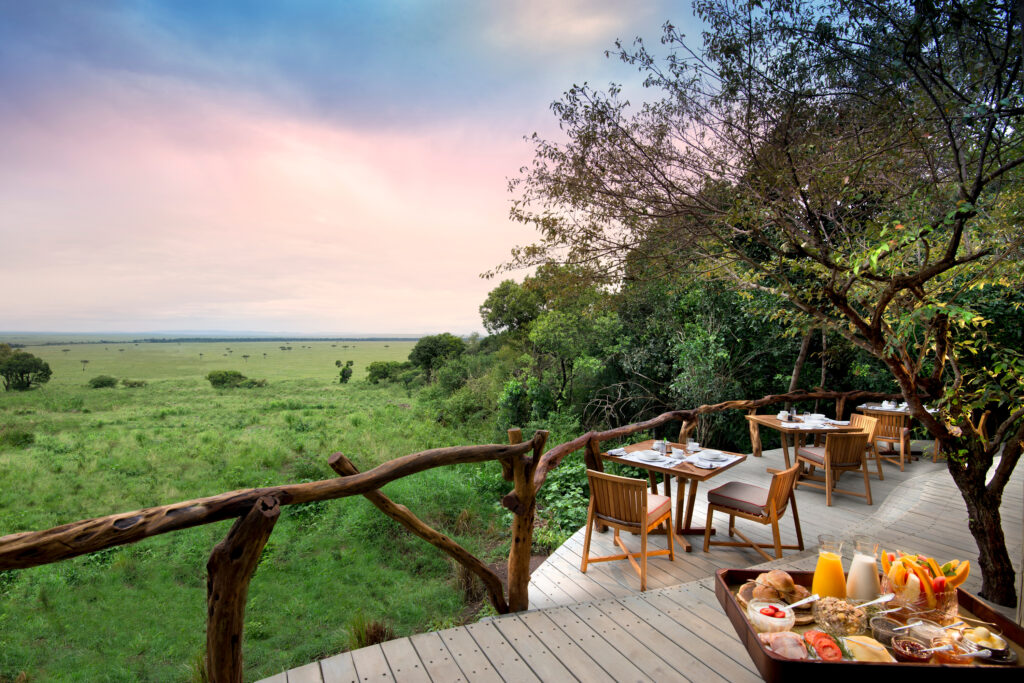
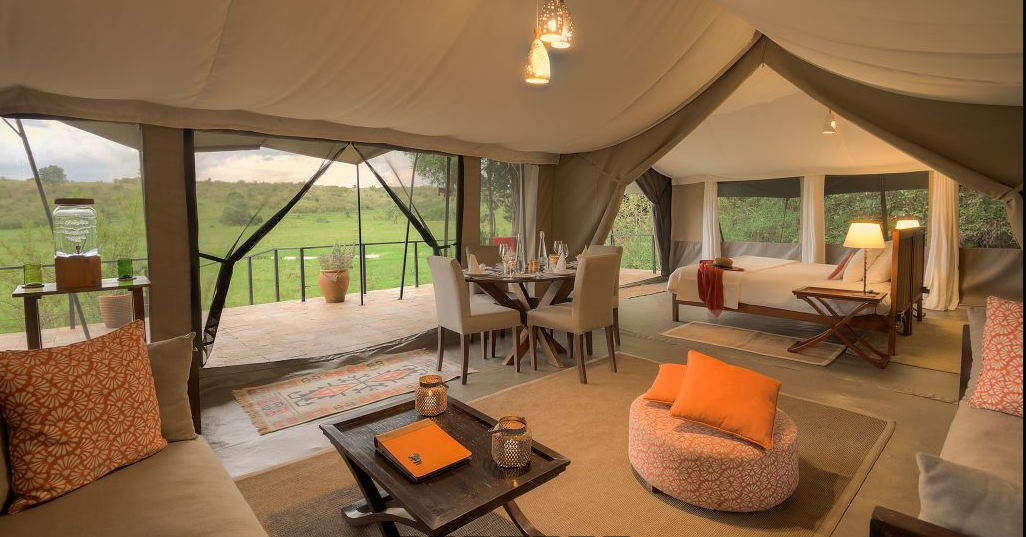
In the Mara Triangle concession near Kichwa Tembo, below the Oloololo Escarpment. When Travel + Leisure named Bateleur its number-one hotel in the world in 2025 (a perfect reader score of 100), it formalised a reputation the Kenya safari community had long held. Eighteen tented suites in two intimate camps of nine, on a setting that formed part of the Out of Africa backdrop.
The guiding is exceptional — guides with a decade or more of local experience. All-inclusive at every level. Because it sits in the Triangle concession rather than a private conservancy, activity rules follow the Triangle’s regime; confirm directly which activities (night drives in particular) are available, as this varies with the specific concession agreement. From ~$1,245-2,595 pp/night. Best for travellers wanting the most celebrated camp in the ecosystem with extraordinary escarpment views and top-tier guiding.
Angama Mara
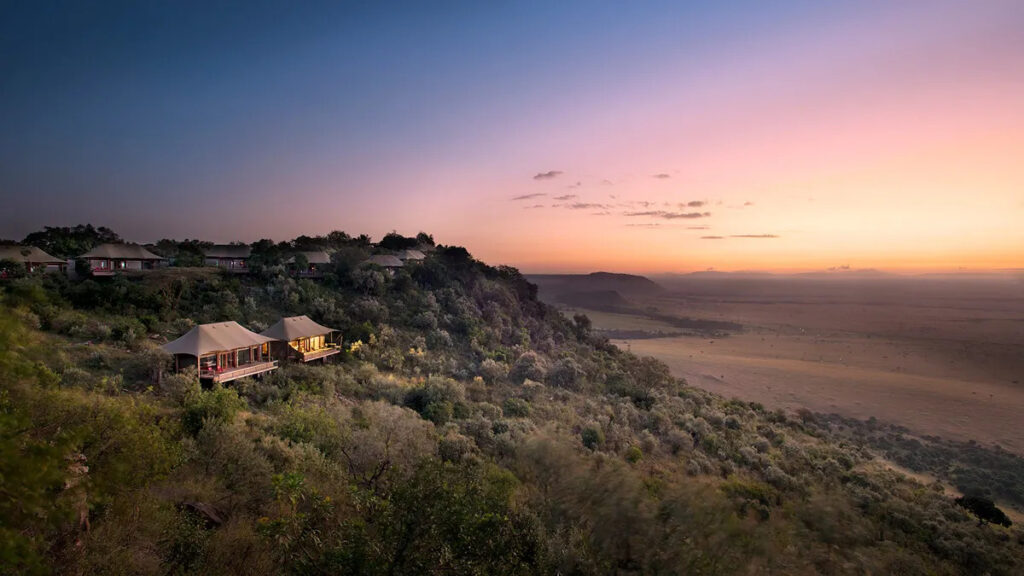
On the Great Rift Valley escarpment, around 300 metres above the Mara Triangle floor, with views extending across the plain. Thirty glass-fronted tented suites in two camps (Angama Above and Angama Below) hold arguably the most dramatic positions of any camp in Kenya; the migration passes below from roughly July to October. Angama runs the ecosystem’s strongest photography programme, with a dedicated photographic studio and guide. Access to both the Mara Triangle and adjacent areas. The food and service are exceptional by any standard, not just safari standards. From ~$1,450 pp/night. Best for travellers prioritising views, photography, and design-led luxury.
Rekero Camp
On the Talek River within the reserve, an Asilia Africa heritage camp beloved for its authentic, unfussy character. Ten river-facing tents with hippos audible from the campfire. The location provides strong predator territory and good migration crossing position. As a reserve camp it does not offer night drives or off-road, but the guiding (to Asilia’s rigorous standards) and the genuine bush atmosphere are the draw. Family configurations available. From ~$680 pp/night. Best for travellers who value authenticity and guiding over design, and families wanting a real bush camp.
Olare Motorogi — the predator conservancy
Olare Motorogi, northeast of the reserve, is the conservancy most associated with high big-cat density — research has identified it among the highest lion densities in the ecosystem, and its strictly enforced vehicle limits make for exceptional, uncrowded predator viewing. Full conservancy activities (night drives, walking, off-road) throughout.
Mahali Mzuri
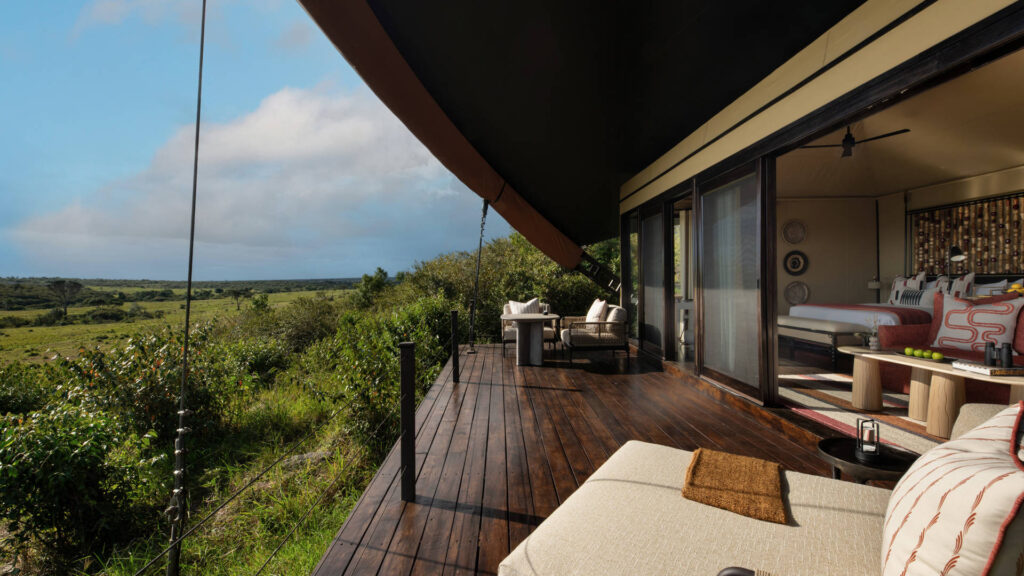
Sir Richard Branson’s Virgin Limited Edition camp — twelve tented suites on a ridge, each with a private deck, and an infinity pool that appears to spill into the savannah. The signature service differentiator is a butler assigned to each suite. Olare Motorogi’s documented high lion density translates directly into intimate, frequent predator sightings. Ranked among the top resorts in the region by Condé Nast Traveler readers in 2025. From ~$1,250 pp/night. Best for honeymooners and travellers wanting flagship service and the conservancy’s predator density.
Porini Lion Camp
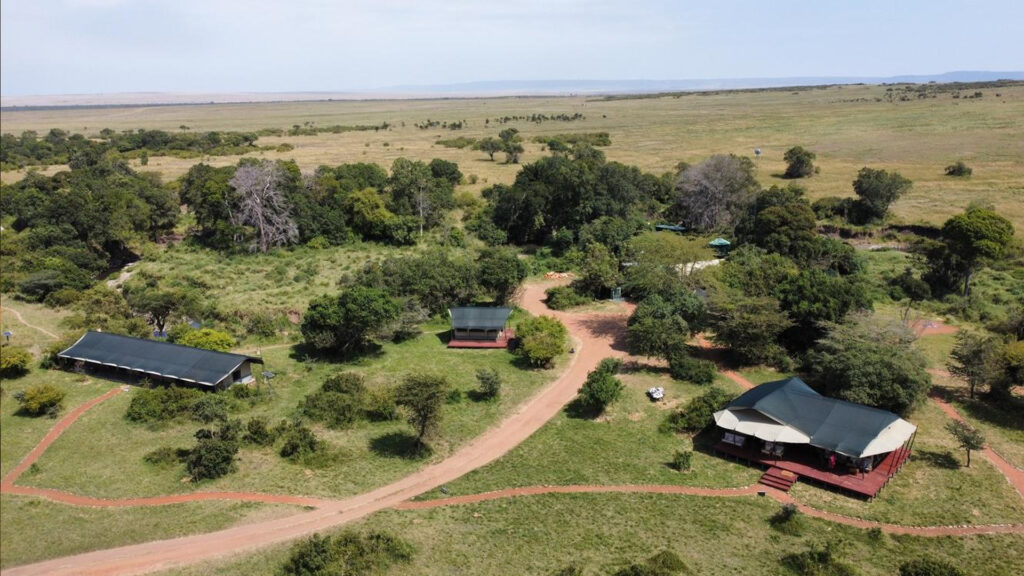
The most eco-committed camp in Olare Motorogi — fully solar-powered, low-impact, with a strong community-employment record. Six tented suites on the seasonal Ntiakitiak River, at a price that dramatically undercuts the conservancy’s luxury tier. Because the conservancy’s vehicle limits apply regardless of camp price, game-drive quality here matches far more expensive properties. Night drives, walking, and off-road all included. From ~$520 pp/night. Best for conservation-minded travellers wanting genuine conservancy access at a mid-range price.
Kempinski / Olare Mara
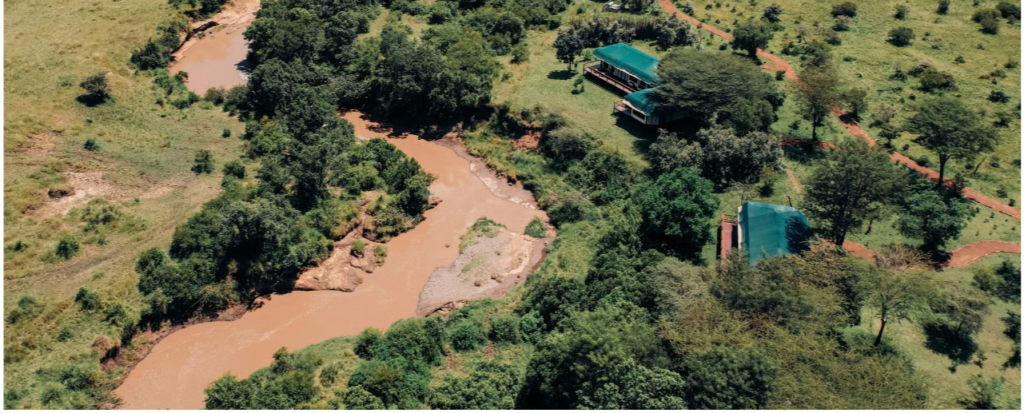
The Kempinski group’s Mara property is the conservancy’s most fully-equipped luxury option — larger than most, with a full spa, multiple dining spaces, and the Kempinski service standard. Conservancy access and off-road wildlife match the tented competition; what it adds is full-service hotel infrastructure. From ~$980 pp/night. Best for travellers who specifically want a brand-name luxury hotel experience in a conservancy setting rather than an intimate tented camp.
Mara North — largest conservancy, best migration access
Mara North, the ecosystem’s largest conservancy, offers the full ecological range plus the best migration river-crossing access of any conservancy, via private tracks that bypass the reserve’s crossing-point vehicle queues. Full conservancy activities throughout.
Serian — The Original
Alex Walker’s flagship — small (around six suites), on the Mara River, with some of the most authoritative guiding in the region. Walker has led Mara safaris for over two decades, and the camps reflect a rare combination of deep ecological knowledge and understated luxury. The riverside position gives excellent hippo and crocodile viewing from camp and strong crossing access. From ~$1,100 pp/night. Best for travellers for whom the quality of the guide and the authenticity of the experience matter most.
Saruni Mara
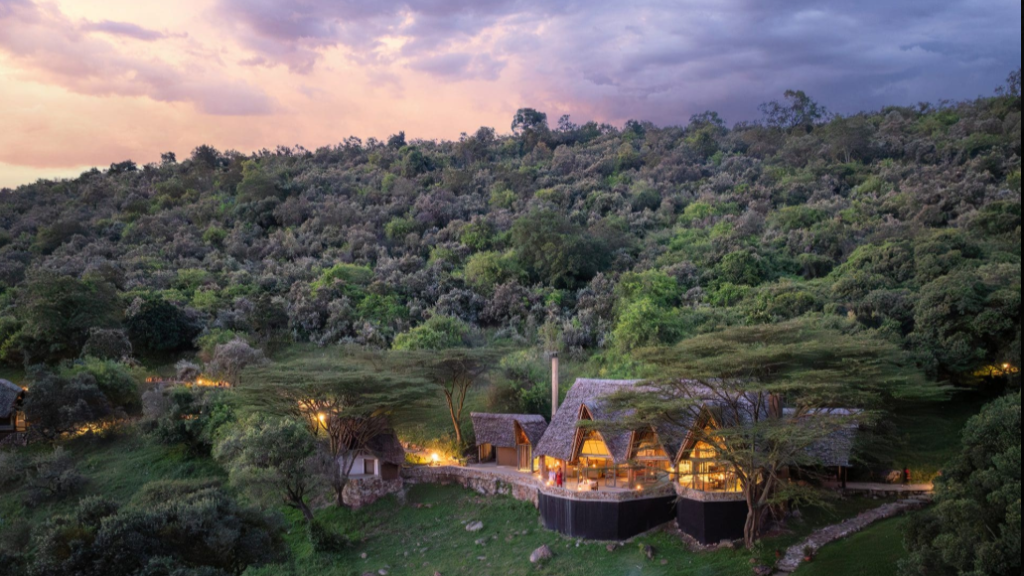
Six villas on a rocky hillside with a panoramic view across the Mara North plains. The Italian-Spanish ownership produces a Mediterranean warmth of design — vivid textiles, terracotta, personal attention — that distinguishes it from the canvas-and-earth-tone uniformity of most Mara camps. A strong children’s programme and a hilltop position make it the most distinctive mid-to-upper-luxury camp in the area. From ~$850 pp/night. Best for families and travellers wanting design character and a spectacular vantage point.
Offbeat Mara
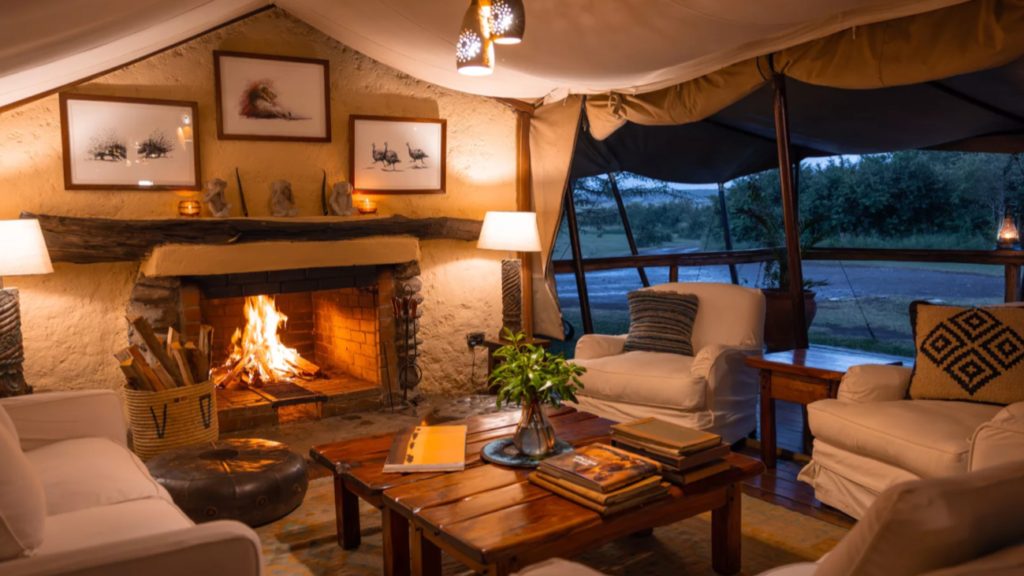
Eight tents on the Topi Plain, operated by Offbeat Safaris with a wildlife-first philosophy that prioritises guiding and authenticity over aesthetics. This is the camp experienced safari travellers recommend to friends who want the real thing: conservancy access, superb guiding, genuine atmosphere, and the full Mara North activity suite at roughly a third of the price of the conservancy’s most expensive properties. From ~$480 pp/night. Best value in Mara North for travellers who know what they want.
Karen Blixen Camp
On the Mara River with direct crossing access in season, around twenty river-facing tents, established in Maasai community partnership with ongoing employment and revenue sharing. A pool overlooks the river; guiding and wildlife access match the conservancy’s better properties. From ~$680 pp/night. Best for travellers wanting the full Mara North experience at a mid-luxury price with a genuine community-partnership model.
Naboisho — community conservation, well-studied results
Naboisho, east of the reserve, is the conservancy most studied as a community-governance model — 500-plus Maasai families, lion densities high by any African standard, and a significant share of lease income directed to community infrastructure. Full conservancy activities throughout.
Encounter Mara
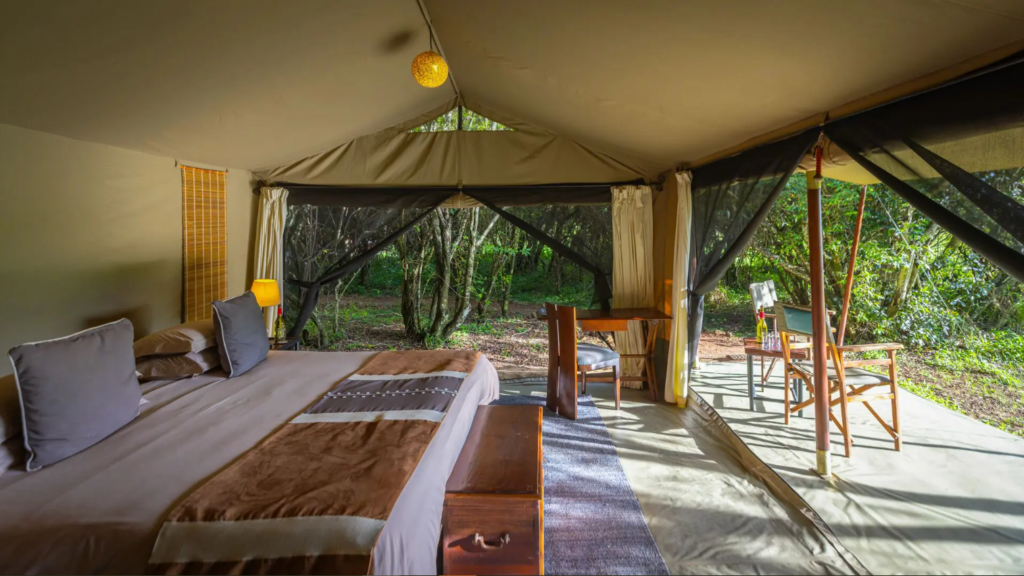
Asilia Africa’s Naboisho camp — eight tents, riverside, with sustainability credentials among the strongest in the industry (carbon-neutral operations, community employment, the Asilia Foundation). Naboisho’s high lion density translates directly to the game drives, and night drives here produce serval and aardvark sightings the reserve never offers. From ~$820 pp/night. Best for travellers who want strong conservation credentials alongside excellent wildlife.
Kicheche Bush Camp
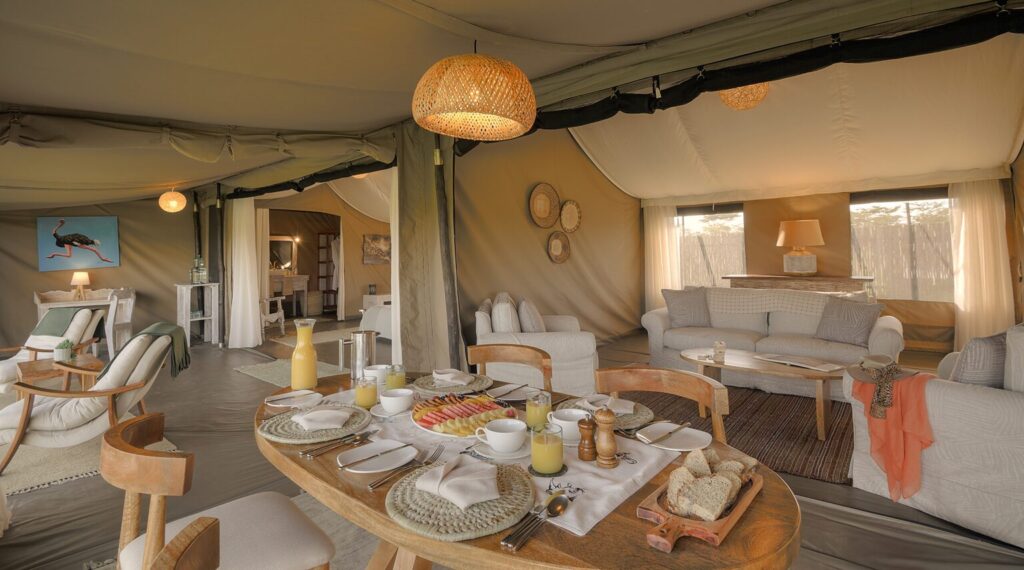
Consistently cited by independent travellers as a Naboisho favourite — six tents, outstanding guiding (Kicheche invests specifically in guide training and retention), genuine eco-commitment, and fair pricing. Night drives and walking included. The family programme — Maasai craft, fire-starting, track identification — is among the best in the ecosystem for children. From ~$765 pp/night. Best for travellers prioritising guiding quality and value, and families.
Olderkesi — the most exclusive conservancy
Cottar’s 1920s Safari Camp
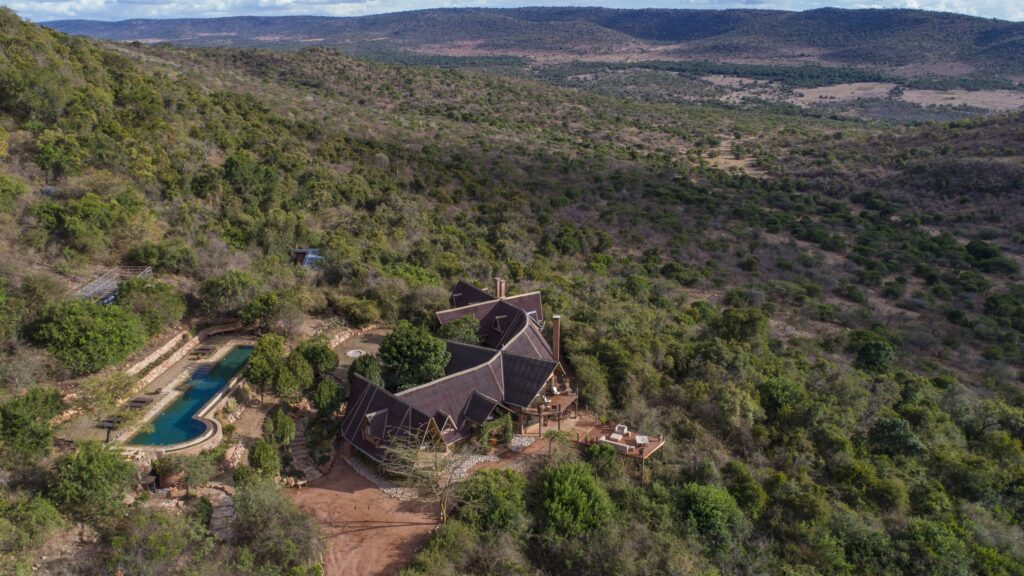
The entire ~7,600-acre Olderkesi concession is effectively exclusive to Cottar’s guests — a maximum of around twenty people on the whole concession at a time. The 1920s aesthetic is meticulous (cream canvas, kerosene lanterns, dark hardwood, stone-heated canvas bathtubs), the Cottar family has run East African safaris for over a century, and an all-female anti-poaching unit operates within the conservancy. A private exclusive-use Bush Villa is available for families or groups. The Big Five sighting rate is reported among the highest in the ecosystem, a direct consequence of the single-operator, vehicle-limited model. From ~$1150 pp/night; Bush Villa from ~$9,500/night exclusive use. Best for travellers prioritising absolute exclusivity, heritage, and the highest sighting rates.
Ol Kinyei and Lemek — best value conservancy access
Ol Kinyei Tented Camp
The best-value conservancy camp in the ecosystem. From ~$240 pp/night all-inclusive in a private conservancy with night drives, walking safaris, and off-road access — undercutting the luxury conservancy tier while delivering most of the same experiential advantages. Ol Kinyei was established in 2005 as one of the first community-owned conservancies, and its cheetah sightings are among the best of any Mara area. Accommodation and food are comfortable and simple rather than luxurious; what you pay for is the conservancy access, and it fully delivers. From ~$240 pp/night. Best overall value in the Mara for travellers who prioritise the wildlife experience over luxury trappings.
Lemek Tented Camp
The least-visited major conservancy area, in the northwest corner bordering the Mara Triangle and the Oloololo Escarpment. Complete vehicle exclusivity at sightings is common here even in peak season, and large elephant herds move through regularly. Simple, affordable, and honest — comfortable accommodation, good food, and a wildlife experience made extraordinary precisely because you are so often alone with it. From ~$280 pp/night. Best for travellers wanting genuine remoteness and exclusivity at an accessible price.
Inside the national reserve — what to expect
Reserve camps trade the conservancy activities (no night drives, no walking, no off-road) for direct access to the famous riverside positions, the migration crossing points, and in some cases decades of accumulated local guiding knowledge. For migration-focused travellers who want to sit at a crossing point for hours, a well-positioned reserve camp can be exactly right.
Governors’ Camp
The original Mara luxury camp, established in 1972 on the Mara River at Musiara Marsh. Five decades of accumulated knowledge of this section produces genuinely exceptional guiding — the guides know the marsh prides and leopards individually. A private wing offers more intimate service. Reserve rules mean no night drives or off-road, but the riverside position and guide expertise compensate considerably. From ~$760 pp/night. Best for travellers wanting heritage, the marsh’s famous predators, and top reserve guiding.
andBeyond Kichwa Tembo
On the edge of the Oloololo Escarpment with sweeping Mara Triangle views, one of Kenya’s most established and consistently recommended family camps. Family suites with dedicated children’s rooms, a well-regarded children’s programme, and seasonal ‘stay 4, pay 3’ offers that make longer family stays more affordable. The escarpment-edge location frames the migration beautifully from roughly July to November. From ~$820 pp/night. Best for families wanting escarpment views and a proven family-camp operation.
Entim Camp
One of the most strategically positioned reserve camps — directly on the Mara River at an active wildebeest crossing point. Around twenty river-facing tents on raised decks, open-fronted to the river, with no pool by design: a pure bush camp focused entirely on the river and the migration. For travellers whose single priority is sitting at the best crossing point with a camera for as many hours as possible, Entim’s position is hard to beat within the reserve. From ~$490 pp/night. Best visited July-October for the migration. Strong value for its position.
Hidden gems and value options
Mara Nyika Camp
The lower-profile companion to Mara Plains (Great Plains Conservation), equally highly rated by guests who have stayed at both. Eight tents with the same Great Plains standards of food, guiding, and environmental commitment, including the Canon camera lending guests appreciate. Rarely tops ‘best of’ lists because Great Plains invests little in media partnerships — word of mouth is its reputation. From ~$920 pp/night. Best for travellers who want a specialist-favourite luxury camp without the marketing premium.
Tangulia Mara
A community-owned camp in the Nkoilale/Lemek area, among the most authentically community-rooted properties in the ecosystem — all staff from the adjacent Maasai community, feeding directly into long-running conservation and development programmes. Eight comfortable tents with full conservancy access including night drives. Almost never appears in ‘best of’ lists because it doesn’t advertise internationally, yet independent reviews are consistently excellent. From ~$320 pp/night. Best for travellers who specifically want their spending to go directly to a Maasai community rather than through an international operator.
Basecamp Masai Mara
The most eco-committed budget camp in the ecosystem and one of the oldest community-based tourism initiatives in the area (since the 1990s). Among the first safari camps in Africa to achieve LEED Gold certification. Twelve en-suite tents, fully solar-powered, with a community employment programme and direct revenue sharing, guided by some of the most knowledgeable local Maasai naturalists. The reserve location means no night drives, but the wildlife access and cultural depth at this price are unmatched. From ~$180 pp/night (half-board). Best budget eco option in the Mara.
Mara Serena Safari Lodge
The largest property in the region (around 74 rooms), designed in the style of a Maasai village on a hill with panoramic views. Reliable Serena quality — consistent food, pool, multiple room categories — good for groups and first-time visitors wanting full-service lodge infrastructure under a recognised brand. Reserve location limits activities, but the views and infrastructure are the strongest of any large lodge in the ecosystem. From ~$290 pp/night. Best for groups and first-timers wanting reliability and brand familiarity.
Side-by-side comparison of Maasai Mara Lodges and Camps
| Camp | Area | From (pppn) | Night drives | Best for |
| andBeyond Bateleur | Mara Triangle | $1,245 | Confirm | Heritage · T+L #1 2025 |
| Angama Mara | Mara Triangle | $1,450 | Yes* | Views · Photography |
| Mahali Mzuri | Olare Motorogi | $1,250 | Yes | Honeymoon · Butler |
| Cottar’s 1920s | Olderkesi | $995 | Yes | Exclusivity · Heritage |
| Serian The Original | Mara North | $1,100 | Yes | Best guiding · River |
| Saruni Mara | Mara North | $850 | Yes | Views · Families |
| Kicheche Bush | Naboisho | $680 | Yes | Value · Guiding |
| Governors’ Camp | Reserve / River | $760 | No | Heritage · Marsh |
| Rekero Camp | Reserve / River | $680 | No | Authentic · Families |
| Offbeat Mara | Mara North | $480 | Yes | Value conservancy |
| Porini Lion Camp | Olare Motorogi | $520 | Yes | Best eco budget |
| Entim Camp | Reserve / River | $490 | No | Migration position |
| Ol Kinyei Camp | Ol Kinyei | $240 | Yes | Best overall value |
| Tangulia Mara | Community | $320 | Yes | Community-owned |
| Basecamp Mara | Reserve | $180 | No | Budget eco · LEED Gold |
*Angama operates in the Mara Triangle and adjacent areas; confirm night-drive availability directly, as it depends on the specific area and concession terms. The same caution applies to any reserve-adjacent camp claiming conservancy-style activities — verify at booking rather than assuming.
When to book — and what sells out first
Booking windows differ sharply by tier and season. The headline rule: the smaller and more sought-after the camp, the earlier it goes.
- Ultra-luxury conservancy camps in August. Book 9-12 months ahead. These camps have 6-18 rooms and sell out completely for peak August; waitlists form. If August is fixed, start booking in roughly September of the prior year.
- Mid-luxury conservancy camps in peak season. Six to nine months ahead for August; four to six months for July, September, and October.
- Budget conservancy camps (Ol Kinyei, Lemek, Porini Lion). Three to four months for peak season is usually sufficient, but the best dates fill as soon as they open — check availability before fixing your dates.
- Reserve camps in peak season. Three to six months. Larger reserve lodges have more capacity and later availability; small reserve camps like Entim and Rekero behave like conservancy camps and should be booked early.
- January-February travel. Four to six weeks lead time is often sufficient at most price points — this is when demand is lower and even experienced operators find availability at preferred camps.
- June travel. The underused sweet spot: excellent wildlife, the last month at the lower reserve fee, and most camps still available six to eight weeks out.
Frequently asked questions
Should I stay in the Maasai Mara reserve or a conservancy?
For most travellers, a conservancy — it permits night drives, walking safaris, and off-road access the reserve prohibits, with enforced vehicle limits that mean uncrowded sightings. Choose a reserve camp if your priority is sitting at a Mara River migration crossing point (the crossings are inside the reserve), if budget is the binding constraint, or if a specific heritage camp (like Governors’) is the draw. The conservancy advantage is structural, not cosmetic, but the reserve has genuine strengths for migration-focused and budget trips.
How much does a Maasai Mara safari camp cost in 2026?
Roughly $180-300 per person per night at the budget end (basic reserve and community camps), $480-850 at mid-range (strong conservancy value camps), $850-1,500 at luxury (premium conservancy camps), and $1,250-2,600+ at ultra-luxury (the flagship properties). Conservancy rates are usually all-inclusive of activities, meals, drinks, and conservancy fees; reserve rates often add park fees and extras on top, narrowing the apparent gap. Always confirm what is included.
Can I self-drive in the Maasai Mara National Reserve?
This is genuinely unsettled. Narok County announced a ban on private vehicles for game drives (permitting only designated safari vehicles) under the Mara Management Plan, but enforcement has been inconsistent — at times the directive has reportedly been relaxed, and properly-equipped 4WD self-drivers have continued to access the reserve, while 2WD/unsuitable vehicles are the clear target. The practical position: do not rely on self-drive access; most visitors use operator safari vehicles, and that is the safe assumption for planning. Verify the current status with a local operator close to your travel date.
Which Maasai Mara camp is best for the Great Migration?
For river crossings specifically, a reserve camp on the Mara River (Entim, Rekero, Governors’) puts you at the crossing points, which are inside the reserve. For the best of both worlds, Mara North conservancy camps have private-track access to crossing points that bypasses the reserve queues. Peak crossing season is roughly late July to October, with August-September the highest-probability window. Book 9-12 months ahead for peak-season migration camps.
Are night drives available in the Maasai Mara?
Only in the private conservancies (Olare Motorogi, Mara North, Naboisho, Olderkesi, Ol Kinyei, Lemek), not in the national reserve, where they are prohibited. Night drives are one of the principal reasons to choose a conservancy camp — they reveal nocturnal species (serval, aardvark, genet, porcupine) and hunting behaviour that daytime reserve drives never show. If night drives matter to you, that decision alone points you to a conservancy.
Honest limits to this guide
Three caveats.
- First, rates move through the year and camps occasionally change operators, rebrand, or close seasonally; every figure here is indicative and should be confirmed at booking.
- Second, the lion-density and ‘best in Africa’ claims attached to particular conservancies are stated here at their well-supported strength — comparable to or higher than the reserve — rather than the marketing maximum; the companion conservation articles cover the evidence and its limits.
- Third, this is a curated directory of camps worth knowing, not an exhaustive list — the Mara has well over a hundred properties, and good camps are missing simply for space. The selection favours camps with track records for guiding, conservation, and value over those with the largest marketing budgets.
THE HONEST BOOKING SEQUENCE
1) Decide conservancy (full activities, uncrowded) versus reserve (migration crossings, lower cost, heritage).
2) Pick the area that matches your priority — Olare Motorogi for predators, Mara North for migration plus versatility, Naboisho for community conservation, Ol Kinyei or Lemek for value, the Triangle for scenery.
3) Pick the camp within that area at your tier. Booking in that order, rather than starting from a camp's marketing, produces a far better-matched safari — and book peak-August conservancy camps 9-12 months out.
Who this guide is for, and who should look elsewhere
Travellers deciding where to stay in the Maasai Mara — this directory gives you the areas, the camps, the verified rate guidance, and the structural reserve-versus-conservancy framework to choose well. Pair it with the conservancy-vs-reserve guide for the decision framework and the best-lodges article for a tighter curated shortlist.
Travellers wanting the conservation context behind the camps — the companion articles on the seven best conservancies and how conservancies saved the Mara’s lions cover the evidence honestly, including which popular statistics to treat with caution.
Budget-focused travellers — the value end is real (Ol Kinyei from ~$240 with full conservancy activities; Basecamp from ~$180), and this guide flags it clearly rather than steering only toward the high-commission luxury tier. The wrong move is assuming the Mara is unaffordable; the right move is choosing a value conservancy camp knowingly.
Travellers wanting a single definitive ‘best camp’ answer — this guide deliberately doesn’t give one, because the right camp depends entirely on your priorities (predators, migration, budget, family, exclusivity, conservation). Anyone offering a single universal answer is selling something. Match the camp to your priority instead.
Tell us what you are looking for, and we will tell you honestly whether we can deliver it — and if we cannot, we will tell you who can.
RELATED READING
- Private conservancy vs national reserve: the structural decision behind this directory
- The 7 best private conservancies in the Maasai Mara: choosing the area
- How conservancies saved the Mara’s lions: the conservation context
- Best time to visit Kenya: timing your Mara stay and migration crossings
- The 7 best private conservancies in the Maasai Mara — and why they matter more than the national reserve
- Samburu National Reserve — Destination Guide
- Best Lodges in the Maasai Mara 2026: From Ultra-Luxury to Best Value
- Mara River Crossing: How to Be There at the Right Time
- Maasai Mara, Kenya — Destination Guide | Nova Expedition Kenya
- Maasai Mara vs Serengeti: Which African Safari is Better? (2026 Honest Guide)
- How Many Days Do You Need in the Maasai Mara?