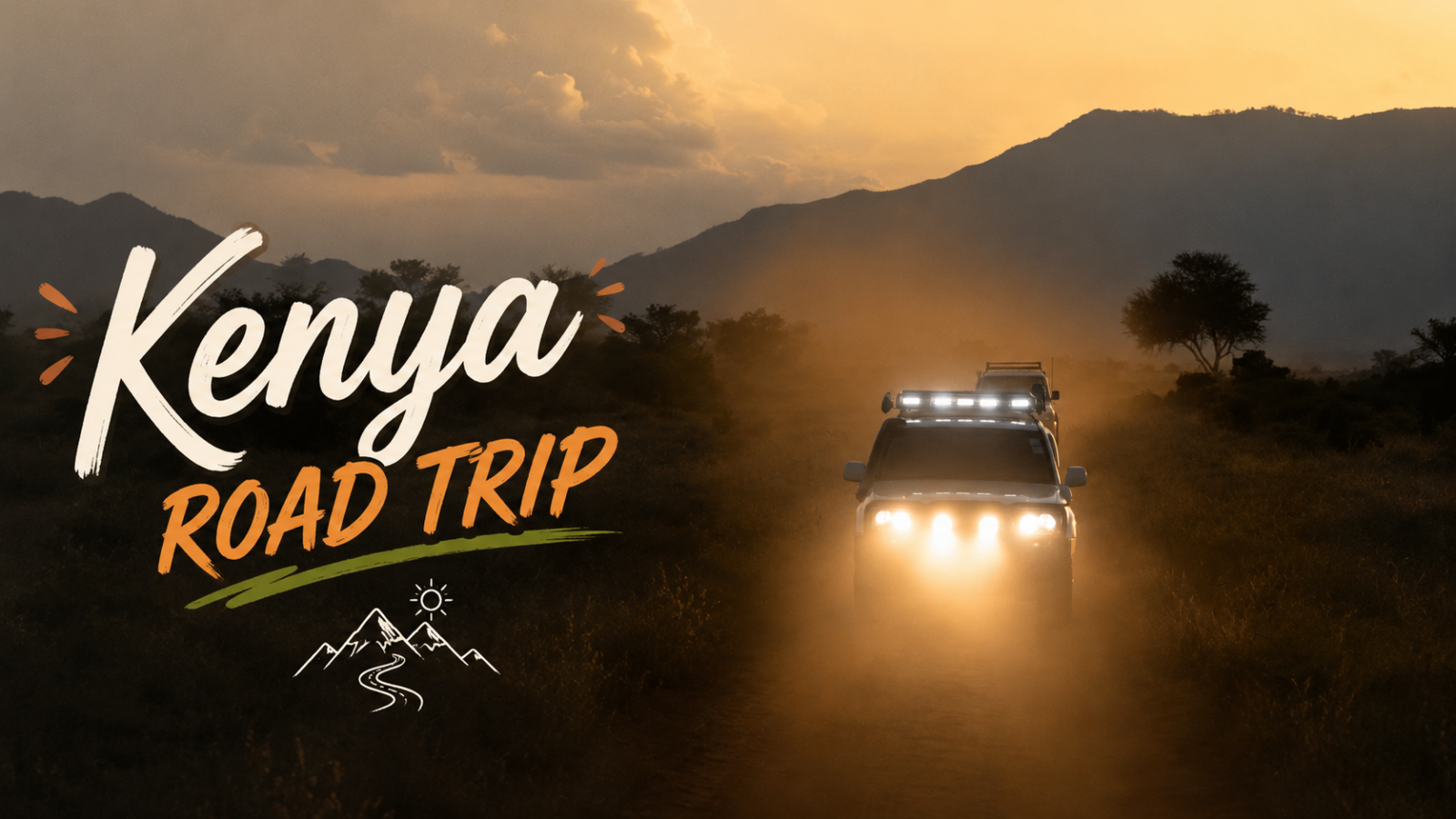

Self-driving Kenya is more accessible than self-driving Tanzania, less polished than South Africa, and quietly changed in 2024 by a Mara vehicle rule that most travel blogs still describe inaccurately. Here is the actual current picture.
The headline most guides get wrong
Search the internet for self-driving the Maasai Mara and you will find a hundred articles confidently stating that Narok County banned self-driving in June 2024. Half of those articles add that the ban applies to private vehicles. None of them tell you what the gate ranger at Sekenani is actually doing in mid-2026, which is a more useful question.
The actual position is this: Narok County banned game-drive use of non-safari-standard vehicles inside the Maasai Mara National Reserve. The ban is on vehicle type, not on who is behind the wheel. A traveller arriving at Sekenani Gate in a personal Toyota RAV4, a rented Nissan X-Trail, or a saloon car will be turned away from game-drive access. A traveller arriving in a Land Cruiser 70 Series with a pop-up roof and PSV licensing on the windscreen will be allowed in. Enforcement varies by gate and by ranger. Talek Gate is stricter than Sekenani. The Mara Triangle (Oloololo Gate) is managed separately under Mara Conservancy and operates its own rules.
This matters because the actual self-drive decision in Kenya hinges on which version of the rule applies to which traveller’s vehicle. A backpacker hoping to rent a saloon in Nairobi and drive themselves around the Mara is, in 2026, simply blocked. A traveller renting a fully kitted-out 4WD safari vehicle (Land Cruiser Prado, Land Cruiser 76 Series, or a Hilux with proper modifications) from one of the established Kenya self-drive operators can still self-drive much of the country, including parts of the Mara, with some caveats.
This Kenya road trip guide gives the honest current picture: which routes work, which do not, what vehicles are required, what it actually costs, who should attempt it, and who should categorically not.
Most international visitors should not self-drive Kenya. The minority who should — experienced overlanders, residents, and travellers doing specific routes outside the high-game-density parks — can do so well, and at a meaningful saving versus guided safari. The trick is being honest with yourself about which group you are in.
| MARA 2026 VEHICLE RULE Safari-standard 4WD with pop-up roof required inside Reserve; private SUVs/saloons turned away at gates | MARA ENTRY FEE 2025 $100/day low season, $200/day high season — 12-hour window (6am–6pm) not 24 |
| KWS NATIONAL PARK FEE RESTRUCTURE October 2025: ~$60–80/24hr non-resident at most KWS parks (subject to ongoing court challenge) | 4WD SAFARI RENTAL IN NAIROBI $120–200 per day for Land Cruiser/Prado with pop-up roof, full kit |
| 4WD WITH DRIVER-GUIDE ALTERNATIVE $150–250 per day all-in (excludes park fees and fuel) | FUEL COST (PETROL) MAY 2026 Approximately KES 175–185 per litre (~$1.35) in Nairobi; +5–10% in remote areas |
| NAIROBI TO MARA VIA NAROK 270 km, 5–6 hours via the B3 / C12 (Sekenani gate) | SELF-DRIVE CURRENTLY BANNED AT Mara Reserve for non-safari vehicles; off-road in most KWS parks; Tsavo East roads in poor condition after rains |
Who should self-drive Kenya
Self-driving is the right choice for a specific minority of travellers. The four legitimate categories:
Experienced overland travellers
If you have driven southern Africa, Namibia, or the trans-African routes, Kenya is not the demanding driving destination it is sometimes made out to be. The major highways (Nairobi–Mombasa A109, Nairobi–Nakuru A104, Nairobi–Namanga A104, Nairobi–Narok B3) are tarmac and generally well-maintained. The challenges are matatu and lorry behaviour in mixed traffic, occasional severe potholes after rains, and unmarked construction zones rather than the road itself. Overlanders accustomed to South Africa’s road quality will find Kenya about one notch rougher.
Residents and long-term visitors
Kenyans, expat residents, and travellers spending three weeks or more in country benefit substantially from vehicle independence. The economics of a $200/day driver-guide compound over a 21-day trip. A personal or rented 4WD plus the time to learn the driving culture is the more reasonable economic choice at that duration.
Specific routes that suit self-drive
Some Kenya routes are well-suited to self-drive and produce strong experiences. These are not the headline safari destinations. They are the Rift Valley scenic drives, the coastal stretch, and the secondary parks. Specifically: the Nairobi–Naivasha–Nakuru loop on the A104 (excellent infrastructure, multiple stops, good for first-time independent travellers), the Mombasa road south coast to Diani (the SGR rail provides a faster alternative but a self-drive opens up the Shimba Hills and Kilifi options), the Lake Naivasha and Hell’s Gate combination (Hell’s Gate specifically welcomes self-driving and cycling), and the Lake Magadi and southern Rift Valley loop. None of these involves the Mara, Samburu, or Tsavo dense-wildlife driving.
Photographers and naturalists who want pace control
A self-driving photographer with a strong 4WD can spend forty minutes at a single light situation in Hell’s Gate or Lake Naivasha without negotiating with a guide. The pace control is real and valuable for photography-priority travellers, although the trade-off is that you will lose the spotting expertise of a senior guide and you will miss most of what is hidden in plain sight.
Self-drive in Kenya is a niche product. It works for the four categories above and it works against most other travellers' interests. The cost saving versus guided safari is real but smaller than overland-travel forums suggest, especially when park-vehicle fees ($50–100 per day at KWS parks for foreign-registered vehicles) are added to the rental and fuel.
Who should categorically not self-drive Kenya
Three groups for whom self-drive is the wrong choice, despite occasional successful self-drives by people in these categories. The successful exceptions get written up; the failures rarely do.
First-time African safari travellers
If this is your first African trip, your first time driving on the left, or your first encounter with the matatu-and-lorry traffic mix, do not self-drive. The Mara is not a destination where vehicle failures or driving errors can be cheaply resolved — break down at 4pm on a Mara conservancy track and you are looking at an expensive recovery, plus the loss of the rest of the day’s wildlife. A first-time visitor renting a 4WD in Nairobi adds three layers of stress to a trip that should be experienced through binoculars rather than through a steering wheel.
Travellers focused on the dense-wildlife parks
The Mara, Samburu, and Tsavo are where most safari travellers want to go. They are also the destinations where self-drive is most constrained, most expensive in marginal costs, and most disadvantageous compared to a guide. A senior guide in the Mara will find you wildlife in the first hour that a self-driving travel writer will miss for three days. The wildlife knowledge gap between a competent KPSGA-licensed guide and a self-driving tourist is enormous. Self-drivers in dense-wildlife parks see roughly half what they could have seen with a guide.
Travellers without 4WD experience
The Kenya self-drive product is overwhelmingly Land Cruisers, Prados, and Hilux double-cabs. These are large vehicles. They require low-range engagement on muddy tracks. They handle differently from passenger cars on rough surfaces. A traveller who has never driven a manual transmission 4WD in low-range conditions should not learn during a Kenya safari trip — the learning curve overlaps with the conditions where errors are expensive.
The Mara situation in detail
Because half the information online is wrong or outdated, here is the accurate June 2024 to 2026 picture.
What changed in June 2024
Narok County Government announced that only safari-standard 4WD vehicles would be permitted to conduct game drives inside the Maasai Mara National Reserve. The stated reason was protection of the reserve’s roads and ecosystem from inappropriate vehicles. The unstated but probable reason was revenue allocation: safari operators with licensed PSV vehicles pay county-administered fees that direct-driving tourists in rental cars did not.
‘Safari-standard’ is interpreted in practice as: 4WD, high clearance, pop-up roof for game viewing. A Toyota Land Cruiser 70 Series, a Land Cruiser Prado fitted out for safari, a Hilux double-cab with the appropriate roof modification, or a Land Rover Defender will pass. A standard Toyota RAV4, Nissan X-Trail, Subaru Forester, or saloon will not — even if you have 4WD.
How enforcement actually works
Enforcement is gate-dependent. Sekenani Gate (south, busiest) typically allows non-standard vehicles to transit to lodge accommodation but will not allow them to conduct game drives. Talek Gate is stricter. The Triangle (Oloololo) operates under Mara Conservancy management with its own rules. Some rangers ask for PSV licensing on the vehicle; some accept that the vehicle meets the visual standard. Travellers reporting refusals consistently report being turned away when arriving in standard rental cars without pop-up roofs.
The practical workaround
A traveller who wants to self-drive into the Mara in 2026 needs to rent a safari-standard vehicle in Nairobi. This means a Land Cruiser 70 or 76 Series, a Prado TX, or equivalent, with pop-up roof and ideally PSV-style licensing on the windscreen. The Nairobi rental cost for this configuration is $150–200 per day, which puts the total daily cost (rental + fuel + park entry + accommodation) within roughly 20 percent of a guided private safari. The cost saving on self-drive in the Mara is therefore much smaller than the rental brochures suggest.
THE BOTTOM LINE ON MARA SELF-DRIVE Self-driving the Mara is still legal and still possible. It requires a specific vehicle category, costs much more than self-drive forums suggest once you add it up, and produces a wildlife-watching outcome substantially worse than a competent guide would produce at marginal extra cost. For 90 percent of international Mara visitors, this is the wrong choice.
Routes that work for self-drive
Three Kenya self-drive routes work well and produce strong experiences that justify the independence. These are not the high-game-density parks; they are scenic and cultural routes that benefit from pace flexibility.
The Rift Valley loop (3–4 days)
Nairobi to Lake Naivasha (1.5 hours via A104), overnight at one of the lakeside lodges. Day two: Hell’s Gate National Park self-drive (this is the KWS park most welcoming to self-drive; vehicles can drive the gorge and the Buffalo Circuit) and an afternoon boat on Lake Naivasha. Day three: drive to Lake Nakuru (1 hour), self-drive the park (one of the most accessible KWS parks for self-drive, although the flamingos that historically defined it have declined dramatically — see Article #77). Day four: optional Lake Bogoria for flamingos if numbers are concentrated there, then return to Nairobi via Nakuru–Naivasha–Nairobi route or onward to Eldoret and the western highlands.
Vehicle requirements: 4WD is recommended but not absolutely required for this route. Hell’s Gate has rough tracks but is technically passable in a 2WD with high clearance. Lake Nakuru’s roads are paved for the main loop. Total driving over four days: approximately 600–700 km. Fuel cost: approximately KES 6,000–7,500 (~$50–60).
The coastal route (5–7 days)
Mombasa drive south to Diani Beach (1 hour via the SGR-served Mombasa or via the A14), overnight Diani for two nights with day trips to Shimba Hills National Park and Kisite-Mpunguti Marine Park. Optional extension north to Watamu and Malindi (2.5 hours from Mombasa via the B8) with Arabuko-Sokoke Forest birding access. The coastal route is the strongest Kenya self-drive option for travellers who want logistical independence in a region where guided alternatives are less central to the experience.
Note: the Likoni Ferry between Mombasa Island and the south coast is not suited to self-drive at peak hours. Plan crossings outside the morning and evening commute windows or take the Dongo Kundu Bypass (now operational, opened 2024) which avoids the ferry entirely. The bypass adds approximately 15 minutes but eliminates the ferry uncertainty.
The northern frontier route (advanced, 7+ days)
Nairobi to Nanyuki (3 hours via the A2), overnight Mount Kenya foothills. Onward to Isiolo and into Samburu (5–6 hours total from Nairobi). For experienced overlanders only: continued onward to Marsabit, Lake Turkana, and the northern frontier. The roads beyond Isiolo are progressively more challenging — graded gravel, occasional rough sections, fuel availability sporadic. The Samburu National Reserve itself permits self-drive with a 4WD; the surrounding NRT conservancies typically restrict access to camp vehicles or guided arrangements.
This route is the strongest Kenya self-drive product for experienced overland travellers. Most international visitors should not attempt it as a first Kenya trip. Vehicle: serious 4WD with extra fuel capacity, recovery gear, and satellite communication. Self-drive operators in Nairobi that handle this route include 4×4 Self Drive Kenya, Roadtrip Africa, and Self Drive Kenya — all three offer vehicles with rooftop tents and camping gear.
The cost comparison that the brochures do not show
Self-drive marketing emphasises the per-day vehicle rental cost, which looks favourable compared to a $300-per-person-per-day guided safari. The honest comparison includes everything.
| Cost item (5-day Mara trip, 2 travellers) | Self-drive (proper safari 4WD) | Driver-guide alternative |
| Vehicle rental / driver-guide (5 days) | $750–1,000 (4WD with pop-up roof, full kit) | $900–1,250 (4WD with senior guide, all-in) |
| Fuel (~600 km Nairobi-Mara-Nairobi) | $80–110 | Included |
| Park entry (3 days high season Mara) | $600 + vehicle fee ~$150 = $750 | $600 + vehicle fee included = $600 |
| Accommodation (mid-tier, 4 nights) | $1,200–2,000 | $1,200–2,000 |
| Insurance and contingency | $100–200 (vehicle damage waiver, recovery insurance) | Covered by operator |
| Total for 5 days, 2 travellers | $2,880–4,060 ($288–406 per person per day) | $2,700–3,850 ($270–385 per person per day) |
The take-away from the table: in the Mara, self-drive in a properly equipped vehicle is roughly equivalent in cost to a driver-guide alternative. The savings are minimal. The wildlife-watching quality difference favours the driver-guide significantly. For trips outside the dense-wildlife parks, the self-drive savings are larger because the driver-guide alternative becomes more expensive relative to the value it adds.
Vehicle, equipment, and operator selection
Three things to get right at the rental stage.
The vehicle
For the Mara, Samburu, Tsavo, or any safari park, the right vehicle is a Toyota Land Cruiser 70 Series (Hardtop or Troopcarrier), a Land Cruiser Prado TX, a Hilux Double Cab with safari modification, or a Land Rover Defender. The pop-up roof matters at the gate. The PSV-style licensing helps. Anything below this standard will be rejected at the Mara gate and looks out of place in the other parks. For coastal and Rift Valley routes, a less specialised 4WD (Toyota RAV4 with 4WD, Nissan X-Trail) is acceptable, although it will not be permitted into the Mara if the trip includes that destination.
The equipment
Essential: two spare tyres (the standard one and a deep-tread replacement), high-lift jack, recovery straps, basic toolkit, jumper cables, first-aid kit. Strongly recommended: rooftop tent with full bedding (if camping), 30-litre fridge or cool box, water tank (40+ litres), camping gas stove, extra fuel cans for northern routes. Almost essential: a local SIM card with data, an offline-capable navigation app (maps.me or OsmAnd), and KES cash in small denominations for fuel and emergencies.
The operator
Established Kenya self-drive rental operators in 2026 include Roadtrip Africa, 4×4 Self Drive Kenya, Self Drive Kenya, and Your Drive Kenya. All four operate from Nairobi with reasonable fleets. Pricing comparable. The operator-level distinguishing factors are: 24/7 roadside support (essential — confirm this is genuinely available), vehicle age and maintenance (ask for the build year and recent service history), insurance and damage policy (confirm comprehensive coverage and the excess), and whether the operator permits travel into the Mara Reserve specifically (some restrict their fleets to outside the Reserve).
The licensing question
International driving permits are recognised. A standard home-country licence may also be accepted, but the IDP is the smoother option at police checkpoints. Carry both. Always carry the vehicle rental agreement, insurance documents, and at least one copy of your passport. Police checkpoints are routine and brief if documents are in order, problematic if they are not.
The road conditions, honestly
Three things about Kenyan road conditions that the rental brochures will not emphasise.
Tarmac highways are good, but matatu behaviour is not
The A104 (Nairobi–Nakuru–Eldoret), A109 (Nairobi–Mombasa), A2 (Nairobi–Nanyuki), and B3 (Nairobi–Narok–Maasai Mara Reserve gate) are tarmac. Surfaces are generally good. The problem is matatus and lorries: matatus (14-seater minibuses) drive aggressively and unpredictably; lorries (heavy trucks) move slowly and overtake in dangerous places. Driving in mixed traffic on these highways at night is materially more dangerous than driving in mixed traffic during daylight. The simple rule: do not drive after dark in rural Kenya.
Secondary roads vary dramatically
The C-class roads (county roads) range from graded gravel to deeply rutted dirt. After heavy rain, several Mara approach roads become temporarily impassable for non-4WD vehicles. The Olare Motorogi and Mara North conservancy access roads are particularly affected. Plan flexibility into any wet-season itinerary.
Tsavo East roads have deteriorated
Tsavo East National Park road conditions in 2024–2026 have been variable, with some sections requiring serious 4WD even in dry conditions and several tracks officially closed periodically. Self-drivers planning Tsavo should confirm current road status with KWS or recent visitor reports before committing — the park is large enough that the wrong route choice can produce a long day.
The ‘should I’ framework
Four questions that will tell you whether to self-drive.
- Is this your first African safari trip? If yes, do not self-drive in the dense-wildlife parks. Hire a driver-guide for the safari days and self-drive only the non-safari segments if you must.
- Are you comfortable driving a manual-transmission 4WD on the left side of the road, in low-range, in mud, after dark if needed? If any of these answers is no, do not self-drive in the parks. The coastal and Rift Valley routes remain viable.
- Is the cost saving the primary driver? For trips of 5–7 days in the dense-wildlife parks, the cost saving from self-drive is minimal once full costs are added. For longer trips and trips outside the dense-wildlife parks, the saving is real but the wildlife-watching cost is also real.
- Do you specifically want pace control and route flexibility that a guide will not provide? This is the strongest case for self-drive — photographers, naturalists, repeat Kenya visitors who already know what they want and don’t need a guide to show them.
Hidden-gem self-drive routes
Two undermarketed Kenya self-drive routes that produce strong experiences for the right traveller.
Lake Magadi and the southern Rift
Lake Magadi, two hours south of Nairobi on the C58 road, sits at the southern end of the Kenyan Rift Valley near the Tanzanian border. The lake is a soda lake with flamingo flocks (less famous than Bogoria but often more accessible in numbers), the Magadi area has hot springs, and the Kwenia cliffs nearby hold one of Kenya’s remaining Rüppell’s vulture breeding colonies. The route is genuinely undermarketed because it lacks tourist infrastructure — there is no major lodge, no formal park, no published itinerary. Self-drivers willing to bring their own water and camping equipment can have a remarkable day out from Nairobi. Why undermarketed: no tourism infrastructure means no marketing budget; the area’s industrial chemical operations (Tata Chemicals operates a soda ash plant on the lake) make it commercially complex to promote.
The Kikopey nyama choma stop and the Nairobi-Nakuru corridor
The A104 Nairobi-Nakuru highway is the strongest Kenya self-drive single day, full of small but distinctive stops. The Kikopey roadside cluster — about 35 km past Naivasha — is one of the country’s strongest nyama choma (grilled meat) stops, with several restaurants competing for what is in effect Kenya’s longest-standing food market for highway travellers.
Travellers who time the drive to coincide with lunch at Kikopey will eat well for under KES 1,000 ($8) per person and get a slice of unselfconscious Kenyan road culture. The A104 also passes the Great Rift Valley viewpoint, multiple weaver-bird-nesting acacia stretches, and the Naivasha lake region with its flower-farm controversy (Kenya supplies 70% of EU cut flowers, and the flower-farm impact on Lake Naivasha is one of the country’s quieter environmental stories).
Honest limits
Three things this article cannot solve.
First, the changing rules. The Mara vehicle rules, KWS park fees, and national park access policies have changed multiple times in 2024 and 2025. The October 2025 KWS fee restructure is still under court challenge as of mid-2026. Self-drivers should confirm current rules at the gate, not from articles written six months earlier — this one included. Conditions change.
Second, the insurance gap. Comprehensive vehicle insurance in Kenya does not cover all damage scenarios. Wildlife collisions are typically covered, off-road damage often is not, gravel-flick windscreen damage is sometimes contested. Confirm in writing what is covered and at what excess. The cheapest insurance policy is usually the most expensive when something happens.
Third, the safety baseline. Driving in Kenya carries materially higher accident risk than driving in OECD countries. The major risks are matatus overtaking on blind rises, lorries with failed brakes on Rift Valley descents, livestock crossing roads at night, and pedestrian risk in towns. Self-drivers should be honest about this risk and design itineraries that minimise the exposure: daylight driving only, no late-night returns, and major route planning.
THE HONEST PICK FOR THE SELF-DRIVE-CURIOUS TRAVELLER The Nairobi–Naivasha–Nakuru–Bogoria route plus a coastal extension via Mombasa is the strongest first Kenya self-drive product. It produces strong wildlife experiences, manageable driving, and meaningful cost savings versus driver-guide alternatives. It avoids the dense-wildlife parks where self-drive is both expensive and disadvantageous. A traveller who completes this trip and wants to return to Kenya can then attempt the Samburu route or the northern frontier with the road-experience baseline that makes those routes viable.
Who this guide is for, and who should look elsewhere
Travellers in the four categories at the top of this article — overlanders, residents, route-specific self-drivers, photographers seeking pace control — this article is aligned with what you are looking for. The trip will be more independent, slightly less wildlife-rich, and meaningfully different from a guided alternative.
First-time African safari travellers — please don’t. The dense-wildlife parks reward expertise that self-drive cannot deliver. Book a guided alternative and consider self-drive on a return trip.
Travellers wanting the cheapest possible Kenya safari — self-drive will not be the cheapest option once you add proper vehicle rental, park fees, and accommodation. The cheapest Kenya safari is a budget tour operator running shared-group tours from Nairobi — typically $150–250 per person per day all-in. Self-drive in a serious 4WD comes in higher than that, with worse wildlife watching.
RELATED READING
- Solo safari in Kenya: the considerations and the operator-selection framework
- Tsavo National Park: the SGR rail option, and the case for not driving to Tsavo
- Lake Naivasha: the honest day-trip and self-drive assessment
- Lake Nakuru National Park: the flamingo collapse and what the park offers now
- Kenya food guide: where the Kikopey nyama choma stop fits in
Tell us what you are looking for, and we will tell you honestly whether we can deliver it — and if we cannot, we will tell you who can.