
Most Maasai village visits in Kenya are commercial transactions dressed as cultural exchange. Some are genuine partnerships that produce meaningful income for the community. This is how to tell them apart, what your money should be doing, and how to visit in a way that respects the people you are visiting.
The standard Maasai village visit is closer to a transaction than an encounter
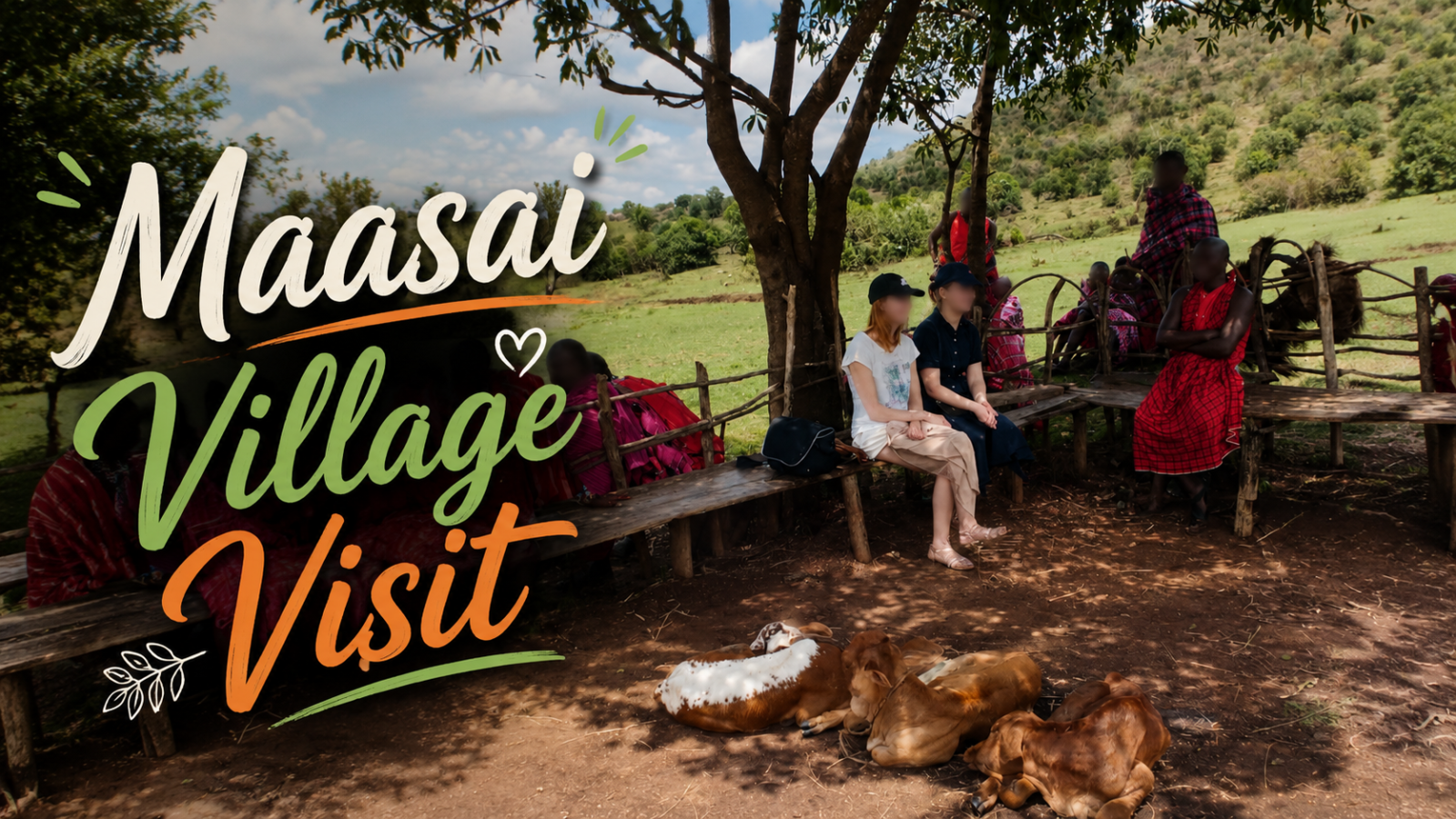
The classic Kenya safari itinerary includes a Maasai village visit — typically 30 to 60 minutes squeezed between game drives, costing the visitor $25 to $50 per person, and following a predictable choreography. You arrive at a boma near a major Reserve gate. You are met by men in red shukas performing the adumu jumping dance. You enter a manyatta hut for a few minutes. You walk through a souvenir market. You leave. The Maasai have welcomed you, performed for you, hosted you, and accepted your money. You have visited a Maasai village. Both sides have done what the format requires.
The question is whether what happened was a cultural encounter or a cultural transaction — and the honest answer for most standard village visits is that it was a transaction. The jumping dance you watched is, in real Maasai life, reserved for specific ceremonial occasions; the version you saw was a daily performance for tourists.
The manyatta hut you entered may or may not have been someone’s actual home. The souvenir prices may or may not reflect the maker’s labour. The entry fee may or may not have gone substantially to the community rather than to the operator who brought you. None of this makes the visit unethical by default. It does mean that the version most travellers experience is closer in structure to a paid attraction than to the cross-cultural exchange the marketing language suggests.
This guide takes the position that Maasai village visits can be genuinely valuable for both parties when structured carefully, and that travellers who care about the difference have specific decisions they can make to upgrade what would otherwise be a token visit into something meaningful. It also names the formats that are not worth your time or money, and the warning signs that you are about to participate in something closer to a human zoo than a cultural exchange. The Maasai are not relics. They are a living community navigating considerable land-rights pressure, climate stress on their pastoralist economy, and the daily question of how to engage with a tourism economy that wants their image more than their voice. How you visit matters.
Quick reference — the essential numbers
| STANDARD VILLAGE VISIT COST $25–$50 per person, 30–90 minutes | TYPICAL REVENUE TO COMMUNITY Variable — verify before booking |
| MAASAI POPULATION (KENYA + TANZANIA) ~1.5 million across both countries | MAASAI LAND LOST SINCE COLONIAL ERA Estimated 60%+ of historical grazing range |
| CONSERVANCY LEASE INCOME TO MAASAI (MARA) $4.8M+ annually to 15,000+ landowners | COMMUNITIES SUPPORTED BY MARA RIANDA MANYATTA 98 families, ~300 individuals |
| ECOTOURISM KENYA CERTIFICATION STATUS GSTC recognition lapsed Dec 2024 (Bronze/Silver/Gold continues) | VISIT FORMATS COVERED IN THIS GUIDE Five, ranked by ethical depth |
Who the Maasai actually are — beyond the postcard
The Maasai are a Nilotic pastoralist people whose oral histories trace migration from the lower Nile valley into East Africa over several centuries, reaching their current territories around the 17th and 18th centuries. They are not a monolithic group: across Kenya and Tanzania, the broader Maa-speaking community includes the Maasai proper, the Samburu, the Chamus (Ilchamus), and several smaller related groups, all sharing variations of the Maa language and core cultural elements. Total Maa speakers across the region exceed 1.5 million people.
Maasai society is organised around three core elements that have remained substantially intact through colonial and post-colonial pressure: cattle as the measure of wealth and the centre of economic life; age sets that move men through defined roles (boy, junior warrior, senior warrior or moran, junior elder, senior elder) at intervals of roughly 15 years; and a complex spiritual system organised around the sky god Enkai.
Polygyny remains common; clan structure governs marriage, inheritance, and dispute resolution; and the warrior tradition — particularly the rite-of-passage of becoming a moran — continues to define male identity through adolescence into early adulthood. Female genital mutilation (FGM) was historically part of women’s coming-of-age rites; it is now illegal in both Kenya and Tanzania, and its prevalence has declined substantially since the 2010s though it has not been eliminated.
What the postcards do not show is the contemporary pressure on Maasai life. Historical Maasai grazing ranges have been progressively reduced through colonial land alienation, the post-independence creation of national parks (which expelled Maasai from lands including the Mara, Amboseli, Serengeti, and Ngorongoro), and the ongoing subdivision of communal group ranches into private title deeds since the 1980s. Climate change is reducing the carrying capacity of remaining rangelands for cattle. Young Maasai are increasingly attending secondary school and university, working in towns and tourism, and balancing traditional identity with modern career structures. The community is not disappearing — it is adapting, and the tourism economy is one of several forces shaping the adaptation.
The five formats of Maasai village visit — what each actually delivers
Maasai village visits come in five recognisable formats, each with distinct ethical and experiential profiles. Choosing format is the single most consequential decision a traveller makes when planning a cultural component to a Kenya trip.
| Visit format | What it looks like | What it actually delivers |
| Roadside boma stop | Driver pulls into a village near a Reserve gate. 30–60 minutes. Adumu jumping dance, brief manyatta entry, souvenir market. | The ‘human zoo’ format. Photo opportunity dressed as cultural experience. Revenue distribution often opaque. Avoid unless on a tight budget with no alternatives. |
| Camp-organised visit | Pre-arranged through your lodge. 60–90 minutes. Visit to a community partner of the camp. Structured but with genuine relationship behind it. | Better. The camp has an ongoing economic relationship with the village. Revenue is auditable. Still scripted, but the script is the standard one for the community’s tourism programme. |
| Conservancy partner village | Village inside or adjacent to a community conservancy (Mara North, Naboisho, NRT-affiliated conservancies). 90 minutes–half day. | Much better. These villages are partners in the conservancy lease economy, not vendors of a one-off experience. Conversations can go beyond the script. Revenue is structurally distributed. |
| Multi-hour cultural immersion | Half-day or full-day arranged through specialist cultural operators. Walking safari with a Maasai elder, school visit, women’s beadwork cooperative, livestock work. | Strong. Time enough for actual conversation. Multiple touchpoints. Revenue typically distributed across schools, women’s groups, and individuals. The ‘meeting people’ format rather than the ‘seeing people’ format. |
| Overnight homestay | One or two nights with a Maasai family or in a partner-village guesthouse. Sleeping in a manyatta or adjacent shelter, eating with the family, accompanying daily routines. | The deepest format available. Requires specialist operator, careful selection, and traveller commitment. Strongest version of the ‘authentic encounter’ positioning. Limited availability. |
THE HONEST RULE If the visit costs less than $25 per person, lasts less than an hour, and is offered by your driver as a roadside add-on between game drives, you are participating in the standard tourist village format. There is nothing morally wrong with this for a price-sensitive trip, but understand what it is. The deeper formats cost more, take longer, and require advance planning — and they deliver materially different experiences for both visitor and host.
Where your money actually goes — and how to find out
The $25 to $50 entry fee for a standard village visit is opaque by default. It may go entirely to the community, predominantly to the camp or driver who arranged the visit, or to a Maasai middleman whose family controls visitor access to specific bomas. Most travellers never find out which. Pressing the question before booking is the single most useful thing a visitor can do to verify what kind of transaction they are participating in.
The questions that reveal the revenue flow
- How much of my entry fee goes directly to the village? Reputable camp partners can give you a specific percentage or amount, often in writing. Operators who deflect or give vague answers are telling you that the answer is unfavourable.
- How many families benefit from your village partnership? The Mara Rianda manyatta partnered with Governors’ Camp explicitly supports 98 families / approximately 300 individuals. That kind of named, audited distribution is the strong signal.
- Is this a year-round village or a tourism village? Some Maasai communities operate “tourist bomas” where families rotate through annually to earn cash, then return to less-visited home bomas. This is not unethical in itself, but it changes the nature of what you are visiting.
- Who chose this village for me to visit? If your camp manager has a multi-year relationship with the community and visits regularly, the visit is embedded in a partnership. If your driver suggested it spontaneously en route, you are in unverified territory.
- What happens to my entry fee in the off-season? Communities with strong tourism partnerships often pool tourist revenue into school fees, cattle purchases during drought, and shared infrastructure. Communities without that structure see the income flow to whoever collects the entry fee that day.
None of these questions is hostile. Asking them politely and in advance signals to your operator that you care about the answer, which produces better selection and better revenue distribution. The operators who get these questions regularly tend to develop deeper community partnerships, because they cannot afford to lose the clients who ask.
The behavioural etiquette — how to be a guest, not an audience
Even within the standard village-visit format, the difference between a well-conducted visit and a badly-conducted one comes down to specific behaviours on the visitor’s side. The Maasai community you are visiting has hosted hundreds of visitors before you and will host hundreds more after. How you conduct yourself is a small but real input into how the next visitor is received.
- Ask before photographing individuals. The Maasai are among the most-photographed people on Earth, and the experience of being constantly photographed without consent is genuinely tiring. Ask the person specifically. “May I take your photograph?” Most will say yes; some will request a small fee; some will decline. All three responses are legitimate.
- Dress with reasonable modesty. Standard safari clothing (long pants, modest tops) is fine. Revealing clothing in a traditional cultural setting reads as disrespectful regardless of your home-country norms. This applies particularly when entering manyatta huts or attending ceremonies.
- Engage in conversation rather than observation. If you have a fluent guide, ask the people you meet about their daily lives — not just about the staged elements of the visit. What does the family eat in a typical week? How many cattle do they currently have? Where do their children go to school? Most Maasai are happy to discuss the practical realities of contemporary life if asked respectfully.
- Buy crafts directly from makers when possible. The beadwork market that closes most village visits often pressures buyers, but the underlying economic reality is genuine: beadwork is a major income source for Maasai women, and direct purchase puts money straight to the maker. Negotiate calmly and respectfully; do not haggle aggressively for items that already cost a fraction of the maker’s labour time.
- Do not bring sweets, pens, or token gifts for children. This is well-meaning but counterproductive. It teaches children to expect handouts from passing strangers, undermines normal parental authority, and substitutes performative generosity for the structural support that real community partnership delivers. If you want to help, channel it through the partner camp’s verified community development programmes.
- Treat the visit as you would a guest visit to any family home. Quiet voice, attention to your hosts, no entering interior rooms uninvited, no opening of personal items, no commentary about the living conditions delivered in a language your hosts may understand more of than you assume.
The deeper formats — what to look for if you want something real
Conservancy partner villages
Communities living inside or adjacent to private community conservancies — Mara North, Naboisho, Olare Motorogi, Lewa, the NRT-affiliated conservancies of northern Kenya — typically have multi-year economic partnerships with the lodges operating in those areas. Lease payments flow to landowners, employment is provided to community members, and visits to homesteads are arranged through the camps with revenue auditably distributed. Mara Rianda’s partnership with Governors’ Camp (supporting 98 families) is one well-documented example; similar relationships exist with Saruni’s partner villages, Kicheche’s community visits, and Cottar’s community programme. The cultural visit in these settings has a structural reason to be more genuine: the community is already in a multi-year relationship with the camp, and the camp’s reputation depends on the visit being meaningful.
Multi-hour or half-day cultural immersions
Several specialist operators arrange longer-format Maasai cultural experiences — half-day walks with a Maasai elder explaining medicinal plants and tracking signs, visits to women’s beadwork cooperatives where you watch and learn the technique rather than just buy the product, school visits with proper introduction protocols, and accompanied participation in daily activities (cattle moving, milking, food preparation). These are still structured experiences, but the longer duration creates space for actual conversation and the chance for both sides to move beyond the standard script. Camps offering this format include Saruni, Cottar’s, Kicheche, and several specialist cultural-tourism outfits.
Overnight Maasai homestays
At the deep end of the format spectrum, a small number of specialist operators arrange one- or two-night stays with Maasai families. This is not a luxury experience — it is sleeping in a manyatta or adjacent simple structure, eating what the family eats, and accompanying the daily rhythms of pastoral life. It is the strongest version of the cultural-encounter premise and the rarest format on offer.
Operators including II Ngwesi Group Ranch, Maasai Wilderness Conservation Trust partners, and a handful of others arrange genuine homestay experiences with proper preparation and revenue distribution. Travellers considering this format should have realistic expectations: it is uncomfortable by Western standards, demanding in terms of cross-cultural attention, and requires a willingness to be a guest rather than a customer.
What to avoid — and how to recognise the warning signs
Several specific patterns mark visits that are likely to be more extractive than exchange. Recognising them in advance saves both the visitor and the community from a poor encounter.
- Roadside boma stops near major Reserve gates that aggressively solicit your vehicle. These are typically among the highest-volume, lowest-revenue-share operations.
- Visits where the entry fee is paid to your driver in cash and not visibly transferred to the community elder.
- Operators who promise “authentic” Maasai culture in marketing language while structuring 30-minute visits with no conversation component.
- Visits where photography is encouraged before basic introductions are made. The Maasai equivalent of asking permission to enter someone’s home matters.
- “Volunteer” Maasai school visits arranged by international voluntourism operators with no verifiable accountability structure. The school visit problem is its own category and frequently overlaps with orphanage-visit ethics issues.
- Any operator that uses imagery of children prominently in marketing materials without indication of consent protocols.
- Cultural performances framed as religious ceremonies. Real Maasai religious practice is private and not commercially performed.
THE STRUCTURAL TEST A culturally respectful visit is built around the principle that you are a guest in someone's community, not a customer of a paid attraction. If the experience is structured around what you get to see and do, with the host community in the background, you are participating in an attraction. If the experience is structured around meeting specific people in their actual lives, with the staged elements being incidental rather than central, you are participating in a visit. The two are not the same, and the deeper formats deliver the second.
The language question — what you can usefully learn before you visit
Showing up able to greet your hosts in Maa is a small thing that produces disproportionately positive responses. The Maasai are not a community accustomed to visitors making linguistic effort, and even minimal preparation reads as respect. A few useful phrases:
- “Sopa” — Hello (most common greeting)
- “Ipa” — Hello (response)
- “Ashe” — Thank you (informal); “Ashe naleng” — Thank you very much
- “Supai” — Greeting for a moran (warrior)
- “Kasserian Ingera” — “How are the children?” (a traditional formal greeting whose answer, “All the children are well,” speaks to the centrality of children in Maasai social health)
If your guide speaks Maa, ask them for additional phrases relevant to the specific community you are visiting. Regional and clan-specific variations exist; using the wrong variant is not offensive but using any variant signals genuine effort.
The bigger picture — what tourism is doing to Maasai culture
The tourism industry is one of three or four major forces reshaping Maasai life in the 21st century, alongside land subdivision, climate change, and education. Honesty requires acknowledging that the changes are mixed, contested within the community itself, and not reducible to a single positive or negative verdict.
On the positive side: tourism revenue, particularly via the conservancy lease model, has provided a financial alternative to land sale and conversion. Maasai-owned tourism enterprises — both lodges and cultural-experience operators — are increasingly common. School enrolment rates for Maasai children have risen substantially, partly financed by tourism income. Maasai women’s economic independence has been strengthened by the beadwork market that tourism supports. Several Maasai-led conservation initiatives, including the Maasai Wilderness Conservation Trust and the Mara Predator Conservation Programme partnerships, channel community ownership into landscape management.
On the contested side: the staged performance of Maasai identity for tourists has, in the view of many community members and observers, accelerated the conversion of cultural practice into commodity. Young men are paid to dance the adumu daily; the dance has lost some of its ceremonial weight. The image of the spear-and-shuka moran is now substantially more associated with tourism revenue than with the pastoral warrior life it originally signified. Some Maasai academics have argued that the tourist version of Maasai identity is increasingly the version performed in community life as well — that the cultural feedback loop runs in both directions.
The traveller’s role in this is neither all-powerful nor irrelevant. The visit you choose, the operator you book, the questions you ask, and the revenue distribution you verify all contribute marginally to which direction the tourism economy pulls the broader Maasai cultural infrastructure. The deeper formats — particularly conservancy-partnered visits and homestays — reward the operators and communities that have built genuine partnerships. The standard roadside boma visit rewards the operators who have not. Over time, demand reshapes supply. The traveller who pays attention to format matters more than they think.
The honest position
A Maasai village visit can be one of the most rewarding components of a Kenya trip when structured carefully, or one of the most extractive when structured carelessly. The difference is largely under the traveller’s control. Choosing a deeper format than the standard roadside stop, verifying revenue flow in advance, conducting yourself as a guest rather than an audience, and accepting that real cultural encounter takes longer than 45 minutes — these together produce visits that benefit both sides and contribute, marginally but measurably, to the broader tourism economics that the Maasai community is navigating.
The Maasai are not in need of your pity, your charity, or your help. They are in need — like any community in a fast-changing economy — of partnerships that treat them as agents rather than subjects, that distribute revenue fairly rather than extractively, and that engage with their reality as a contemporary community rather than as a postcard from the past. The right kind of visit does all three. The wrong kind does none. Choose accordingly.
THE BOTTOM LINE If you can only do one cultural component on your Kenya trip, skip the standard roadside village visit and book a half-day or longer cultural immersion through a conservancy-partnered camp. The cost differential is modest. The experience differential is categorical. And the revenue distribution at the receiving end actually supports the community whose culture you came to engage with.
RELATED READING
- Maasai Mara Destination Guide — Including community conservancy partnerships in detail.
- Mara North Conservancy — The 783-landowner partnership in lived practice.
- Responsible tourism in Kenya: how to travel ethically — The broader framework around cultural visits.
- How private conservancies are saving Kenya’s lions — The economic model that funds community partnerships.
Tell us what you are looking for, and we will tell you honestly whether we can deliver it — and if we cannot, we will tell you who can.