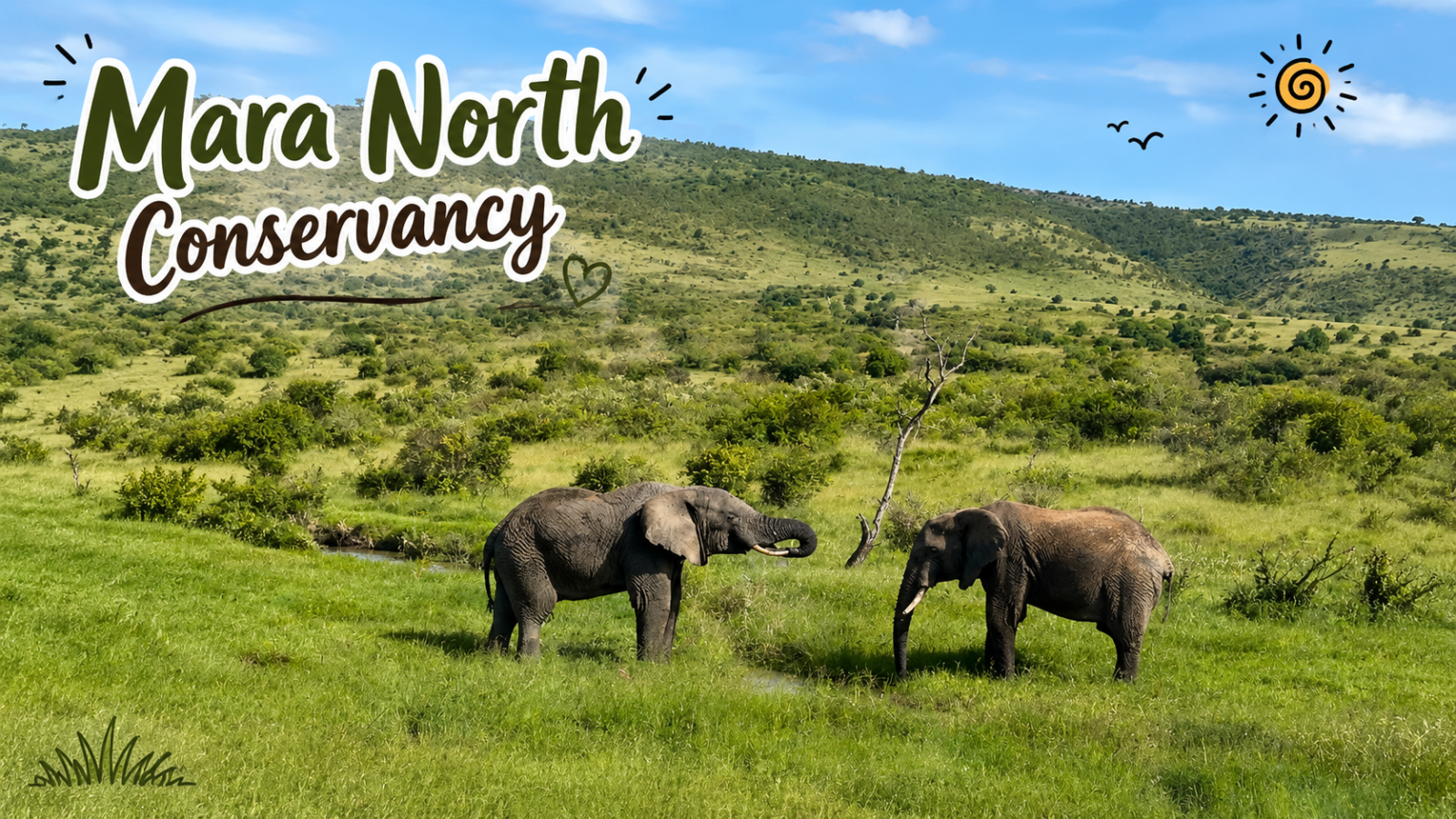

Mara North is the largest community conservancy in the Greater Mara ecosystem, with one of the strongest lion populations and the most landowners. It is also frequently mis-recommended. Here is the honest case for who should book it — and who should not.
Mara North is not automatically the best conservancy for every Mara trip
Mara North Conservancy is, by several measurable criteria, the most consequential community conservancy in the Greater Mara ecosystem. At approximately 70,400 acres (28,486 hectares), it is the largest single conservancy in the federation. It supports approximately 783 Maasai landowners — one of the broadest community partnerships in the model. It directly increases the protected area of the Greater Mara by 21%. The 10 to 12 member camps that operate within it have, through the Mara North Conservancy management entity, sustained guaranteed monthly lease payments to landowners even through the 2020 tourism collapse. By any reasonable conservation metric, Mara North is a success.
Despite all of that, Mara North is the wrong choice for some of the trips it gets booked for. Travellers who choose it because it appears at the top of conservancy lists, or because it is the largest, or because a particular operator pushes it, sometimes end up with a perfectly good safari that was not actually the strongest available match for their trip. The point of this guide is to be specific about what Mara North does exceptionally well, what it does not do as well as some of the smaller conservancies, and who specifically should and should not book it.
The right way to think about Mara North is as a high-quality, large-format conservancy with strong resident wildlife, a meaningful migration footprint, broad accommodation choice, and one of the deepest community partnership structures in East Africa. It is the right answer for many Mara trips. It is not automatically the right answer for every one.
Quick reference — the essential Mara North numbers
| TOTAL AREA ~70,400 acres / 28,486 hectares / 320 km² | ESTABLISHED 2009 |
| MAASAI LANDOWNERS ~783 individual title holders | MEMBER CAMPS 10–12 permanent + 2 mobile horseback |
| CURRENT BED DENSITY ~336 acres per bed | TARGET BED DENSITY 350+ acres per bed |
| POSITION North-western boundary of the National Reserve | BIRD SPECIES RECORDED 450+ |
The land — what Mara North actually looks like, in honest terms
Mara North sits on the north-western edge of the National Reserve. The landscape is a mix of open rolling grasslands typical of the Mara aesthetic, riverine forest along the Mara River and its tributaries, scattered acacia woodland, and the foothills of the Oloololo Escarpment to the west. The Mara River forms part of the southern boundary of the conservancy, which means migration corridor traffic — wildebeest and zebra heading from the National Reserve north into the surrounding lands during July to October — passes directly through the conservancy.
Pre-2009, the area now under Mara North was in poor ecological state. Land ownership had become highly fragmented after the 1980s adjudication of group ranches into individual title deeds. Fencing of individual plots had created barriers to wildlife movement. Overgrazing by livestock had degraded the grass biomass that supports the wider ecosystem. The 2009 founding agreement reversed all three trends in a single contractual structure: landowners agreed to remove fences, accept controlled livestock numbers, and receive monthly lease payments in exchange. A decade and a half later, the wildlife has recovered to densities comparable to the National Reserve itself.
How Mara North compares to the other principal conservancies
Mara North is one of four high-profile conservancies that anchor the Mara ecosystem. Choosing among them is the substantive decision most luxury Mara buyers should make. The comparison below makes the trade-offs explicit:
| Metric | Mara North | Olare Motorogi | Naboisho | Reserve |
| Size (acres) | ~70,400 | ~33,000 | ~52,000 | ~375,000 |
| Established | 2009 | 2006 (merged 2014) | 2010 | 1974 (current form) |
| Bed density (acres/bed) | ~336 (target 350) | ~650–700 | ~700+ | Unrestricted |
| Member camps | 10–12 permanent + 2 mobile | 5–6 | 9 | Many large lodges |
| Maasai landowners | ~783 (some sources cite 800+) | 277 (founding) | 500+ | N/A (county-managed) |
| Off-road / night drives | Yes | Yes | Yes | No |
| Migration corridor | Strong — herds linger July–Oct | Moderate | Moderate | Strongest (river crossings) |
HOW TO READ THE TABLE Bed density is the single most important number. Mara North at 336 acres per bed is good — significantly better than the Reserve and broadly comparable to most luxury safari standards. But Olare Motorogi and Naboisho operate at roughly twice the per-bed acreage, which translates directly to fewer vehicles at sightings and a more exclusive feel. If your priority is the lowest possible vehicle density at a sighting, Olare Motorogi or Naboisho win. If your priority is migration corridor footprint plus broader camp choice and price range, Mara North wins.
The wildlife — what Mara North genuinely delivers
Mara North supports the full Big Five (lion, leopard, elephant, buffalo, with rhino moving in and out from the Reserve), plus cheetah, occasional wild dog sightings, hyena, jackal, and the full ungulate roster of wildebeest, zebra, topi, hartebeest, impala, Thomson’s and Grant’s gazelle. The Mara Predator Conservation Programme actively monitors the lion population across the conservancy, and the resident prides — including the Offbeat Pride (centred around Offbeat Mara Camp) and several other established groups — are tracked by individual identification across multiple years.
Lions
Mara North holds one of the strongest conservancy lion populations in the Greater Mara ecosystem. The 14% higher density figure that MMWCA reports across the conservancy belt versus the National Reserve applies broadly to Mara North, although the specific density figures vary slightly between conservancies. The Offbeat Pride is the most-documented resident pride and is frequently observed within walking distance of the camp by guests on bush walks (with armed ranger escort).
Leopards
Leopard sightings in Mara North are strong, particularly along the Mara River riverine forest. The combination of off-road access and night drives (both permitted in the conservancy, both prohibited in the National Reserve) materially improves leopard viewing odds versus the Reserve. The trees along the river hold known resident leopards, and the long-tenured guides at the conservancy camps can usually find them.
Cheetahs
Cheetah sightings are good but not as concentrated as in Naboisho or the open plains of Olare Motorogi. The mosaic habitat — partly open, partly wooded — favours lion and leopard over cheetah, which prefer the more open hunting terrain. For travellers prioritising cheetah viewing specifically, Naboisho is the stronger pick. For travellers wanting the full predator roster with strong lion focus, Mara North is excellent.
Elephants
Elephant populations are healthy and growing. The Mara Elephant Project (MEP), based across the wider Mara, includes Mara North elephants in its tracking and conservation work. Herd sizes and breeding activity have improved measurably since the conservancy’s founding.
The migration
Mara North sits on a meaningful section of the wildebeest migration corridor. Between July and October, the herds spill from the National Reserve into the conservancy in large numbers, providing dense game-viewing without the vehicle congestion that the Reserve experiences during the same months. River crossings, however, occur primarily within the National Reserve (along the Mara River and the Talek).
Guests staying in Mara North during peak migration who want to witness a major crossing will typically need to organise a full-day drive into the Reserve, paying the Reserve fee for that day. The conservancy’s location means that crossings of the smaller Olare Orok River (within or adjacent to the conservancy) can occur, but the spectacular large-herd crossings are a Reserve event.
Where to stay in Mara North — the honest hierarchy
Mara North has the broadest range of accommodation of any single Mara conservancy. The six camps below cover the spectrum from old-school authenticity to ultra-luxury, with the in-between covered well at each price point.
| Camp | Tier / size | Why it stands out |
| Offbeat Mara | High luxury · 6 tents | Family-owned since the 1990s. Camp has its own resident lion pride (the Offbeat Pride) frequently hunting within sight of camp. Strongest guiding consistency of any Mara North property. |
| Saruni Mara | High luxury · 6 cottages | Tucked into a forested valley away from the open plains. Italian-influenced design, strong wellness offering, distinctive aesthetic vs the standard tented-camp template. |
| Kicheche Mara Camp | High luxury · 8 tents | Photographer-focused. Eco Tourism Kenya Gold-rated. Low single-supplement policy makes it one of the strongest solo-traveller picks in the Mara. |
| Karen Blixen Camp | Entry-high luxury · 22 tents | The largest member camp. Riverside position on the Mara River. Strong food and service, broader price accessibility. Better for first-time mid-range buyers than for repeat luxury clients. |
| Elephant Pepper Camp | High luxury · 8 tents | Quiet, off-the-circuit position. Old-school Mara aesthetic, no electricity in tents (paraffin lanterns), traditional bush-camp authenticity that the newer designer properties cannot replicate. |
| Mara Plains Camp | Ultra-luxury · 7 tents | Technically straddles Olare Motorogi but routinely traverses Mara North. Top-end of the price spectrum. Strong for photographers wanting design and access simultaneously. |
THE HONEST PICKS For solo travellers and photographers: Kicheche Mara Camp. For families wanting authentic bush experience: Offbeat Mara or Elephant Pepper. For couples wanting design and food at high-luxury tier: Saruni Mara. For ultra-luxury photographic priority: Mara Plains. For first-time visitors on tighter budget who still want the conservancy experience: Karen Blixen Camp. Avoid generic 30-tent properties marketing themselves as conservancy lodges without these specific identifiers.
Who Mara North is actually for
The strongest match for Mara North is the traveller who values multiple factors that the larger conservancy size enables: a meaningful migration footprint without paying Reserve fees, a broader choice of camps at varied price points, the strongest community partnership story in the model (783 landowners is genuinely the strongest community-economic statement available), and a habitat mosaic that supports the full predator roster including the Offbeat Pride’s resident drama.
- Repeat Mara visitors who have done the Reserve and want the conservancy upgrade with a known migration angle. Mara North is the natural step up — broader, less restrictive, with comparable wildlife and substantially less crowding.
- Families wanting accommodation choice. The price spread between Karen Blixen at the entry-high luxury level and Mara Plains at ultra-luxury means multi-generational groups with different budgets within the family can co-locate.
- Photographers who specifically value the migration corridor traffic without the Reserve vehicle density. Mara North gets the wildebeest without the crowds.
- Conservation-engaged travellers who want the strongest community-partnership story. The 783-landowner figure is the largest single community-economic relationship in the model.
Who should look elsewhere
Mara North is the wrong recommendation for several specific buyer profiles. If any of these describe you, consider Olare Motorogi, Naboisho, or another conservancy instead.
- Travellers prioritising the lowest possible vehicle density at sightings. Mara North operates at ~336 acres per bed; Olare Motorogi and Naboisho operate at roughly twice that ratio. For ultra-premium exclusivity, the smaller conservancies deliver better.
- Migration river-crossing priority travellers. If you came to Kenya primarily to witness the Mara River crossings, you should stay either in the Reserve itself or in a property with direct Reserve access that handles the crossing logistics. Mara North can take you to the crossings via a paid day-trip into the Reserve, but that means paying the $200 peak-season Reserve fee on top of your conservancy stay.
- Cheetah-specific photographers. Naboisho’s open-plains habitat consistently produces stronger cheetah viewing than Mara North’s mosaic landscape. Choose accordingly.
- Travellers wanting the longest-established Mara conservancy heritage. Olare Motorogi (founded 2006) and Olare Orok before it are the older conservancies with the deepest operational track record. Mara North (2009) is highly successful but operationally younger.
- Anyone seeking sole-use buyout options. The smaller boutique camps in Naboisho or Olare Motorogi are easier to buy out exclusively for a family group. Mara North’s larger camps make exclusive-use less practical at the lower end of the price scale.
Birding — the 450-species story most visitors miss
Mara North records more than 450 bird species, putting it among Kenya’s strongest birding landscapes. The Mara River and its tributaries support fish eagles, African darters, hamerkops, goliath herons and pied kingfishers. The acacia woodland holds lilac-breasted rollers, secretary birds, southern ground hornbills, and several raptor species including martial eagles and tawny eagles. The grasslands deliver the ostriches, kori bustards, secretary birds and Crowned cranes (Kenya’s national bird) that are the visual signature of East African birding.
The migration draws an enormous secondary wave of bird species — vultures arrive in numbers at every kill site, including the four critically endangered Mara vulture species (white-backed, Ruppell’s, lappet-faced, and hooded). Watching a single carcass attract sequential vulture waves is one of the most ecologically informative experiences available on a Mara safari, and one most operators barely mention because most clients are not specifically looking. For birders, Kicheche Mara Camp and Offbeat Mara both employ guides with specific bird-identification credentials, which is the rare case where the guide quality directly determines the experience yield.
Cultural engagement — the 783-landowner partnership in lived terms
The conservancy’s relationship with the 783 Maasai landowners is the structural reason Mara North exists. For travellers interested in the cultural dimension, the conservancy offers genuine engagement options that go meaningfully beyond the staged manyatta visits that dominate other Mara experiences.
Member camps including Saruni Mara, Karen Blixen Camp and Offbeat Mara arrange visits with landowner families — homestead encounters that work because the families have ongoing economic relationships with the camps and are genuinely partners rather than performers. The cultural visits typically include cattle-related demonstrations, beadwork (a major Maasai income source for women), discussion of how lease payments are used at household level (often education for the next generation), and frank conversations about the trade-offs involved in conservancy participation versus alternative land uses. The Maasai school programmes funded partly through conservancy revenue are visitable; guests who request can spend a morning at a school the conservancy supports.
The ‘Singing Wells’ tradition, where Samburu and Maasai herders sing in chorus while drawing water from deep wells for cattle, is more strongly associated with the northern Kenya conservancies, but smaller cattle-watering ceremonies on Maasai pastoral land near the conservancy boundary are accessible and authentic. Cultural engagement booked through Mara North member camps is one of the few areas where the standard Maasai cultural experience marketing actually corresponds to what travellers receive on the ground.
The 2020 stress test — how Mara North survived the tourism collapse
The COVID-19 pandemic triggered the worst single event in the modern history of the Mara conservancy model. International tourism collapsed within weeks of March 2020. Lodges shut. Bookings disappeared into 2021. The lease payments that 783 Maasai landowners had come to depend on for school fees, food security, and household income were suddenly at structural risk.
The Mara North member camps made a calculated decision: they would maintain monthly lease payments to all 783 landowners out of their own balance sheets, regardless of camp occupancy. The decision was financially painful — operators were paying the structural costs of the conservancy while generating effectively zero revenue. But the alternative was worse: a single missed lease payment cycle could have triggered landowner withdrawal from the conservancy, fence reinstatement, and irreversible damage to the conservation model. The decision held the conservancy together through the pandemic’s worst months.
In parallel, Conservation International Kenya and the Maasai Mara Wildlife Conservancies Association created the Maasai Mara Rescue Fund, a $5 million bridge facility specifically designed to support conservancy lease payments and reduce pressure for land conversion during the tourism collapse. The fund disbursed grants across multiple conservancies including Mara North, providing a backstop that combined with operator commitments to keep landowners financially whole.
The honest assessment of what 2020 demonstrated: the conservancy model is financially fragile under extreme tourism disruption, but it is operationally resilient when its participants understand the long-term stakes. The Mara North member camps that absorbed lease costs through 2020 — Offbeat, Saruni, Kicheche, Elephant Pepper, Karen Blixen, and others — earned a credibility with the conservation infrastructure and with the landowners that is not available to operators who entered after the pandemic. For travellers choosing among conservancy properties, the 2020 behaviour of the operator tells you something material about which side of the conservation economics they are actually on.
The monthly transparency reports — what they tell you about the operation
Mara North publishes monthly conservancy reports documenting wildlife counts, livestock numbers, conservation activities, anti-poaching events, and operational issues across the conservancy. The reports are public, dated, and granular — distinct from the glossy marketing material that operators across the safari industry produce to justify their conservation claims.
For travellers evaluating whether a conservancy is doing what its marketing claims, the existence of monthly publicly-available reports is one of the strongest credibility signals available. The Mara North monthly reports document cattle numbers (often a tension point in conservancy operations — too many cattle degrades the grass biomass that wildlife depends on), wildlife sightings frequency (lion, leopard, cheetah, wild dog, elephant counts), and specific incidents (snare removals, livestock predation events, anti-poaching patrols). The transparency matters because it allows the model to be audited externally, which is what distinguishes a working conservancy from a marketing brand.
Practical planning — fees, access and the COVID-resilience story
Getting there
By air: scheduled flights from Nairobi Wilson Airport to Mara North or Musiara airstrips (45-60 minutes). All member camps include airstrip transfers. By road: 5-6 hours from Nairobi via Narok. Air is the standard for conservancy stays — road is genuinely interesting but adds a full travel day.
Fees and access
Mara North is closed to day visitors. Access is restricted to guests staying at member camps. The conservancy access fee is typically included in camp rates and is approximately $100-$150 per person per night depending on the camp. There is no Reserve fee unless you choose to enter the National Reserve on a day excursion. The 12-hour Reserve ticket rule that catches Reserve-stay visitors does not apply to conservancy-only stays.
THE BOTTOM LINE Mara North is a high-quality, large-format community conservancy with strong resident wildlife, a meaningful migration footprint, broad accommodation choice, and the deepest community partnership structure in the Mara model. It is the right answer for many Mara trips — but not all of them. The smaller conservancies deliver lower vehicle densities. The Reserve itself delivers the migration crossings. Choose Mara North when its specific advantages match your priorities; choose another conservancy when they don't.
RELATED READING
- Olare Motorogi Conservancy — The smaller, denser-predator alternative.
- Maasai Mara Destination Guide — The Reserve vs. the conservancies, in full.
- When is it too crowded in the Maasai Mara? — The 2025 visitor-numbers shift that changes everything.
- How private conservancies are saving Kenya’s lions — The economic model behind Mara North’s success.
- Luxury Safari Kenya: What Makes It Worth the Premium? — Where conservancy access pricing comes from.
Tell us what you are looking for, and we will tell you honestly whether we can deliver it — and if we cannot, we will tell you who can.