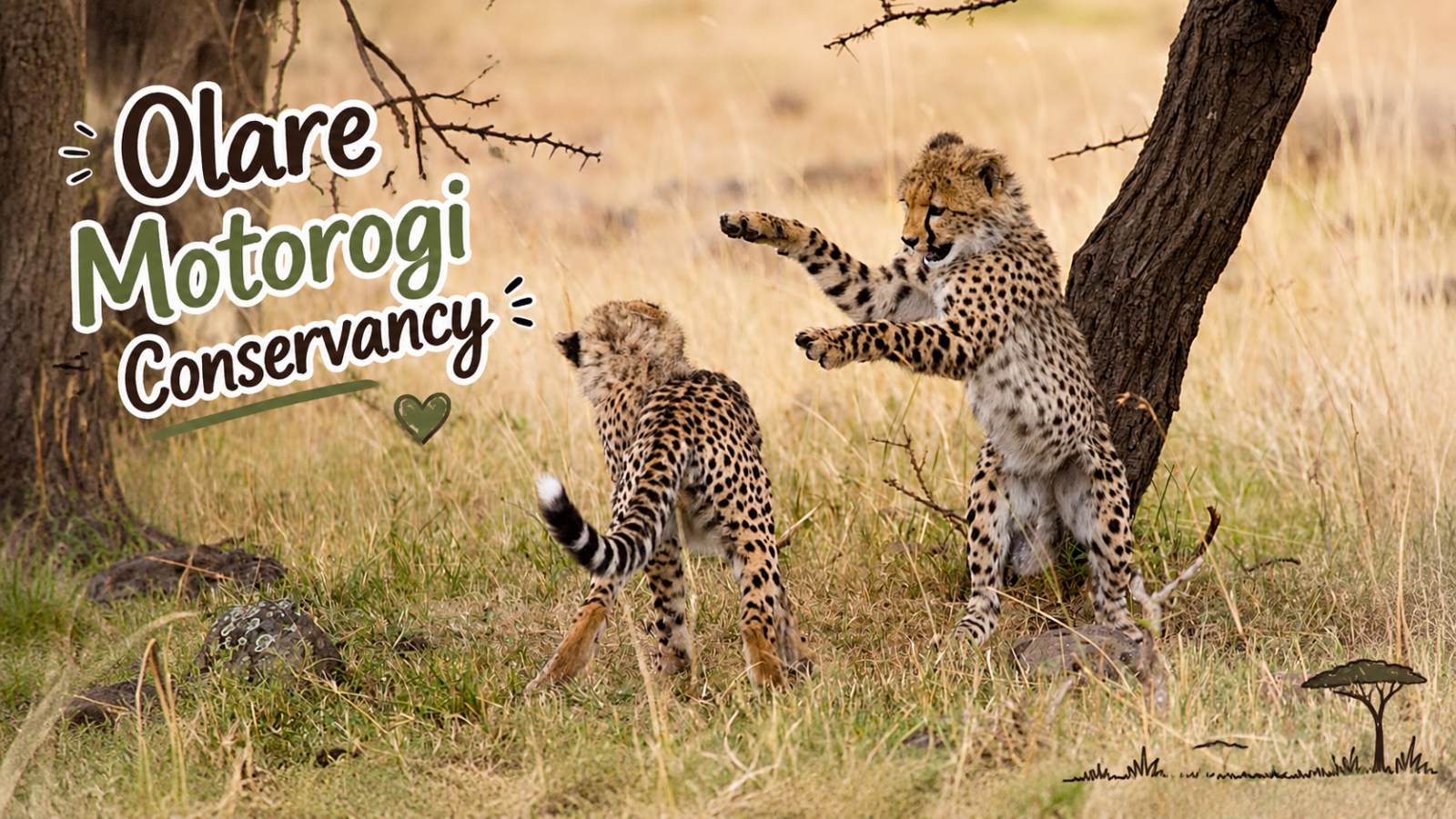

Founded in 2006 as the template for the entire Mara conservancy movement, Olare Motorogi Conservancy now records the highest big-cat concentration of any safari area in East Africa. This is what 277 Maasai landowners and five tourism partners built — and why the conservancy still sets the standard 20 years later.
Olare Motorogi conservancy: the blue print other conservancies were modelled on
In May 2006, a remarkable agreement was signed between 277 Maasai landowners holding individual freehold titles and five tourism operators. The landowners agreed to set aside roughly 3,500 acres of short-grass land — the most productive grazing — and remove their cattle from it during specific periods, in exchange for guaranteed monthly lease payments. The structure became the Olare Orok Conservancy. In 2014, Olare Orok and the neighbouring Motorogi Conservancy merged to form Olare Motorogi, the 33,000-acre community-owned conservation area that has since become the operational and conservation benchmark for the entire Mara conservancy movement.
Twenty years later, the case for Olare Motorogi rests on measurable outcomes. The Mara Predator Conservation Programme’s monitoring data consistently shows the conservancy among the highest big-cat density areas in Africa. The Tony Lapham Predator Hub — the operational headquarters of the MPCP — is located inside Olare Motorogi. Vehicle densities at sightings are among the lowest of any Kenyan wildlife landscape. The bed-to-acreage ratio enforced under the conservancy’s founding charter — approximately one room per 650 acres — is roughly twice as restrictive as the broader Mara conservancy average.
If the question is which single conservancy delivers the highest probability of strong big-cat encounters at the lowest vehicle density in the Mara ecosystem, Olare Motorogi is the answer. The trade-off is that the camps inside it are fewer and pricier than the broader conservancy market, and that limited access means the conservancy frequently sells out 6-12 months in advance for peak season. The discerning explorer who books Olare Motorogi is buying something specific: the original conservancy model, executed at the highest standard.
Quick reference — the essential Olare Motorogi numbers
| TOTAL AREA ~33,000 acres / ~13,400 hectares / ~134 km² | ESTABLISHED May 2006 (merged 2014 from Olare Orok + Motorogi) |
| FOUNDING LANDOWNERS 277 Maasai with individual title deeds | BED DENSITY RULE One room per ~650 acres |
| MEMBER CAMPS 5–6 (small, deliberately capped) | PREDATOR RESEARCH BASE Tony Lapham Predator Hub (MPCP HQ) |
| KEY LANDSCAPES Olare Orok & Ntiakitiak rivers, 12km escarpment, acacia woodland | WILDLIFE CLAIM Highest concentration of big cats anywhere in East Africa |
The 2006 founding — why this conservancy mattered before there was a movement
Before 2006, the land that is now Olare Motorogi was in a familiar pattern of land-use stress. The 277 Maasai who held individual title deeds in the area — descendants of community-ranch members whose land had been sub-divided into private parcels during the 1980s and 1990s — were running cattle herds at sustainable-livelihood levels but at the cost of progressive overgrazing of the short-grass habitats most attractive to wildebeest, zebra and other ungulates. As wildlife density dropped, predator density dropped with it. The land was on a trajectory familiar from across East Africa: from wildlife mosaic, to overgrazed pastoral land, eventually to settlement and conversion.
The agreement that reversed this was not philanthropy. It was an economic transaction. The five tourism operators committed to pay guaranteed monthly lease fees to landowners in exchange for: removal of all fences across the conservancy area, restriction of cattle from designated short-grass zones during peak ungulate concentration months, and a contractual agreement that the land would not be sub-divided further or sold for non-conservation use during the lease term.
The deal worked because the lease income exceeded what the same landowners had been earning from cattle on the same land, while the wildlife recovery generated tourism income that funded the lease payments. Within five years, the wildlife had measurably returned. Within ten, Olare Orok had merged with Motorogi to consolidate the conservancy area, and the founding structure had been adopted, adapted and replicated by Mara North, Naboisho, and the rest of the conservancy network now coordinated by MMWCA.
The 277 — why the founding count matters
The 277 founding landowners of Olare Orok in 2006 set a precedent for individual community-economic empowerment in conservation. Each landowner receives a direct lease payment proportional to the acreage of their individual title. The payments do not flow through an intermediary community trust to be distributed at the discretion of leaders; they flow directly to individual title-holders’ bank accounts on a fixed monthly schedule.
This structure prevented the elite-capture problems that have undermined community conservation models elsewhere in Africa, and it gave each individual landowner a direct, personal economic stake in keeping the conservancy intact. Twenty years later, the structure has held — substantially the same family lines still hold the lease relationships, with multi-generational continuity now built into the conservancy’s underlying economics.
The landscape — what 33,000 acres of conservancy actually contains
Olare Motorogi sits along the northern boundary of the Maasai Mara National Reserve, directly bordering the Reserve with which it shares an unfenced ecosystem. The conservancy itself contains a remarkable diversity of habitats within its compact area:
- The lower valleys of the Olare Orok and Ntiakitiak rivers, providing year-round water sources and dense riverine vegetation that supports leopard, hippo, and a high concentration of resident antelope.
- Riverine forest along both rivers, with mature trees holding known resident leopards and supporting strong birding diversity.
- A 12-kilometre escarpment running along part of the conservancy boundary, providing dramatic landscape and rocky habitat for hyrax, klipspringer and the occasional caracal.
- Large areas of classic Mara acacia woodland and short-grass plains below the escarpment, providing prime hunting habitat for the resident lion prides and good visibility for game viewing.
- The Ntiakitiak Gorge — a dramatic geological feature within the conservancy that few visitors see but that the guides will reach on extended morning drives.
Why Olare Motorogi has the highest big cat concentration in East Africa
The strong wildlife claim — that Olare Motorogi holds the highest concentration of big cats in East Africa — appears in multiple credible sources including the official conservancy literature and the operational publications of Great Plains Conservation. The Mara Predator Conservation Programme, headquartered inside the conservancy, has the data to substantiate it. The reasons the concentration is so high are structural rather than accidental.
Vehicle pressure is genuinely minimal
The 650-acre-per-room ratio enforced under the conservancy charter means that on a typical day, the entire conservancy has perhaps 15-20 game-viewing vehicles spread across 33,000 acres. At any given sighting, the rule is a maximum of 3-5 vehicles. The result is that predators continue to behave naturally rather than abandoning hunts when surrounded by vehicles — which means more hunts, more successful kills, more cubs reaching maturity, and more resident pride continuity year over year.
The habitat mosaic supports multiple species in close proximity
Lions thrive in the open short-grass plains. Leopards thrive in the riverine forest. Cheetahs use the open acacia woodland. The compact landscape mosaic supports all three apex predators within walking distance of each other. Wild dogs are seen occasionally — typically transient packs moving through. Hyena densities are notable, with multiple clans active across the conservancy.
The grazing management actually works
The controlled livestock grazing under the founding lease agreement has, over twenty years, restored grass biomass to levels that support strong wildebeest, zebra, topi and Thomson’s gazelle populations. Predator success rates correlate directly with prey biomass. The land use logic — cattle and wildlife coexisting under managed conditions — has worked at scale, and the predator densities are the downstream result.
THIS IS WHAT THE MODEL PRODUCES When a guide at Kicheche or Mahali Mzuri tells you which pride has hunted in this area for the past four generations, with what success rate, and what each individual's tendencies are — that is the operational consequence of 20 years of continuous research presence by MPCP plus 20 years of stable conservation infrastructure. It is not available everywhere. It is available here.
The resident prides — what continuous monitoring delivers
Olare Motorogi’s lion population is monitored continuously by the Mara Predator Conservation Programme. Several established resident prides are tracked across generations. The Enkoyenai Pride and the Acacia Pride are among the long-documented groups whose territories extend across parts of the conservancy and the bordering Reserve. Individual lions are identified by unique whisker patterns, facial markings and scars; sub-adult males are GPS-collared as part of the Future Kings Project to track dispersal to other parts of the ecosystem.
The MPCP’s annual reports and quarterly technical updates document specific lion outcomes — births, deaths, conflicts, movements, hunting success rates. The reports are publicly available and represent some of the most transparent predator population data in African conservation. For travellers staying in the conservancy, the practical consequence is that your guide can name the lion you are watching, tell you the lineage, and explain what the individual has been doing for the past several months — because the MPCP team is working from the same dataset that your guide uses, and many guides actively contribute observations through the geo-referenced photograph system.
Where to stay in Olare Motorogi — the honest hierarchy
There are only five to six member camps inside the conservancy, all small, all high-luxury or above. The compact list is the conservancy’s design feature, not a limitation. The five worth understanding clearly:
| Camp | Tier / size | Why it stands out |
| Mahali Mzuri | Ultra-luxury · 12 tents | Virgin Limited Edition / Sir Richard Branson property. Tents suspended on hillside with extraordinary plains views. Strongest design statement in the conservancy and one of the most-photographed safari interiors in Kenya. |
| Mara Plains Camp | Ultra-luxury · 7 tents | Great Plains Conservation property. 65m² tents with substantial verandas. Strong photographic credentials and private vehicle policy. Among the smallest most-personal camps in the Mara region. |
| Kicheche Bush Camp | High luxury · 6 tents | The photographer’s specialist. Strongest guiding consistency in the conservancy. No-electricity-in-tents authenticity. Eco Tourism Kenya Gold-rated. Low single-supplement policy in low season — strongest solo-traveller option in the conservancy. |
| Porini Lion Camp | High luxury · 9 tents + family unit | Award-winning eco-camp. Gold Eco-rating. Every tent pays to protect 700 acres of wilderness. Walking safaris with Maasai warriors. Strong conservation-immersion option. |
| Olare Mara Kempinski | High luxury · 12 tents | Tented bar set within forested glade, shaded swimming pool, central lounge and dining area. The most conventional luxury aesthetic in the conservancy, with more amenity infrastructure than the bush camps. |
THE HONEST PICKS For photographers and serious wildlife enthusiasts: Kicheche Bush Camp. The combination of small size, top-tier guides, and reduced single supplement is hard to match. For couples on a milestone trip wanting design and address: Mahali Mzuri. For families and groups wanting ultra-luxury at the smallest scale: Mara Plains. For conservation-immersed travellers: Porini Lion Camp.
Who Olare Motorogi is actually for
The strongest match for Olare Motorogi is the traveller who explicitly values the lowest possible vehicle density at a sighting, the highest resident big-cat numbers in the Mara, access to ongoing predator research, and is willing to pay the price for a small, deliberately-capped conservancy. Specifically:
- Repeat Mara visitors who have done the Reserve and want the conservancy upgrade with the highest predator density in the ecosystem.
- Photographers prioritising big cat sightings without vehicle congestion. Olare Motorogi consistently delivers more uninterrupted hunting sequences and longer sightings than any other Mara area.
- Honeymooners and milestone-trip travellers wanting ultra-luxury at small bed counts. Mahali Mzuri and Mara Plains both deliver.
- Conservation-engaged travellers wanting to see the original conservancy model that everything else is built on, plus direct access to MPCP research operations.
- Solo travellers who want one of the most respected conservancies in Kenya. Kicheche’s single-supplement policy makes this practical.
Who should look elsewhere
Olare Motorogi is not the right fit for several traveller profiles:
- Tight-budget travellers. The conservancy is small and deliberately capped at high-end camps only. There is no entry-luxury option inside Olare Motorogi. If your budget is at the $400-600/night range, Mara North has more options.
- Travellers prioritising the migration river crossings. The crossings happen in the National Reserve. Olare Motorogi gives you migration corridor traffic but not the river-crossing spectacle. Stay in the Reserve or in Mara North if crossings are the priority.
- First-time Africa travellers wanting maximum variety. The conservancy is compact and the wildlife focus is on the resident species. If you want the broad checklist experience, the Reserve plus a brief conservancy add-on may work better than three or four nights in Olare Motorogi alone.
- Last-minute bookers. Peak season (July-October) sells out 6-12 months in advance. Plan ahead, or accept that the conservancy may not be available for the dates you want.
The guides — why Olare Motorogi consistently delivers exceptional guiding
Across the safari industry, guide quality is the single most underrated determinant of trip outcome. Olare Motorogi has, over twenty years, built one of the strongest guiding rosters of any African safari area. The factors are structural rather than accidental and worth understanding because they affect what you actually see and experience day to day.
First, the small camp count produces continuity. With only five to six member camps, the same guides have typically been working the same conservancy for many years — knowing individual lions across generations, leopards in specific riverine trees, cheetah hunting territories week by week. Several Olare Motorogi guides hold Kenya Professional Safari Guides Association (KPSGA) Gold certification, the highest professional grade in East African guiding. The KPSGA examination process is demanding — written and oral tests on ecology, ornithology, mammalogy, geology, ethnobotany — and Gold-level guides are rare across the industry. Olare Motorogi has a higher density of Gold-rated guides than most other Mara areas.
Second, the guides participate actively in the MPCP monitoring infrastructure. The geo-referenced photograph system that the Predator Hub deploys means that guides at Kicheche, Mahali Mzuri, Mara Plains, Porini and Olare Mara are effectively part of the predator research team. The photographs they take during game drives — with embedded GPS coordinates and timestamps — feed directly into the database that the MPCP uses to track lion and cheetah populations. This is operationally a two-way data flow: the guide knows which individual lion is in front of you because they helped collect the data that identifies it.
Third, the small camp ratio (1:6 or better) and the typical 2-3 guests per vehicle mean guides have time and space to communicate detail rather than running through a checklist. The difference between hearing ‘that’s a lion’ and hearing ‘that’s Naserian, daughter of Selenkay, who lost two cubs in 2023 and whose current male coalition has held this territory for fifteen months’ is the entire difference between a competent drive and a transformative one.
The photography case for Olare Motorogi
If you specifically want to photograph African big cats at high quality, Olare Motorogi is the strongest single conservancy in Kenya for the purpose. The reasons compound:
- Off-road driving means optimal positioning. Guides can move the vehicle for the light, the angle, the background — without breaking conservancy rules. The same animal in the National Reserve, where vehicles must stay on tracks, frequently produces photographically compromised shots because the angle cannot be controlled.
- Night drives unlock crepuscular and nocturnal subjects. Lion hunting peaks at dusk and through the night. Olare Motorogi night drives, conducted with specialised spotlights, deliver shots impossible in any National Reserve in Kenya.
- Low vehicle density means longer sightings. A cheetah hunt lasts as long as the cheetah commits to it. When 15 vehicles surround a cheetah, the cheetah typically abandons within minutes. When 2 vehicles share the sighting, the hunt plays out fully. The photographic difference is the difference between a few quick frames and a complete sequence.
- The 12-kilometre escarpment provides dramatic backdrops. Big cat portraits with escarpment backdrop, golden-hour escarpment landscapes, and morning mist below the escarpment are signature Olare Motorogi photographic compositions that the open plains conservancies cannot deliver.
- Specialist photography support at Mara Plains and Mahali Mzuri. Mara Plains has a dedicated media tent for in-camp editing. Both properties accommodate specialist photographic guests with extended morning departures, longer game drives, and guides who understand photographic priorities.
The Ntiakitiak Gorge and other off-the-circuit experiences
Olare Motorogi includes several distinctive features that most one-time visitors do not see because they lie outside the standard game-drive circuit. The conservancy’s compact area means these are accessible to guests staying for three or four nights with guides who know to take them there.
The Ntiakitiak Gorge
A dramatic geological gorge cut by the Ntiakitiak River, complete with rocky cliff walls, riverine trees, and a quality of stillness that the open plains cannot offer. The gorge is genuinely off the main circuit and few Mara visitors see it. It functions as a leopard refuge and supports specific bird species not found in the open landscape. A morning at the gorge with a competent guide and a packed breakfast is one of the strongest single-experience days available in the Mara ecosystem.
The 12-kilometre escarpment
The escarpment running along the conservancy provides not just photographic backdrop but also a distinctive habitat. Hyrax colonies live on the rocky outcrops. The occasional caracal — Kenya’s rarely-seen mid-sized cat — is recorded along the escarpment. Klipspringer (small rock-loving antelope) are found here and almost nowhere else in the Mara ecosystem. A late-afternoon drive along the escarpment with sundowner positioning at the top of the rim is among the most under-marketed Mara experiences available.
Walking safaris with Maasai warriors
Most of the conservancy member camps offer walking safaris with armed guide and Maasai warrior escort. The walks are not generally aimed at big-cat encounters (which would be irresponsible at walking range) but at ecology, tracking, plant identification, and ethnobotanical knowledge. A morning walk with a senior Maasai guide is the single most effective way to develop the awareness that transforms subsequent vehicle game drives — once you have learned to read the ground at walking speed, you see substantially more from the vehicle.
Bush meals at the Olare Orok riverbed
Several camps coordinate bush breakfasts or sundowners in the seasonal Olare Orok riverbed and adjacent forested glades. These are not the staged set-piece experiences they sound — they are working meals in real bush settings with the wildlife continuing around you. A breakfast in the riverbed with a passing elephant family in the middle distance is the kind of experience that makes the conservancy worth the price.
Practical planning
Access
By air: scheduled flights from Nairobi Wilson Airport to Ol Kiombo airstrip (45 minutes), with onward 30-40 minute transfer through the National Reserve to the conservancy. Some camps use the dedicated Olare Motorogi airstrip via private charter. By road: 5-6 hours from Nairobi via Narok. Air is the standard.
Fees
Conservancy fee is typically $100-$150 per person per night, usually included in camp rates. There is no Reserve fee unless you choose a day-excursion into the Reserve. Note that camps in Olare Motorogi often include the Reserve fee in their rate during migration season — confirm in writing.
When to go
Year-round. Peak dry season (June-October) coincides with the migration corridor traffic and the strongest game viewing — also the highest prices and earliest sell-out dates. January-February is the underrated window: dry, hot, fewer vehicles, calving-season predator action that is arguably equal to the migration spectacle for serious wildlife viewers. Long rains (April-May) and short rains (November) offer lower prices and lush landscapes; the conservancy roads remain passable in conditions that close parts of the Reserve.
The honest summary
Olare Motorogi is the original Mara conservancy and remains the operational benchmark for the entire model. The 33,000 acres, the 277 founding landowners, the one-room-per-650-acres rule, and the continuous MPCP research presence combine to produce wildlife viewing conditions — particularly for big cats — that no other Mara area matches at the same density and quality. The trade-off is price and scarcity: the camps inside are few, small, and expensive, and peak season sells out months in advance.
For repeat Mara visitors, serious photographers, conservation-engaged travellers, and milestone-trip buyers willing to plan ahead and pay the premium, Olare Motorogi is the highest-yield conservancy in Kenya. For first-time visitors wanting variety, tight-budget travellers, and river-crossing-priority travellers, the answer lies elsewhere in the Mara ecosystem.
THE BOTTOM LINE Olare Motorogi is what the rest of the Mara conservancy model was built to replicate. If you want to stay where the original template was written, where the highest big-cat density in East Africa is documented, and where 20 years of continuous research has produced individually-known animals across multiple generations — this is where you book.
RELATED READING
- Mara North Conservancy — The larger, broader-choice alternative.
- Maasai Mara Destination Guide — The Reserve vs. the conservancies, in full.
- How private conservancies are saving Kenya’s lions — The economic model that started here.
- When is it too crowded in the Maasai Mara? — The 2025 visitor-numbers shift.
- Luxury Safari Kenya: What Makes It Worth the Premium? — Where conservancy access pricing comes from.
Tell us what you are looking for, and we will tell you honestly whether we can deliver it — and if we cannot, we will tell you who can.