
The Sheldrick Elephant Orphanage is frequently marketed as a sentimental pitstop for tourists in Nairobi- a place to see “cute” animals before heading to the bush. This characterization is not only reductive; it is factually dishonest. The Sheldrick Wildlife Trust (SWT) is a rigorous, scientifically-driven clinical recovery system that manages the world’s most successful rewilding program for a species that possesses a near-human capacity for grief and post-traumatic stress.
To understand Sheldrick is to move beyond the bottle-feeding and into the mechanics of a 1977 nutritional breakthrough, the economic reality of a $50,000-per-orphan recovery cost, and the wild-born metric that serves as the ultimate proof of conservation success. This is not a sanctuary; it is a clinical and emotional recovery system designed to undo the damage of human-wildlife conflict.
What is the Sheldrick Elephant Orphanage?
The Sheldrick Elephant Orphanage, officially the Sheldrick Wildlife Trust (SWT), is a global leader in the rescue and rewilding of orphaned African elephants and rhinos. Founded in 1977 by Dame Daphne Sheldrick in memory of her husband, David Sheldrick, the Trust has successfully raised and reintegrated over 196 elephants into the wild. Its success is built on a proprietary milk formula perfected in 1977 and a multi-stage reintegration process that spans up to a decade. To date, former orphans have given birth to 94+ calves in the wild, demonstrating a sustainable generational impact.
Key Planning Facts: The Discerning Explorer’s Grid
| Category | Specific Data |
| Founder & History | Dame Daphne Sheldrick (1934–2018); Established in 1977 |
| CURRENT DIRECTOR | Angela Sheldrick (since 2001) |
| Generational Success | 94+ calves born in the wild to former orphans |
| Reintegration Units | 4 (Nairobi Nursery, Voi, Ithumba, Umani Springs) |
| Milk Formula | Proprietary coconut-oil-based formula (Perfected 1977) |
| Foster Contribution | Minimum US$50/year (Directly funds care and keepers) |
| Public Visiting | Strictly 11:00 AM – 12:00 PM; Advanced booking mandatory |
| Aerial Unit | 12+ aircraft (8 fixed-wing, 4 helicopters) |
| Veterinary Support | 7 Mobile Units + Sky Vet Initiative (KWS partnership) |
| WILD ANIMALS TREATED BY MOBILE VET UNITS (CUMULATIVE) | 11,000+ including 3,000+ elephants |
| SNARE TRAPS REMOVED (CUMULATIVE) | 160,000+ |
| Habitat Protection | Management of Kibwezi Forest and Chyulu Hills boundaries |
The 1977 Breakthrough: The Science of Survival
For the discerning traveler, the “cute” factor of a baby elephant is secondary to the technical achievement of its survival. For decades, the rescue of infant elephants was a narrative of failure. Infant elephants are fully milk-dependent for the first two years of life and partially so until age four. In the 1950s and 60s, David and Daphne Sheldrick, then wardens of Tsavo East National Park, watched dozens of calves perish despite their best efforts.
The problem was biological: cow’s milk contains fats that elephants cannot digest, leading to fatal scouring (diarrhea) and rapid, irreversible dehydration. The Sheldricks experimented with everything from butter to cream, but the results were consistently tragic. It was only in 1977, following David’s death, that Daphne identified the missing link: coconut oil. By combining a human infant formula base with coconut oil, she created a milk substitute that mimics the fat globules and nutritional density of elephant milk.
This formula is not just a recipe; it is the foundation of modern elephant conservation. It allows a calf to gain the 1kg of weight per day required to support its massive skeletal growth. When you visit the Nairobi Nursery, you are not just seeing a feeding; you are witnessing the application of a breakthrough that effectively ended the 100% mortality rate for orphaned infants. This scientific authority is what earns the trust of the Discerning Explorer.
II. The Psychological Architecture: Healing the “Broken” Elephant
Elephants are one of the few species on Earth that exhibit clear symptoms of Post-Traumatic Stress Disorder (PTSD). Many of the orphans at Sheldrick are victims of poaching, having witnessed the violent death of their mothers and matriarchs. In the wild, an elephant’s sense of self is entirely tied to its family structure. When that structure is destroyed, the calf doesn’t just lose a food source; it loses its psychological anchor.
The Keeper as Surrogate: The Trust’s solution is as emotional as it is clinical. Each orphan is assigned a team of keepers who act as surrogate family members. Crucially, these keepers rotate every night to prevent the “Aisha Error”—a reference to a 1970s orphan named Aisha who died of grief when her primary caregiver left for a few days. By rotating keepers, the Trust teaches the elephant to bond with a group rather than an individual, mimicking the structure of a wild herd. This embodies the value of Intimacy—a deep connection that is managed, not just performed.
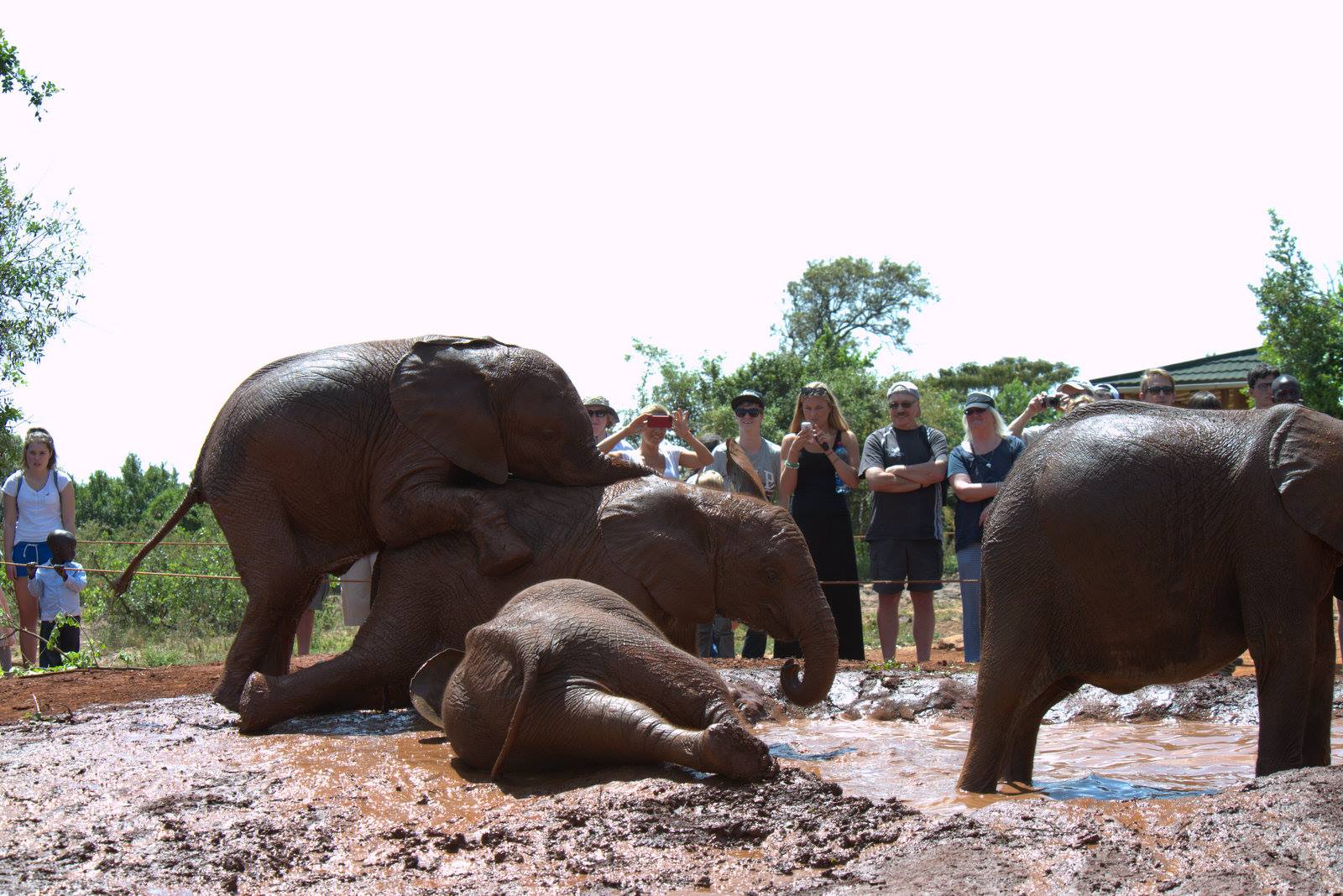
The Role of Play and Social Reconstruction: In the nursery, you will see older orphans (matriarchs-in-training) lie down to allow younger ones to play on top of them. This is not just “fun”; it is the reconstruction of social hierarchy. An elephant that does not learn to play is an elephant that will not survive the social complexities of a wild herd in Tsavo. The Trust provides the Time required for this emotional reweaving, acknowledging that recovery from trauma takes a decade, not a season.
III. The Three-Stage Reintegration Arc: A Decade-Long Journey
The Nairobi Nursery is merely the Intensive Care Unit. The real work of rewilding happens over the next 5 to 10 years in the Reintegration Units. This is where the value of Access comes into play—access to the true, unvarnished process of nature.
1. The Nairobi Nursery (Ages 0–3)
The focus here is stabilization. Calves are vulnerable to pneumonia and depression. They are kept in individual stockades at night, with a keeper sleeping in the hay beside them to provide the physical contact they would normally receive from their mother. This is the stage of maximum vulnerability and maximum intervention.
2. Voi and Ithumba (The Tsavo Units)
When a calf is around 3 or 4 years old, it is moved to Voi or Ithumba in Tsavo East National Park. This is a massive psychological step. They are no longer in the lush forest of Nairobi; they are in the harsh, red-dust scrub of Tsavo. Here, they spend their days in the wild, meeting wild herds, but returning to the stockades at night for their milk bottles and safety. This is the University stage, where the orphans learn the geography of survival.
3. Umani Springs (The Specialist Unit)
Rarely Mentioned but Highly Rated: Umani Springs is the Trust’s Hidden Gem. Located in the Kibwezi Forest, it is a specialized unit for orphans with physical disabilities or those who were too psychologically fragile for the competition of Tsavo. It is a lush, groundwater forest that provides a soft rewilding environment. For the traveler, staying at the SWT eco-lodge at Umani Springs offers an intimacy that is impossible to find in the crowded Nairobi Nursery. It is undermarketed because it caters to a specific, more sensitive group of orphans, but it represents the absolute pinnacle of the Trust’s individualized care.
IV. Guardians of the Sky: The Aerial Surveillance Unit
To understand the scale of the Sheldrick operation, one must look up. The Aerial Surveillance Unit is the eye in the sky that protects the Tsavo ecosystem. Consisting of over 12 aircraft, including 8 fixed-wing planes and 4 rapid-response helicopters, this unit is the vital link in nearly all habitat protection and field operations.
Operational Statistics: In 2025 alone, SWT pilots logged the equivalent of 90 full days in the air, covering nearly nine laps around the Earth. These flights are not for tourism; they are for survival. Pilots scan for:
- Injured Animals: Spotting elephants with spear wounds or snares that are invisible from the ground.
- Illegal Activities: Identifying charcoal burning, poaching camps, and illegal livestock incursions.
- Habitat Monitoring: Tracking the health of the groundwater forests and identifying areas of severe drought.
The Access provided by this unit is what allows the Mobile Veterinary Units to reach an injured animal in hours rather than days. It is a multi-million dollar investment in the “Access” to the wild that most tourists never see.
V. The Wild-Born Metric: The Ultimate Proof
In conservation, the ultimate KPI is not how many animals you save, but how many of those animals go on to breed in the wild. This is where the Sheldrick Wildlife Trust (SWT) stands alone. As of 2026, over 94 elephant calves have been born in the wild to mothers who were once orphans in the program.
The Pilgrimage of Trust: One of the most extraordinary phenomena documented by the Trust is the pilgrimage. Former orphans, now living entirely wild lives, frequently return to the reintegration units (like Ithumba) to present their new wild-born calves to the keepers. This is not a marketing claim; it is a documented behavioral fact. The mothers bring their babies back to the stockades, allowing the keepers—the humans who saved their lives a decade prior—to touch and examine the new calves. This is the highest form of Intimacy achievable between humans and wildlife. It is the cumulative weight of evidence that the Trust’s method works.
VI. Saving Habitats: The Kibwezi Forest Initiative
The Orphans’ Project is only one pillar of the SWT. The Saving Habitats initiative is equally critical. The Trust has secured a concession for the Kibwezi Forest, a unique groundwater forest nestled within the foothills of the Chyulu Hills National Park.
The Ecological Model: The Trust has electrically fenced 47 kilometers of the forest boundary to protect it from illegal logging and charcoal burning, while still allowing the elephant herds and wildlife free movement between the forest and the adjacent park. This is a model of investing in the long-term health of the ecosystem so that the orphans have a home to return to. Without habitat, the Orphans’ Project is a bridge to nowhere. The Kibwezi Forest is a “Hidden Gem” because it represents a successful public-private partnership that has restored a degraded forest into a thriving wildlife corridor.
VII. The Mobile Veterinary Units: Clinical Precision in the Field
In partnership with the Kenya Wildlife Service (KWS), the SWT operates seven fully equipped Mobile Veterinary Units and a rapid-response Sky Vet initiative. These units are the emergency rooms of the bush.
Quarterly Impact: In the first quarter of 2025 alone, these units attended to 152 wildlife cases involving 222 animals. This is not just about elephants; it’s about the entire ecosystem. The units treat:
- Poaching Victims: Removing spears and treating axe wounds.
- Snare Injuries: Using clinical precision to remove wire snares that would otherwise cause a slow, agonizing death.
- Human-Wildlife Conflict: Treating animals injured in clashes with local communities, often providing a bridge for education and conflict resolution.
VIII. The Invisible War: De-Snaring and Ecosystem Security
To the casual visitor, the threat to elephants is often perceived as a distant, high-stakes battle between poachers and rangers. The reality is far more mundane and insidious: the wire snare. Snares are the “silent killers” of the African bush—indiscriminate loops of wire set by local hunters to catch bushmeat (dik-diks, impalas, zebras) but which frequently maim or kill larger wildlife, including elephants.
The Scale of the Problem
The SWT operates 23 De-snaring Teams across Kenya. In 2023 alone, these teams recovered and destroyed more than 12,500 snares. These are not just statistics; they are lives saved. A snare that catches an elephant’s trunk can lead to a slow death by starvation; a snare on a leg leads to infection, gangrene, and eventually, the inability to keep up with the herd.
The Mau Unit Case Study
In partnership with the Mara Elephant Project (MEP), the SWT Mau De-Snaring Unit operates in the high-altitude forests of the Mau Escarpment. This team alone is responsible for over 60% of the total snares collected in their region. This is the “Radical Honesty” of the Trust: conservation is a daily, grueling grind of walking kilometers through dense forest to remove a few dollars’ worth of wire. It is the brand value of Time expressed as a persistent, unglamorous commitment to security.
IX. Water for Wildlife: Mitigating the Climate Crisis
As climate change accelerates, the greatest threat to Kenya’s wildlife is no longer poaching, but drought. The 2022–2023 drought was the most severe in four decades, resulting in the deaths of hundreds of elephants in the Tsavo and Amboseli ecosystems.
The SWT Infrastructure: The Trust’s Water for Wildlife initiative is a massive engineering effort to provide a safety net for wild populations. The SWT maintains:
- Boreholes and Water Pans: Strategic water points across the Tsavo Conservation Area that are powered by solar pumps.
- Water Bowsers: During peak drought, the Trust deploys massive water trucks to fill drying pans, providing a literal lifeline for thousands of animals.
- Habitat Management: By securing water in specific areas, the Trust can influence wildlife movement, reducing the pressure on human-settled areas and mitigating human-wildlife conflict.
X. The Human Layer: Community Outreach and Education
Conservation cannot succeed if the people living alongside wildlife are left behind. The SWT’s Community Outreach program is one of the most comprehensive in East Africa.
Impact Data (2025–2026):
- School Feeding Programs: Providing daily school lunches to over 14,600 students from 15 schools. This isn’t just charity; it’s a strategic investment. A child who is fed by the Wildlife Trust is a child whose family is less likely to turn to poaching for survival.
- Educational Trips: Leading 80 class trips annually into the National Parks. For many of these children, this is the first time they see an elephant as a living creature rather than a threat to their family’s crops.
- Scholarships: Sponsoring 15 high-achieving students from the Tsavo area through secondary school and university.
The Trust is not an external entity “saving” the bush; it is a local employer and a community partner. Over 90% of the Trust’s staff are Kenyans, many from the very communities they support. This is the only sustainable model for the next 50 years.
XI. The Rhino Orphans: A Parallel Success Story
While the elephants are the stars, the Trust’s work with black rhinos is equally critical. The black rhino is a critically endangered species, with fewer than 1,000 remaining in Kenya.
The Solio Case Study
Solio, an orphaned black rhino raised by the Trust, is a legend in the rewilding world. After being hand-raised in Nairobi, she was reintegrated into Nairobi National Park. Today, she is a wild mother, having given birth to calves like Sultan and Savannah. The rhino rewilding process is even more complex than the elephant one, as rhinos are solitary and highly territorial. The Trust’s success with rhinos is the “Hidden Gem” of their technical expertise, proving that their model of individualized care and gradual reintegration is applicable across species.
XII. Ethical Grounding: The Honest Trade-off
Radical honesty requires us to name the limitations and trade-offs of the Sheldrick model.
- The Crowd Factor: The 11:00 AM public visiting hour in Nairobi is crowded. It is loud, it is touristy, and it can feel like a spectacle. If you are looking for unhurried immersion, this hour will disappoint you. This is the price of public awareness and low-cost accessibility.
- The Habituation Risk: Critics often point to the risk of habituating elephants to humans. The Trust counters this with a strict no-touch policy for the public and a focus on rewilding. The keepers are the only ones allowed close contact, and even they begin to distance themselves as the elephant matures.
- The Cost: Raising an elephant is expensive. The Trust spends millions annually on its mobile vet units and de-snaring teams. Your $50 foster fee is a drop in the bucket, but it is the aggregate of the Discerning Explorer that keeps the helicopters in the air and the vet units on the road.
XIII. Your Practical Guide to Visiting and Supporting
How do I book a visit to the Sheldrick Elephant Orphanage?
You must book online via the official Sheldrick Wildlife Trust booking portal. Public visits are limited to one hour daily (11:00 AM – 12:00 PM). Due to high demand, bookings often fill up 3 to 6 months in advance.
What is the best way to see the elephants without the crowds?
The “Discerning Explorer” should become a foster parent (minimum $50/year). Foster parents are eligible for a private 5:00 PM visit, which is significantly quieter and allows for deeper conversation with the keepers. Note: This also requires advanced booking and is not guaranteed.
Is the Sheldrick Wildlife Trust a legitimate charity?
Yes. The SWT is a registered charity in Kenya, the UK, the USA, and Canada. It is widely considered the most successful elephant rescue and rehabilitation program in the world, with a documented success rate of 196+ reintegrated elephants and 94+ wild-born calves.
Can I stay at the Sheldrick Wildlife Trust?
Yes, but only if you are a foster parent. The Trust operates several eco-lodges, including Ithumba Camp, Ithumba Hill, and Umani Springs. These lodges provide exclusive access to the reintegration process and 100% of the proceeds go directly back into the Orphans’ Project.
XIV. The Practical Implication: Planning Your Journey
If you are planning a high-value Kenya safari, the Sheldrick experience should be the preface to your trip, not the main event.
- Foster First: Six months before you travel, foster an orphan. Read their monthly logs. Understand their specific trauma and recovery. This earns the Intimacy before you even arrive.
- Stay in Lang’ata: To make the 11:00 AM visit without the stress of Nairobi traffic, stay at a nearby property like Eden Nairobi or Hemingways.
- Go to Tsavo: If you truly want to see the Sheldrick mission in action, include Tsavo East in your itinerary. Visit the Ithumba area. Seeing a “graduate” in the wild, recognizable by the red dust of Tsavo on its skin, is the moment the narrative comes full circle. This is the ultimate Access.
XV. Case Study: The Journey of Murka
To understand the Radical Honesty of the Trust, one must look at individual stories like that of Murka. Rescued near Tsavo with a spear lodged ten inches deep between her eyes, Murka was a victim of human-wildlife conflict. Her sinuses were ruptured, and she couldn’t use her trunk to drink.
The Trust’s Mobile Vet Unit extracted the spear and stabilized her, but her recovery was as much psychological as it was physical. She was angry and traumatized. It took years and the doting care of the keepers to rebuild her trust. Today, Murka is a testament to the Wild-Born metric, a survivor who has moved from the brink of death to a wild life in Tsavo. Her story is not a brochure anecdote; it is a clinical record of the Trust’s ability to heal the “broken” elephant.
XVI. Conclusion: The Architecture of Survival
The story of Sheldrick does not end at the stockade gate. It ends in the vastness of Tsavo. When an elephant finally leaves the program, it doesn’t just “go away.” It joins a wild herd, often one led by a matriarch who may have her own history with the Trust.
The success of the SWT is measured in the silence of the bush. It is the sight of a 20-year-old bull, once a tiny orphan named after a well in the north, now standing tall among his peers. It is the realization that the $50,000, the decades of work, and the thousands of bottles of milk were all for this one moment: a wild elephant living a wild life, exactly as nature intended.
This is the Nova Expedition promise: we do not just show you the animals; we show you the architecture of their survival. We provide the access to the science, the intimacy of the recovery, and the time required to understand that in the world of the African elephant, there are no shortcuts. This is the only content worth your time.
References & Citations
- Sheldrick Wildlife Trust. (2026). Orphans’ Project: Wild Born Babies. Link
- National Geographic. (2011). Orphans No More. Link
- Bradshaw, I. G. A. (2004). Not by Bread Alone: The Psychology of Elephant Recovery. Link
- Sheldrick, D. (2012). An Elephant in My Kitchen. Link
- Sheldrick Wildlife Trust. (2025). Aerial Surveillance Unit Impact Report. Link
- Sheldrick Wildlife Trust. (2025). Mobile Veterinary Units Quarterly Report. Link