
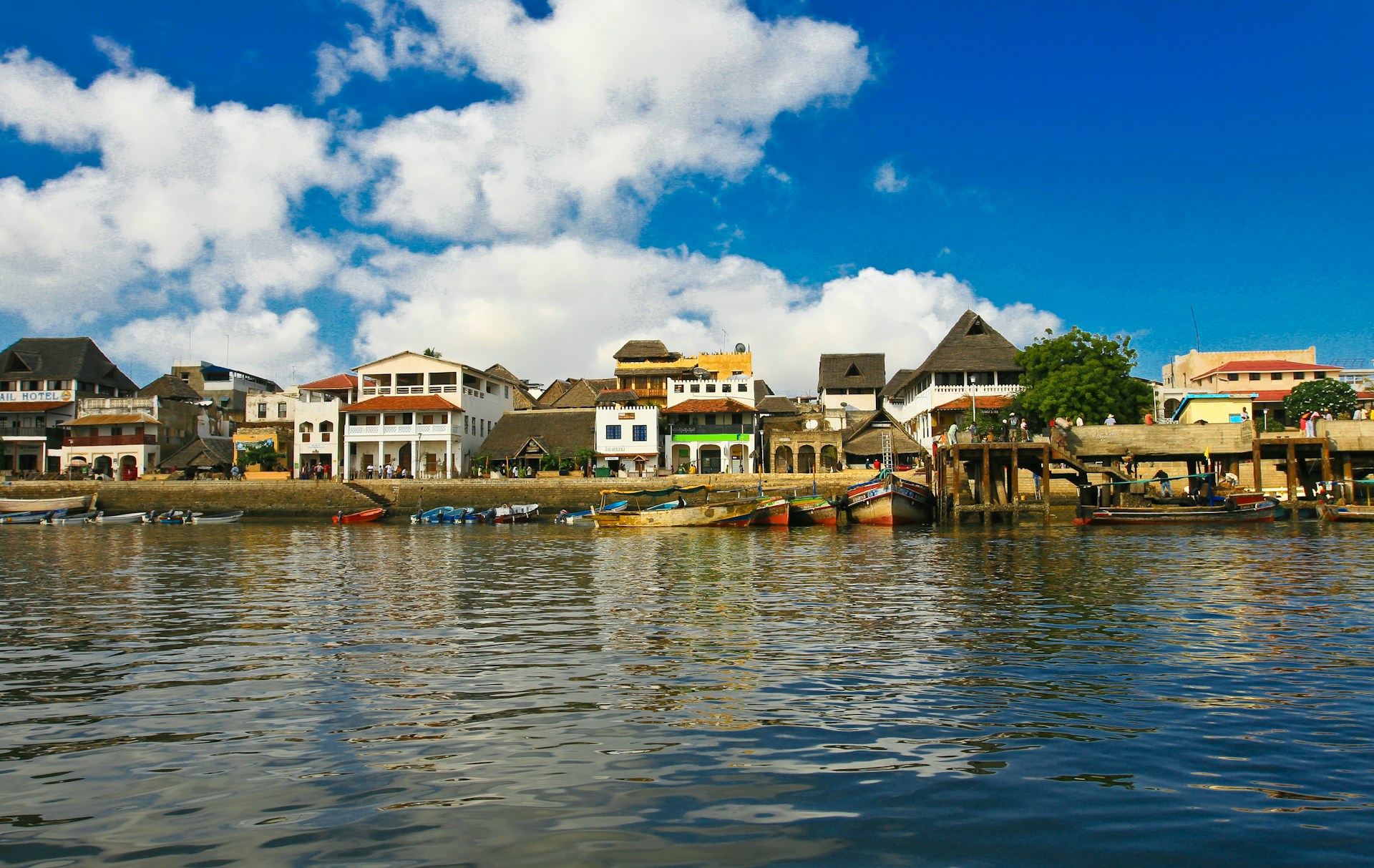

Seven hundred years of Swahili history, no cars, the best-preserved old town in East Africa, and a 12-kilometre beach. The complete guide to Lamu — Old Town and Shela, where to stay, when to go, how to get there, and the cultural etiquette that makes the difference between a tourist and a guest.
Why Lamu is unlike anywhere else in Africa
Lamu has been continuously inhabited for over seven hundred years. It is the oldest living Swahili settlement in East Africa and the best-preserved example of Swahili architecture in the world — inscribed as a UNESCO World Heritage Site on 16 December 2001. It has been called Kenya’s most romantic destination, East Africa’s most magical island, and the place that time forgot. All of these descriptions are simultaneously accurate and inadequate, because Lamu’s character is cumulative rather than reducible to a single feature.
What makes Lamu extraordinary is the accumulation. The complete absence of motorised vehicles in Lamu Old Town, where donkeys and boats are the only transport. The call to prayer drifting across the waterfront at dawn. The carved wooden doors in every alleyway, encoding stories of trade routes that stretched across the entire Indian Ocean. The light at six in the evening, when the old town turns gold and fishermen return in their dhows. The unhurried pace the island imposes on you whether you want it or not. Lamu does not perform for visitors; it simply continues being itself, as it has for seven centuries, and lets you slow to its rhythm.
Lamu is also Kenya’s most discreet luxury destination. At Shela Village — a thirty-minute walk or ten-minute boat ride from the old town — a collection of beautifully restored Swahili houses, boutique hotels, and private villas occupies the edge of a twelve-kilometre beach. The atmosphere is effortlessly stylish without trying to be, the kind of place where the wealthy and the bohemian have quietly holidayed for decades without the infrastructure of conventional luxury tourism. Lamu Island Travel Guide guide covers both faces of the island — the living heritage of the Old Town and the barefoot elegance of Shela — plus the practical detail (getting there, getting around, when to go, where to stay, what to do, and how to behave) that turns a visit into an experience.
Lamu rewards travellers who arrive ready to slow down and engage respectfully with a living Muslim Swahili community, rather than treating the island as a beach resort with heritage decoration. Get that orientation right and Lamu becomes the most memorable few days of a Kenya trip. Get it wrong and you'll miss what makes it singular.
| LOCATION Kenya’s northeastern coast, in the Lamu Archipelago | UNESCO STATUS World Heritage Site since 16 December 2001 (Criteria ii, iv, vi) |
| AGE OF OLD TOWN Founded 14th century — 700+ years continuously inhabited | POPULATION ~25,000 island-wide; ~15,000 in Old Town and environs |
| TRANSPORT ON ISLAND No cars — donkeys, boats, and walking only | BEST TIME TO VISIT July-October and January-March (dry seasons) |
| GETTING THERE Fly to Manda Airport (LAU) + ~10-minute boat transfer | CULTURAL NOTE Predominantly Muslim — dress modestly in town |
Lamu Old Town — 700 years of UNESCO heritage
Lamu Old Town is a dense, labyrinthine settlement of coral-stone buildings, narrow alleyways, and intricately carved wooden doors that have accumulated seven hundred years of Swahili, Arab, Persian, Indian, and Portuguese influence. It is simultaneously a living community of approximately 15,000 people and one of East Africa’s most important historical sites. UNESCO inscribed it under three criteria, recognising it as the oldest and best-preserved Swahili settlement in East Africa, built in coral stone and mangrove timber, characterised by inner courtyards, verandas, and the elaborately carved doors that are its signature.
Those carved doors are the town’s most distinctive feature — and they are far more than decoration. Each is unique, combining geometric patterns, floral motifs, and calligraphic inscriptions that historically encoded the status, religion, trade connections, and origins of the household behind it. The oldest surviving doors date back centuries. Walking through the old town with a locally born guide who can read what each door reveals is one of the most culturally rich experiences available anywhere in Kenya — the companion article on Lamu’s carved doors covers this tradition in depth, but even a short guided walk transforms the alleyways from picturesque to legible.
Key landmarks anchor the Old Town. Lamu Fort, a nineteenth-century coral-stone fortress that now houses a museum, dominates the main square. The Lamu Museum holds one of Kenya’s finest regional collections — Swahili furniture, dhow models, and Indian Ocean trade artefacts that document the island’s role in a maritime network spanning from China to the Arabian Peninsula. The main seafront, where traditional fishing boats and cargo dhows still operate as they have for centuries, is the town’s working heart. And the Riyadha Mosque, the island’s spiritual centre, hosts the annual Maulidi festival that has drawn pilgrims and scholars for generations and remains a significant event in the Islamic calendar of the East African coast.
Shela Village and the beach
Shela is where most visitors actually stay — thirty minutes’ walk or ten minutes by boat from Lamu Old Town, and dramatically different in atmosphere. Where the Old Town is dense, working, and lived-in, Shela is quieter, cleaner, and increasingly stylish: a collection of whitewashed buildings and restored Swahili houses facing both the channel and the beginning of the island’s twelve-kilometre beach. Shela has become the island’s centre of discreet luxury without losing its village character — you can still get lost in its handful of sandy lanes, and donkeys still carry the building materials.
Shela’s beach is one of East Africa’s finest: wide, clean, and backed by sand dunes rather than development. The water is warm year-round, and the view of dhows crossing the channel is unchanging. In the June-to-September window, the kaskazi-and-kusi monsoon winds create ideal conditions for kitesurfing, and the beach’s length means it never feels crowded even at peak season. This is barefoot luxury rather than resort luxury — there are no high-rise hotels, no beach clubs with bottle service, just sand, sea, dunes, and the occasional dhow.
The social centre of Shela is the Peponi Hotel — a family-run institution that has been operated by the Korschen family since 1967, occupying a seafront house and functioning as Lamu’s most celebrated seafood restaurant, bar, and gathering point. Even if you do not stay there, eating on the Peponi terrace at sunset while dhows cross the channel is an essential Lamu experience. The hotel’s long menu, its catch-your-own-fish ethos, and its role as the meeting point for the island’s community of artists, sailors, and long-term residents make it the closest thing Lamu has to a town square on the Shela side.
Getting to Lamu
By air (strongly recommended). Daily scheduled flights from Nairobi (Wilson Airport and JKIA) and from Mombasa and Malindi land at Manda Airport (airport code LAU) on Manda Island. Carriers include Safarilink, Jambojet, and Skyward Express. The flight from Nairobi takes approximately 90 minutes. After landing, a roughly ten-minute boat transfer crosses the channel to Lamu Town or Shela — most hotels arrange this transfer as part of your booking, and it is one of the most pleasant arrivals in Kenyan travel, gliding across the channel toward the waterfront.
By road. It is possible to drive or take a bus to Mokowe Jetty on the mainland and then cross by boat, but this is an eight-hour-plus journey from Nairobi through remote northeastern Kenya, and the route has historically carried security considerations that fluctuate. Flying is strongly recommended for virtually all visitors. The road option is for travellers with specific overland reasons and current local security advice in hand.
Getting around the island
Lamu Old Town has no motorised vehicles — this is not a quaint affectation but a defining feature of the island, dictated by the narrow alleyways that only donkeys can traverse. Walking is the best and usually only way to explore both the Old Town and Shela. Dhows and motorboats cover inter-island travel, the crossing between Shela and the Old Town, and excursions to Manda Island and the wider archipelago. The boats are the island’s taxis, buses, and delivery vans all at once, and arranging one is simply a matter of asking at any jetty.
THE SINGLE MOST IMPORTANT PRACTICAL NOTE FOR LAMU ATMs on Lamu are very limited and frequently out of service. Withdraw all the cash you expect to need before you arrive — in Nairobi, Mombasa, or Malindi. USD is accepted at hotels, but Kenya Shillings are required for local restaurants, markets, dhow trips, guides, and most day-to-day transactions. Running short of cash on Lamu is a genuine and avoidable problem; M-Pesa mobile money works if you set up a Kenyan SIM, but cash remains essential.
Best time to visit Lamu
Lamu can be visited year-round, but the dry seasons are markedly better, and one window is best avoided entirely.
| Window | Rating | What to expect |
| July – October | BEST (and kitesurfing) | Dry and warm. Trade winds create perfect kitesurfing at Shela Beach. The channel is beautiful. Coincides with the Mara migration — ideal for combining bush and beach in one trip. |
| January – March | EXCELLENT | The best overall months for the Kenya coast — warm, dry, clear water, Lamu at its most beautiful. Coincides with the Jan-Feb dry season inland; perfect for combining with Amboseli or the Mara. |
| November – December | Good value | Brief afternoon showers (short rains), still warm and generally pleasant, lower rates. The Lamu Cultural Festival typically falls in November — a genuinely extraordinary experience worth planning around. |
| April – May | Avoid | Long rains: high humidity, frequent heavy rainfall, rough seas. Many properties reduce rates significantly or close for maintenance. Not recommended for a first visit. |
Where to stay
Lamu accommodation divides into three distinct experiences: the institution (Peponi), the luxury retreat (The Majlis on Manda), and the authentic option (a private Swahili house in Shela). Each suits a different kind of traveller.
Peponi Hotel
Shela Village, on the seafront. The most loved hotel on the Kenya coast and the social heart of Shela, run by the Korschen family since 1967. Around 28-30 rooms of varying character, each with sea views, set behind whitewashed walls with a deep colonnaded veranda overlooking the Lamu Channel. The restaurant and bar are the island’s gathering point, serving fresh-caught seafood (you can catch your own and have it prepared as sashimi, ceviche, or curry) and hosting Lamu’s community of artists, sailors, and long-term residents alongside visitors.
The private dhow jetty, the three-generation family service, and the sunset terrace together make this the essential Lamu experience. From ~$380 per room per night, breakfast included, with airport transfers and a welcome drink. Best for travellers who want the iconic Lamu hotel with its history, character, and unbeatable location.
The Majlis Resort
On Manda Island, accessible only by boat. The most luxurious property in the Lamu archipelago — Swahili and Italian-influenced architecture, direct beach access, and a level of privacy and polish unavailable in the Old Town or Shela. The trade-off is separation: you are across the channel from the island’s life, which suits travellers prioritising a private retreat over immersion in Lamu’s community rhythm. Even if you stay elsewhere, lunch at the Majlis beachfront restaurant is worth the ten-minute boat trip from Shela. From ~$580 per room per night. Best for travellers prioritising luxury, privacy, and beach access over the lived texture of the Old Town.
Private Swahili house rental (Shela)
The most distinctive way to stay in Lamu: rent a private three-to-eight-bedroom coral-stone villa in Shela, with rooftop terrace, private cook, and complete freedom. These houses are built from coral stone with open-air designs that keep interiors naturally cool, and many are beautifully restored examples of Swahili domestic architecture.
In-house cooks typically charge a few dollars per meal beyond the rental, shopping the local markets for fresh fish and produce. This is the closest experience to actually living in Lamu — which is exactly what it feels like within twenty-four hours. From ~$250 per night for a whole house (excellent value for families or groups). Best for travellers wanting authenticity, space, privacy, and the experience of living as a temporary resident rather than a hotel guest.
What to do
- Wander Lamu Old Town with a guide. Hire a locally born guide for two to three hours (around KES 2,500 through hotels like Peponi). They explain the carved-door history, take you through alleyways no map captures, and connect you with the living community that makes Lamu genuinely different from any other heritage site. This is the single highest-value activity on the island.
- Take a private sunset dhow charter. Hire a traditional dhow and captain for an evening on the channel. The Old Town turns gold, dhows cross behind you, and your captain tells stories about every building on the waterfront. The most romantic evening available on the Kenya coast.
- Snorkel at Manda. A short dhow ride reaches coral gardens on the reef, or Manda’s pristine beach for a day of seclusion. Combine with a beach picnic for a full day on the water.
- Visit the Lamu Museum. Small but excellent. The Swahili furniture, dhow models, and Indian Ocean trade collection is one of Kenya’s finest regional museum holdings, and a perfect orientation to the island’s history before exploring the Old Town.
- Kitesurf at Shela Beach. The July-September trade winds create ideal conditions. Equipment rental and lessons are available near Peponi. The twelve-kilometre beach means uncrowded riding even at peak.
- Reach the Takwa Ruins. Accessible by dhow at high tide through the mangroves on Manda Island: a deserted Swahili town abandoned in the eighteenth century. The ruins among the mangroves are genuinely memorable and almost entirely uncrowded.
Cultural etiquette
Lamu is a predominantly Muslim island with deep Swahili cultural roots, and it is a living community rather than a heritage theme park. Visitors are welcomed warmly — Lamu has received travellers for seven hundred years and the community is gracious about it — but showing cultural respect is what separates a guest from a tourist, and it is straightforward.
Dress modestly in Lamu Old Town and Shela village: cover shoulders and knees. Swimwear is appropriate on the beach and at hotel pools, but not in town or in the markets. Ask before photographing people, particularly women — the carved doors and the architecture are fair game, but people are not photo props. The call to prayer is part of the island’s daily rhythm, not a tourist attraction; treat it with the same respect you would any religious observance.
Alcohol is available at hotels and restaurants including Peponi, so the island is not dry for visitors, but public drunkenness is deeply out of place. And, to repeat the most practical point: there are very limited ATMs, so plan your cash carefully before arriving. None of this is onerous; it is simply the difference between visiting respectfully and visiting obliviously.
Frequently asked questions
Is Lamu safe to visit in 2026?
Lamu Island itself — the Old Town and Shela, reached by air via Manda Airport — is a long-established tourist destination that has welcomed visitors continuously. Security considerations have historically applied to the overland route through northeastern Kenya and to areas near the Somali border on the mainland, which is why flying to Manda Airport (rather than driving) is the standard and recommended approach. Travellers should check their government’s current travel advisory before booking, as advisories are periodically updated. The island destination is well-established; the overland approach is where caution applies.
How many days do you need in Lamu?
Three to four nights is ideal. Lamu rewards slowing down — a day for the Old Town and a guided walk, a day on the beach or kitesurfing, a sunset dhow charter, a day trip to Manda or the Takwa ruins, and time simply to absorb the island’s pace. Two nights is the minimum to make the journey worthwhile; the island’s rhythm takes a day to settle into. Many travellers wish they had stayed longer once they leave.
Can you combine Lamu with a safari?
Yes — and the bush-and-beach combination is one of the classic Kenya itineraries. Lamu’s best windows (July-October and January-March) align with the prime safari seasons, making the combination natural. Fly from the Maasai Mara or Amboseli back to Nairobi (Wilson Airport), then connect to Manda. Three to four nights of safari followed by three to four nights on Lamu is a superb week-to-ten-day Kenya trip, ending on the beach to decompress after early-morning game drives.
Do you need to cover up completely in Lamu?
No — modest rather than restrictive. Covering shoulders and knees in town and the markets is the standard, achieved easily with light linen trousers or a long skirt and a loose top or shirt. Swimwear is fine on the beach and at hotel pools. There is no requirement for women to cover their heads. The principle is respect for a living Muslim community in its public spaces, not strict religious dress; lightweight, breathable, modest clothing covers both the etiquette and the equatorial heat.
Are there really no cars on Lamu?
Correct — Lamu Old Town has no motorised vehicles, a defining feature dictated by alleyways too narrow for anything but donkeys. Donkeys, boats, and walking are the transport. There are a small number of motorbikes (boda-bodas) on parts of the island away from the main settlements, and the occasional government or utility vehicle, but the Old Town experience is genuinely car-free, which is a large part of its atmosphere and its UNESCO-recognised character.
Honest limits to this guide
Two things this guide cannot resolve.
First, security advisories for the broader Lamu County region are periodically updated by various governments, primarily concerning the mainland and the overland route rather than the island destination reached by air. Check your own government’s current advisory before booking; this guide describes the established island-tourism reality but cannot substitute for current official advice.
Second, Lamu is a living community under real pressures — tourism economics, climate threats to the water catchment and the Shela dunes, and the long-term challenges of heritage conservation. A respectful visit supports the local economy; an oblivious one adds to the pressure. The island rewards travellers who engage with it as a place where people live rather than as a backdrop for their holiday.
THE HONEST PICK FOR LAMU Three to four nights in July-October or January-March, staying at Peponi (for the institution and the location) or a private Swahili house in Shela (for authenticity and value). Fly in via Manda Airport — never plan to drive. Bring all your cash from Nairobi. Hire a local guide for the Old Town, take a sunset dhow, eat at Peponi, and let the island slow you down. Pair it with 3-4 nights of safari for the classic Kenya bush-and-beach week.
Who this guide is for, and who should look elsewhere
Travellers wanting a cultural-and-beach coastal destination after a Kenya safari — Lamu is the standout choice, delivering living heritage and a magnificent beach in one place, with seasons that align with the safari calendar.
Travellers wanting conventional beach-resort luxury — Lamu may disappoint. There are no large resorts, no beach clubs, no infinity-pool-and-buffet infrastructure. Diani Beach (south coast) is the stronger choice for travellers wanting resort amenities. Lamu’s appeal is barefoot character and living culture, not polished resort comfort.
Travellers fascinated by Swahili history and architecture — Lamu is unmatched, and the companion article on Lamu’s carved doors goes deep on the cultural dimension. The Old Town is a living museum of a civilisation that connected Africa to the entire Indian Ocean world.
Travellers wanting a fast-paced, activity-packed destination — Lamu’s entire character is the opposite. It imposes slowness. Travellers who cannot relax into that rhythm will find it frustrating; travellers who can will find it the most memorable few days of their trip.
Tell us what you are looking for, and we will tell you honestly whether we can deliver it — and if we cannot, we will tell you who can.
RELATED READING
- Best time to visit Kenya: aligning Lamu with the safari seasons
- Kenya safari packing list: the coastal-extension additions for Lamu
- Amboseli National Park guide: the bush half of a bush-and-beach trip
- Kenya safari for beginners: building Lamu into a first Kenya itinerary
- 700 years of Lamu — what the old town’s carved doors reveal about the Swahili Coast
- Where to Stay in Diani Beach and Lamu — Every Hotel Rated 2026
- Kenya Tanzania Safari — The Complete Combined Guide 2026
- The 7 best private conservancies in the Maasai Mara — and why they matter more than the national reserve
- Maasai Mara, Kenya — Destination Guide | Nova Expedition Kenya