
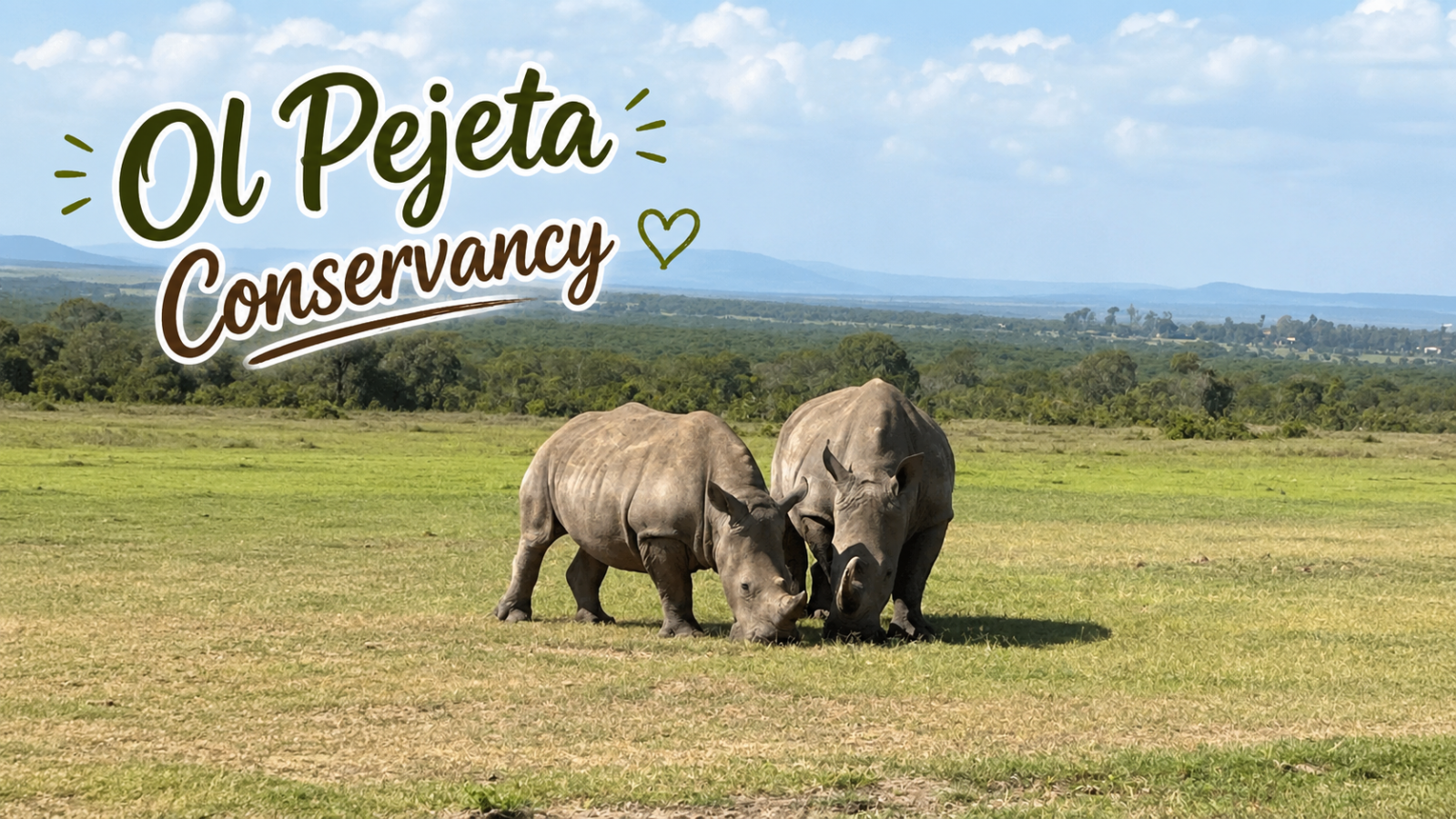

How a former colonial cattle ranch became home to the largest black rhino population in East Africa, the last two northern white rhinos on Earth, and a working conservation model that has gone four consecutive years without a poaching incident.
Ol Pejeta Conservancy is doing what most rhino conservation thought was impossible
The standard narrative on African rhino conservation in 2026 is grim. Poaching syndicates remain active; horn prices in Vietnam and China remain high; the northern white rhino is functionally extinct, with the last two individuals on Earth — Najin and Fatu — alive only under armed guard at Ol Pejeta Conservancy. The headlines are mostly losses. Against that backdrop, what Ol Pejeta has actually accomplished is easy to miss.
In 1993, Ol Pejeta received 20 Eastern black rhinos as part of an emergency translocation programme during the height of Africa’s poaching crisis. Three decades later, the conservancy holds more than 165 black rhinos — by a substantial margin the largest single population of this critically endangered subspecies anywhere in East Africa.
Black rhinos in Kenya overall have grown from fewer than 400 in the 1990s to 2,102 today, according to the 2025 National Wildlife Census released in December 2025. Ol Pejeta has not had a single rhino poaching incident in four consecutive years. This is not a romanticised story. It is a measurable, reproducible conservation outcome — and the operating model behind it is now being studied and adapted across the continent.
What makes Ol Pejeta unusually credible as a conservation story is not the rhino numbers in isolation. It is that the same operating model — community engagement, livestock-wildlife coexistence, K9 anti-poaching units, transparent reinvestment of tourism revenue — has produced the rhino recovery alongside Kenya's only chimpanzee sanctuary, growing populations of lion and elephant, and a working cattle ranch in the same fenceline. Access, intimacy, time: Ol Pejeta delivers all three to travellers, and channels the revenue into a conservation infrastructure that is genuinely industrial in scale.
Quick reference — the essential Ol Pejeta numbers
| LOCATION Laikipia County, central Kenya, foot of Mount Kenya | SIZE 90,000–110,000 acres (estimates vary by management area) |
| FOUNDED AS CONSERVANCY 2004 (former Sweetwaters Game Reserve since 1988) | EASTERN BLACK RHINO POPULATION 165+ — the largest in East Africa |
| SOUTHERN WHITE RHINO POPULATION 40+, including breeding females | NORTHERN WHITE RHINOS 2 (Najin & Fatu) — the last two on Earth |
| YEARS WITHOUT POACHING 4 consecutive years | NORTHERN WHITE RHINO EMBRYOS CREATED 38 (BioRescue programme, 2025 figure) |
The rhino populations — verified numbers, honest context
Ol Pejeta’s three rhino populations occupy three different conservation positions. The Eastern black rhino population is a recovery success on a scale rarely achieved anywhere in African mammal conservation. The Southern white rhino population is a buffer species — common across South Africa, introduced to Ol Pejeta in 2005, and now playing a role in the broader Northern white rhino recovery experiment. The Northern white rhinos are the headline animals, but in conservation terms they are functionally extinct in the wild — the project around them is high-stakes assisted reproduction, not population maintenance.
| Species / subspecies | 1993 | 2024 | Trend | Status |
| Eastern black rhino (Ol Pejeta) | 20 (translocated) | 165+ | +725% | Largest black rhino population in East Africa |
| Eastern black rhino (Kenya total) | ~400 | 2,102 (2025 census) | +425% | Subspecies recovering nationally |
| Southern white rhino (Ol Pejeta) | 0 | 40+ | Established | Introduced from South Africa 2005 |
| Northern white rhino (world) | ~30 worldwide | 2 (Najin, Fatu, both female) | Functionally extinct | Both remaining individuals at Ol Pejeta |
Eastern black rhino — the recovery
The black rhino (Diceros bicornis) was nearly driven to extinction across Africa during the late 20th century. The continent’s population fell from roughly 100,000 in 1960 to approximately 2,300 in 1993 — a 97.6% decline driven primarily by poaching for horn destined for Yemeni dagger handles and Asian traditional medicine markets. The Eastern black rhino subspecies (Diceros bicornis michaeli), native to Kenya, was particularly hard hit; only a few hundred remained at the lowest point. Today, the continental black rhino population sits above 6,000, with the Eastern subspecies showing the strongest recovery rate — 30–40% growth per decade — driven by intensive management at properties like Ol Pejeta, Lewa, Borana and Solio.
Ol Pejeta’s role in this recovery is structural. The conservancy is surrounded by 120 kilometres of electric fence that keeps rhinos inside the protected area where they can be monitored continuously, while leaving wildlife corridors that allow elephants and other species to move into the wider Laikipia ecosystem. More than 150 rangers patrol the conservancy in 12-hour shifts. A K9 anti-poaching unit — Belgian Malinois, German Shepherds, Bloodhounds, Springer Spaniels — tracks, detects and arrests poachers, often before any rhino encounter occurs. Every rhino is individually identified, with movement data, breeding history, and health records that allow targeted veterinary intervention.
Southern white rhino — the buffer species
The Southern white rhino (Ceratotherium simum simum) is a different conservation story — one of unambiguous success at scale. From a population of around 50 individuals in 1900, the subspecies has recovered to more than 15,000 today, almost entirely in South Africa. Ol Pejeta received its first Southern whites in 2005, and the population has now grown to around 40 individuals through both translocations and on-conservancy breeding.
The Southern whites play a critical secondary role: they provide the natural social context that allowed the Northern white rhinos translocated from the Czech Republic in 2009 to acclimatise to African life. Mating attempts between Northern and Southern whites in the early years did not produce viable calves, but the social cohabitation made the rest of the rescue science possible. The Southern white population is also the surrogate candidate pool for the BioRescue embryo programme — the females ultimately expected to carry pure Northern white rhino embryos to term.
Northern white rhino — the species on life support
On 20 December 2009, four of the last seven Northern white rhinos remaining in zoo populations — Najin, Fatu, Suni, and Sudan — were translocated from Dvůr Králové Zoo in the Czech Republic to Ol Pejeta. The hope was that a more natural African environment would stimulate breeding that had failed in captivity. It did not. Suni died of natural causes in 2014. Sudan, the last known male, was euthanised in March 2018 after a degenerative leg infection became untreatable. Najin (mother) and Fatu (daughter) remain the last two known Northern white rhinos on Earth — both female, both unable to carry pregnancies naturally.
The current Northern white rhino programme has shifted entirely to assisted reproduction. The BioRescue consortium — Leibniz Institute for Zoo and Wildlife Research, Dvůr Králové Zoo, Kenya Wildlife Service, and the Italian biotech firm Avantea — has been harvesting eggs from Fatu, fertilising them in vitro with sperm preserved from deceased males including Suni and Sudan, and storing the resulting embryos in liquid nitrogen pending surrogate implantation. As of 2025, 38 Northern white rhino embryos have been created. The next stage — implanting embryos into Southern white rhino surrogates — has been technically demonstrated but not yet produced a live calf of either subspecies. The work continues.
THE HONEST FRAMING Najin and Fatu are not the species' recovery. They are the species' last best chance — and the chance is real but small. Visiting them is genuinely moving, but it is also a witness to something unprecedented: the active scientific attempt to bring a large mammal subspecies back from functional extinction. No comparable rescue has ever succeeded at this scale. Travellers who visit should arrive expecting witness, not certainty.
How Ol Pejeta actually operates — the conservation infrastructure
The rhino numbers exist because of a specific operational model. Understanding it matters for two reasons: it explains why Ol Pejeta works where many protected areas struggle, and it shows what conservation actually costs and looks like at industrial scale.
Ranger force and K9 unit
Ol Pejeta employs more than 150 rangers across the conservancy. Patrols run continuously in 12-hour shifts. The K9 anti-poaching unit, established in 2017, has become a core asset — dogs trained for search, tracking, and apprehension, capable of detecting poachers from up to a kilometre away and locating concealed firearms and ammunition. This combined human-and-canine capability is the operational reason behind the four consecutive poaching-free years. Comparable infrastructure exists at Lewa and Borana, the two adjacent conservancies; together, these three properties constitute the heaviest rhino-protection density anywhere in Africa.
Wildlife corridors and population management
The 120-kilometre electric fence around Ol Pejeta is the source of an apparent contradiction: a fenced conservancy in a country where the conservation argument increasingly centres on unfencing the land. The contradiction is operational rather than philosophical. Rhinos must be confined — they need to be monitored individually, and the fences keep them inside the protected zone where they can be protected. But the fence has specific corridor breaks that allow elephants and other species to move into the wider Laikipia ecosystem freely. The same fence that keeps rhinos in keeps poachers out, while leaving the ecological network around the conservancy connected. This is the operational compromise the rhino crisis requires, and it has worked.
Cattle and conservation in the same fenceline
Ol Pejeta also runs an active commercial cattle operation — a deliberate choice, not a legacy from its colonial ranching past. The cattle programme demonstrates that working livestock production can coexist with high-density wildlife on the same land, including with the largest black rhino population in East Africa. The model has been studied and replicated across other conservancies and ranching properties in Laikipia. The economic logic is also operational: cattle revenue supplements tourism revenue, smoothing income volatility and reducing the conservancy’s dependence on any single revenue stream — a lesson that became painfully relevant during the 2020 tourism collapse.
Sweetwaters Chimpanzee Sanctuary
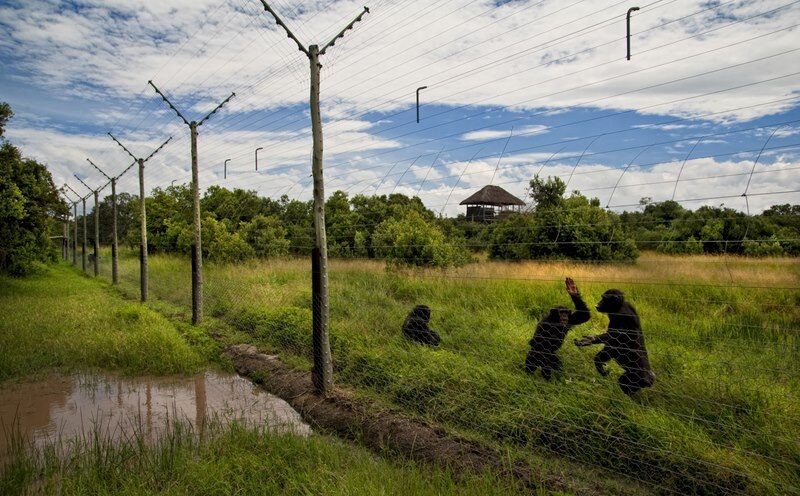
Adjacent to the main conservancy is the Sweetwaters Chimpanzee Sanctuary, established in 1993 in partnership with the Jane Goodall Institute. It is the only chimpanzee sanctuary in Kenya and rehabilitates animals rescued from the bushmeat and exotic pet trades across Central and West Africa. Chimps are not native to Kenya — Sweetwaters is therefore a sanctuary in the strict sense, not a reintroduction site — and the animals live out their lives in spacious island enclosures inside the conservancy. The “Caregiver for a Day” experience pairs visitors with sanctuary staff for half a day of food preparation and observation. It is one of the more thoughtful conservation-immersion experiences in Kenya, and the revenue contributes directly to chimp care costs.
What to actually do at Ol Pejeta
Ol Pejeta has the broadest portfolio of activities of any single protected area in Kenya. The reason matters for trip planning — at a reserve, you do game drives. Here, you do game drives plus a meaningful list of conservation-immersion and adventure activities that are simply not available elsewhere.
- Visit Najin and Fatu. The Northern white rhino enclosure is open to visitors with a designated keeper escort. Allow 45 minutes. The keepers (Zacharia Kipkirui, Peter Esegon, and colleagues) have worked with the animals for over a decade; their commentary is the reason to come.
- Meet Baraka. Baraka is a blind black rhino who lives in a sanctuary enclosure and accepts close visits — including hand-feeding under keeper supervision. Confronting a 1,300-kilogram rhino at arm’s length, gently, reframes everything about the species.
- Rhino tracking on foot. Available with armed rangers. A completely different sensory experience from vehicle viewing — the ground reading, the wind awareness, the deliberate approach. Strong recommendation for guests doing two nights or more.
- Sweetwaters Chimpanzee Sanctuary. Open 10:00–15:30 daily. The half-day Caregiver experience requires advance booking.
- Night game drives. Permitted across the conservancy — one of the few protected areas in Kenya where this is the case. Aardvark, porcupine, white-tailed mongoose, leopard, lion hunting activity all possible.
- Lion tracking with collared individuals. Several lions are fitted with tracking collars. Joining a tracking session — finding a known individual using telemetry — is offered through several lodges and provides direct exposure to conservation field methodology.
- Cycling, mountain biking, horseback riding, running with rangers. All available within Ol Pejeta, all rare or unavailable in National Reserve systems. The conservancy structure permits modes of wildlife engagement that the parks cannot.
Where to stay — and the honest hierarchy
Ol Pejeta has more than a dozen lodge options across the price spectrum. The five worth understanding clearly:
| Lodge | Tier / position | What it delivers |
| Sirikoi (Lewa, adjacent) | High-luxury, family-owned | Gold Eco-rated, 4 tents + Cottage + House, 80%+ organic produce on-site. Combines with Ol Pejeta for the strongest rhino-focused circuit. |
| Porini Rhino Camp | Mid-luxury, low-impact | 8 tents in the quiet north-eastern sector. Strong conservation credentials, walking safaris, photographer-friendly. Often empty in shoulder season. |
| Ol Pejeta Bush Camp | Mid-luxury, riverside | 7 tents on the Ewaso Nyiro. Strong family option. Game drives, rhino tracking, chimp sanctuary visits. |
| Sweetwaters Serena | Entry luxury, larger property | 50 tents. Higher density than the smaller camps. Adequate base for short stays but doesn’t deliver the exclusive feel of the smaller properties. |
| Ol Pejeta House | Exclusive use, family / group buyout | Private 4-bedroom house with own staff, vehicle and guide. The conservancy’s flagship exclusive-use option for groups of 8. |
THE HONEST PICK For a first-time Ol Pejeta visitor with mid-luxury budget, Porini Rhino Camp or Ol Pejeta Bush Camp deliver the strongest combination of wildlife position, conservation credentials, and price. For travellers combining Ol Pejeta with Lewa, Sirikoi is one of the strongest properties in northern Kenya overall. Sweetwaters Serena works for short-stay families on tighter budgets but won't deliver the exclusive feel. Ol Pejeta House is the answer for groups of eight.
Getting there, fees, and practical planning
Access
Ol Pejeta is approximately 200 kilometres north of Nairobi, at the foot of Mount Kenya. By air: scheduled flights from Wilson Airport to Nanyuki Airstrip (40 minutes), then a 30–45 minute drive to most lodges. By road: a 3.5–4 hour drive on largely tarmac road through the central highlands. The road journey is genuinely scenic — Aberdares, the equator crossing at Nanyuki, the bulk of Mount Kenya — and works well for travellers who want to see the geography of central Kenya.
Park fees (2026)
Non-resident adults: $115 per person per 24 hours. Children (5–17): $58. East African residents pay reduced rates with valid ID. The conservancy uses a 24-hour ticket validity (unlike the Mara’s 12-hour rule), which is more forgiving for departure-day timing. All fees go to conservancy operations including ranger salaries, rhino monitoring, anti-poaching, and community programmes.
When to go
Year-round destination. June through October is the peak dry season with the best general game viewing. January and February are also dry and excellent. Long rains (March–May) and short rains (November) bring lush landscapes, lower prices, and full activity availability — Ol Pejeta’s road and tracks remain drivable in conditions that close parts of the Mara. The conservancy makes a particularly strong shoulder-season option.
Where your money actually goes
Ol Pejeta operates as a not-for-profit trust. 100% of revenue is reinvested into conservation, community programmes, and operational costs — there are no shareholder distributions and no profit extraction. The financial breakdown across recent years has consistently shown that tourism revenue (lodge fees, conservancy access fees, paid activities) accounts for roughly 40–50% of operational income; cattle ranching adds another significant portion; and the remainder comes from international donor partnerships and grant funding.
The conservation cost base is substantial. Ranger salaries, K9 unit operations, vehicle and aviation costs, veterinary capacity, the BioRescue partnership for Northern white rhinos, and community programmes (schools, clinics, water projects in the surrounding settlements) together require a continuous funding flow measured in millions of dollars annually. The poaching-free streak is not free; it is the dividend on sustained operational investment. Travellers paying the $115/day conservancy fee are funding that investment directly.
Visiting Ol Pejeta well — five honest tips
- Spend two nights, not one. Ol Pejeta has more genuine activity depth than any other Kenyan protected area. A single night barely covers the rhino programme. Two nights minimum, three for the full programme including Sweetwaters and on-foot rhino tracking.
- Book the Northern white rhino visit with intention. It is not a casual stop. The visit is short by design (45 minutes) and is most meaningful with prior reading. Najin and Fatu are not zoo exhibits — they are the entire remaining population of their subspecies, and the encounter carries that weight.
- Pay for the on-foot rhino tracking. It costs extra. It is worth it. The shift from vehicle to ground transforms how the species registers.
- If you can stretch to it, add Lewa or Borana. The three adjacent conservancies — Ol Pejeta, Lewa, Borana — together hold the densest rhino population in Africa. A circuit across two or three of them is the strongest rhino itinerary available anywhere.
- Consider the Caregiver for a Day at Sweetwaters. Half a day with the chimpanzee staff is one of the more substantive conservation immersions you can buy in Kenya, and the revenue goes directly to sanctuary care costs.
The honest summary
Ol Pejeta is the conservation success story Kenya can credibly claim and that the broader African rhino story badly needs. The 165+ black rhinos represent a 725% increase from the founding 1993 population. The four consecutive years without a poaching incident are the operational dividend of 150+ rangers, a K9 unit, electric fencing, and continuous rhino monitoring. The Northern white rhino programme is the highest-stakes assisted reproduction project in mammal conservation history — and Ol Pejeta is the home for it because the operational infrastructure was already in place to keep Najin and Fatu alive long enough for the science to catch up.
Visiting Ol Pejeta well is more than a safari. It is a deliberate engagement with what working conservation actually looks like at scale — fences, dogs, rangers, lease economics, IVF, community schools, cattle ranching, and an Eastern black rhino population that exists today because thirty years ago a small group decided to try.
THE BOTTOM LINE If rhino conservation is part of why you came to Kenya, Ol Pejeta is the most important place you can spend three nights. The combination of population scale, operational transparency, and active conservation science is not replicated anywhere else in East Africa.
RELATED READING
- Samburu Destination Guide — Including Sera Conservancy, East Africa’s only community-run rhino sanctuary.
- Laikipia Conservation Guide — The wider conservancy ecosystem of which Ol Pejeta is the flagship.
- How private conservancies are saving Kenya’s lions — The economic model behind Kenya’s conservation recovery.
- Walking safari Kenya: what to expect and where to go — Including on-foot rhino tracking at Ol Pejeta and Sera.
- Luxury Safari Kenya: What Makes It Worth the Premium? — Where conservancy access pricing comes from.
Tell us what you are looking for, and we will tell you honestly whether we can deliver it — and if we cannot, we will tell you who can.