Amboseli National Park: The Complete Visitor Guide (2025)
The complete Amboseli National Park guide — elephants, Kilimanjaro views, when to visit, where to stay, and how to get the iconic photograph. Everything you need to plan your Amboseli safari.
Why Amboseli is extraordinary
You have almost certainly seen Amboseli without knowing it. The image — enormous elephants moving slowly across a dusty plain with the snow-capped peak of Mount Kilimanjaro blazing behind them — is the most reproduced photograph in East African travel. It is one of the defining images of Africa. What surprises most visitors is discovering that Amboseli is much more than one iconic photograph. It is a 392-square-kilometre ecosystem of profound ecological complexity — permanent swamps fed by underground springs from Kilimanjaro’s melting glaciers, alkaline dust plains, acacia woodlands, and dry lake beds — supporting over 1,500 elephants, four of the Big Five, 420+ bird species, and a decades-long elephant research project that has fundamentally changed how science understands elephant intelligence and family structure.
Amboseli is also one of Kenya’s most accessible destinations: 240 kilometres from Nairobi, reachable in 4 hours by road or 45 minutes by charter flight, and manageable on a short two-night itinerary. For first-time Kenya safari visitors, it often makes the perfect introduction before heading on to the Maasai Mara.
The elephants of Amboseli
Amboseli is home to the world’s most studied elephant population. Since 1972, Dr. Cynthia Moss and the Amboseli Elephant Research Project have tracked every elephant in the ecosystem — naming matriarchs, recording births and deaths, studying social structures and acoustic communication across five decades of continuous observation. The result: every adult elephant has a documented history that your guide can access.
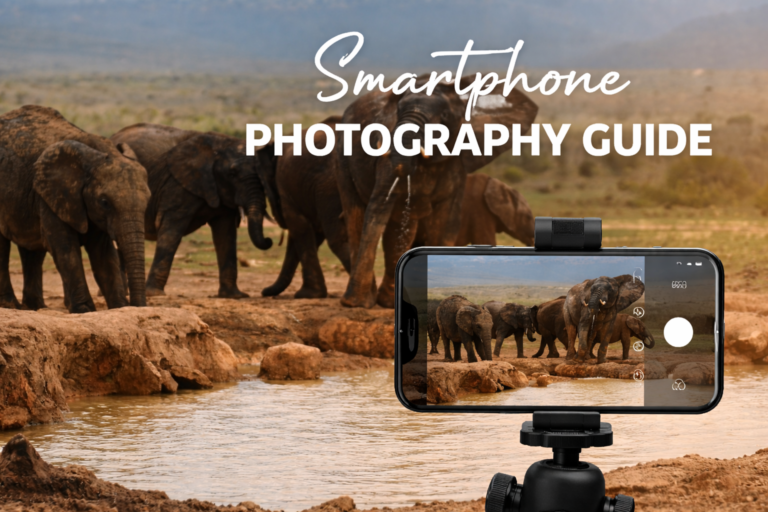
The practical consequence for visitors is extraordinary: Amboseli’s elephants are among the most vehicle-habituated in Africa. Because researchers have moved among them for generations, they have learned that safari vehicles are not threats. It is entirely normal to find yourself within 10 metres of a 60-strong elephant family, the matriarch entirely unfazed, young calves playing at arm’s reach. This level of proximity and natural behaviour is not available anywhere else in East Africa. The elephants are also famous for their size — underground springs from Kilimanjaro produce year-round fresh water and rich vegetation, supporting animals with the largest tusks in the region. Some of Amboseli’s biggest tuskers have tusks that sweep almost to the ground.
“The matriarch walked directly alongside our vehicle. She had been named in 1974. Our guide had known her for fifteen years. That depth of relationship between guide and individual animal is what makes Amboseli unlike anything else in Kenya.”
— Nova Expedition guest, July 2024
How to get the Kilimanjaro shot
Kilimanjaro is notoriously shy. At 5,895 metres, the peak generates its own weather system — by mid-morning, clouds typically gather around the summit and obscure the snowcap. By midday, the mountain is often invisible. The window for the classic shot is specific: shortly after dawn, before heat haze and cloud cover build.
- Leave camp at gate opening time (typically 6am). Be positioned on the plains by 6:15–6:30am.
- Drive toward Enkongo Narok swamp, where elephant herds congregate in the morning and which provides the classic foreground.
- The soft pink light on the snow is available for approximately 30 minutes after dawn. The clearest sky is in the first hour after sunrise before convection currents begin.
- Dry season (June–October) gives clearest views; January–February is also excellent. The green season (April–May) frequently obscures the mountain entirely.
- Observation Hill — a short climb inside the park — is one of the only places you can leave your vehicle and gives a panoramic view with Kilimanjaro in the distance. Arrive early for both the view and the photography.
The honest caveat: the perfect shot — elephants in golden light with Kilimanjaro blazing pink behind them — requires luck alongside planning. Not every morning produces it. But it is genuinely achievable in 3–4 days at Amboseli during dry season, particularly January–February.
Wildlife beyond elephants
Amboseli offers four of the Big Five reliably — elephant, lion, buffalo, and leopard (rarer here than in the Mara). Rhino are essentially absent from the main park. Beyond the headline species: cheetah (the open lake bed provides ideal hunting ground — consistent sightings); hippo (Enkongo Narok and Longinye swamps); Maasai giraffe (the distinctive dark-patched variety, stunning against the mountain); large resident populations of zebra, wildebeest, and impala; baboons studied since 1971 by the Amboseli Baboon Research Project; and 420+ bird species including pelicans, flamingos, African fish eagle, and an extraordinary diversity of waterbirds making Amboseli one of Kenya’s 60 Important Bird Areas.
Best time to visit Amboseli
Getting there
By air (recommended) — Charter flights from Nairobi’s Wilson Airport to Amboseli (Kimana airstrip, 1.2km long) take approximately 45 minutes. Most lodges include airstrip transfers in their rates. The road journey is long and can be rough; flying is strongly recommended for most visitors. By road — Approximately 4–5 hours from Nairobi via the Namanga road (A104) or via Emali. Road conditions vary; the final section to Kimana Gate is unpaved. Safari vehicles with driver-guides are recommended for first-time visitors.
Where to stay
Key experiences
- Observation Hill — The only place inside the national park where you can leave your vehicle. A short climb to a panoramic viewpoint overlooking the entire park, swamps, and Kilimanjaro. Go at sunrise or sunset for the best light and the quietest experience.
- Enkongo Narok Swamp — The main elephant gathering point. This is where the classic elephant-in-the-swamp images are made. Best in the morning when herds come to drink and bathe.
- Amboseli Elephant Research Project — Ask your guide about a briefing from the scientists. Understanding individual elephants’ names and 50-year histories transforms every subsequent elephant sighting from seeing animals to recognising individuals with stories.
- Maasai community visit — The Maasai surrounding Amboseli have coexisted with these elephants for centuries. A guided visit to a Maasai manyatta explains the community conservation model and the long history of human-wildlife coexistence here.