
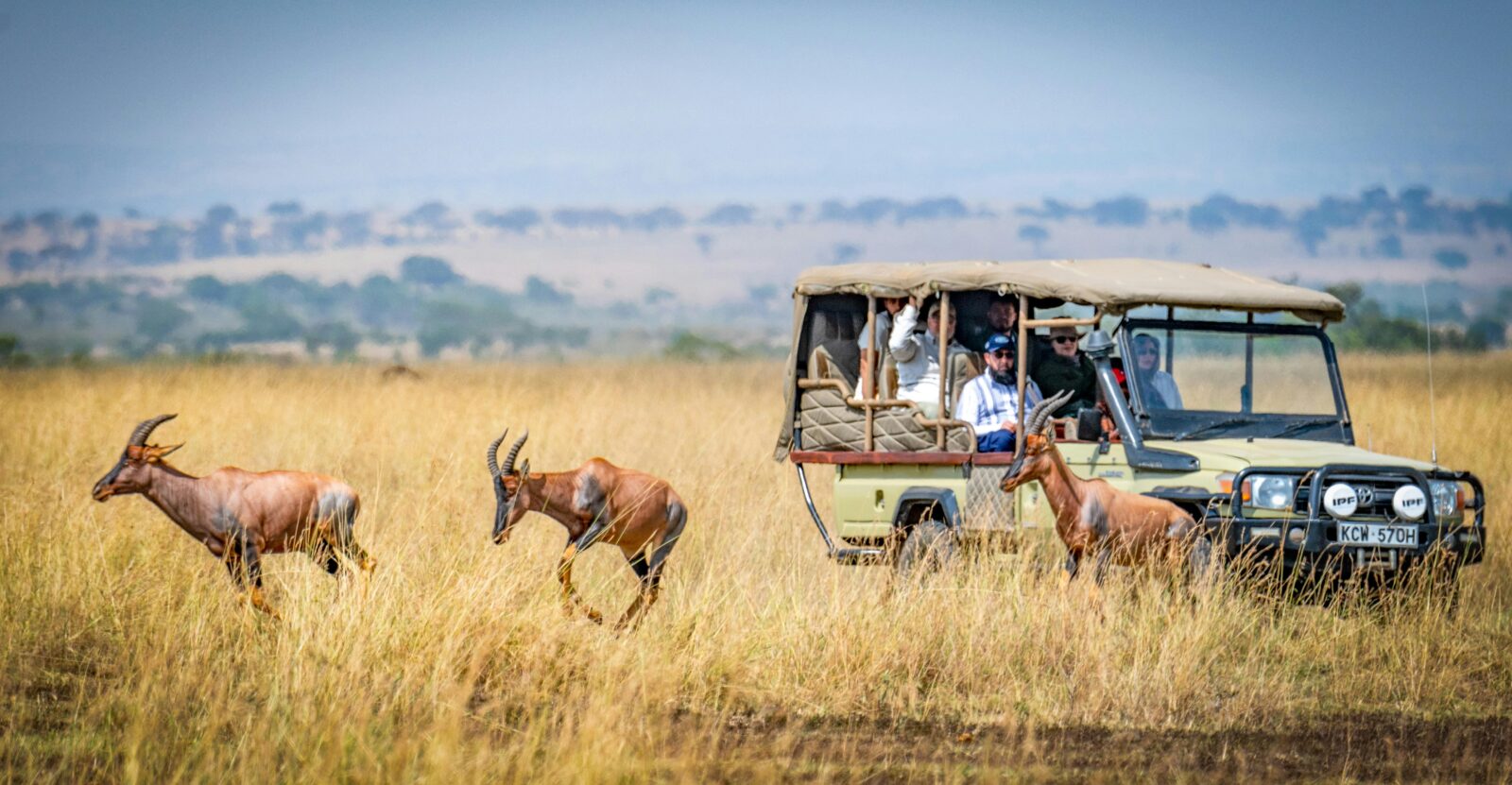

Most Kenya safari planning guides present the seasonal calendar as a simple binary: dry season good, wet season bad. The reality is far more nuanced and, in several important respects, the opposite of what conventional wisdom suggests. The best month for a Kenya safari depends entirely on what you are optimising for — the Great Migration, Kilimanjaro photography, big cat encounters, bird diversity, privacy, cost, or landscape aesthetics — and none of those answers lands on the same month. This guide gives you the honest breakdown of every month, the temperature reality across Kenya’s different altitude zones, and the seasonal recommendation matrix that experienced operators use when their clients give them a blank slate.
The Kenya Climate and Weather structure — four seasons, not two
Kenya sits on the equator but does not have equatorial weather. The dominant variable is altitude, and Kenya has remarkable altitude variation across a small geographic area. Nairobi at 1,700 metres has a temperate highland climate with warm days (22–26°C) and cool evenings (12–15°C) year-round, rarely reaching the extremes of either heat or cold. The Maasai Mara at 1,500 metres is similar but significantly colder at dawn during the dry season: 6am game drives in June and July regularly record 10–12°C in an open-sided vehicle moving at speed, cold enough that a fleece and windproof outer layer are genuinely necessary.
Samburu at 800–900 metres is consistently hot — 33–36°C in the afternoons year-round — in a way that the Mara and Laikipia plateau are not. Tsavo, at 400–900 metres, is Kenya’s hottest safari destination, with afternoon temperatures reaching 38–40°C in the dry season and a dry heat that is intense but manageable with appropriate clothing. The coast at sea level is tropical and humid. Understanding which Kenya you are visiting tells you more about what to expect and what to pack than any seasonal calendar.
The four seasonal periods each have distinct characters. The Long Dry Season (June–October) is the classic safari period. Rain is minimal or absent. Vegetation thins as the months progress, making wildlife more visible at greater distances and animal tracks more legible in the dust. Wildlife concentrates at permanent water sources — rivers, swamps, waterholes — creating spectacular and relatively predictable viewing. Temperatures are comfortable during the day but cold at altitude in the mornings.
The Great Migration arrives in the Maasai Mara from late June. The Mara national reserve park fee doubles on July 1, from $100 to $200 per person per day, remaining elevated through December — a cost that is not always clearly separated from accommodation rates and that meaningfully affects the total budget for the trip. The best conservancy camps book out 9–12 months in advance for August and September.
The Short Dry Season (January–February) is the most consistently underused and undervalued window in the Kenya safari calendar. Two months of warm, dry, clear weather that in several respects outperforms the main dry season. Warmer temperatures than June–October. Park fees at the lower rate in the Mara. Visitor numbers significantly lower than peak. Kilimanjaro at its most reliably visible from Amboseli and Tsavo West. The coast at its seasonal best.
Baby animals abundant everywhere — most herbivores calve in January and February, creating intense predator activity across the ecosystem. Senior Kenya guides consistently choose January or February for their own family trips. The reasons are not complicated: better weather for photography, better wildlife intensity from calving season, lower prices, and far fewer vehicles at sightings.
The Long Rains (March–May) are Kenya’s most challenging period for conventional safari. Rain falls persistently — April is typically the wettest month, with heavy and sometimes prolonged rainfall across most of the country. Many unpaved tracks become impassable, particularly in Tsavo East, parts of the Mara national reserve, and lower-lying areas. Some camps close for maintenance. Wildlife disperses as temporary water sources appear everywhere, making game viewing harder and less predictable than the dry season. Vegetation grows rapidly, reducing visibility.
Accommodation rates drop 30–40%. The landscape is extraordinarily photogenic in its vivid green intensity, producing a visual quality that the dry-season brown landscape cannot match. The most viable rainy season destinations are Laikipia (volcanic soil drains quickly, most tracks remain passable), the Mara conservancies (better track management than the national reserve), and Samburu (northern Kenya sometimes less affected than the south).
The Short Rains (October–December) are consistently misunderstood in safari planning conversations. Unlike the long rains, the short rains typically fall as afternoon or evening showers of varying intensity — not the sustained all-day precipitation of April and May. Morning game drives are almost always unaffected, and the conditions that matter most for wildlife viewing — visibility, track accessibility, animal concentration — are largely maintained through the short rains period.
The landscape greens rapidly as the first rains arrive in late October. Migratory birds arrive from Europe and Asia in large numbers, making November and December among the best months for bird diversity. November accommodation rates are significantly below peak season. October specifically — the final month of the dry season, before significant rain begins — is one of the best-value months in the entire Kenya calendar: dry conditions, excellent wildlife concentration, lower prices than July–September, and substantially fewer vehicles at sightings than the peak migration period.
Kenya Climate and Weather — REFERENCE BY ALTITUDE AND REGION
| Maasai Mara (1,500m) | Jun–Jul dawn: 10–14°C · Midday: 22–26°C · Cold mornings — fleece mandatory Jun–Aug |
| Laikipia plateau (1,700–2,600m) | Dawn: 8–14°C · Midday: 22–28°C · Most variable — 900m altitude range within plateau |
| Nairobi city (1,700m) | Year-round: 14–26°C · Most consistently pleasant urban climate in East Africa |
| Amboseli (1,100m) | Dawn: 14–18°C · Midday: 26–32°C · Warmer than Mara · Best Kili photography Jan–Feb |
| Samburu (800–900m) | Dawn: 18–22°C · Midday: 30–36°C · Hot year-round · Wide-brim hat essential |
| Tsavo East/West (400–900m) | Dawn: 18–24°C · Midday: 28–38°C · Kenya’s hottest parks · Pack for heat |
| Coast / Diani / Lamu (sea level) | Year-round: 22–34°C · High humidity · Best season Dec–Mar and Jul–Oct |
| Mara park fee change | $100/day (Jan–Jun) doubles to $200/day on July 1 — major cost variable |
Month-by-month — the honest guide
January — the most underrated month
Short dry season. The best Kilimanjaro visibility of the year from Amboseli and Tsavo West, produced by the year’s lowest atmospheric moisture content. Calving season creates the most intense predator activity in the annual cycle: lion prides, cheetah mothers, and hyena clans are simultaneously tracking newborn wildebeest, zebra, and Thomson’s gazelle across the open plains, in conditions that frequently produce encounters more dramatic than anything visible during the crowded August peak.
Park fees at the lower Mara rate ($100/day). Visitor numbers significantly below peak — most camps at 40–60% occupancy, compared to 95% in August. The coast is at its seasonal best: warm, dry, calm seas ideal for diving and snorkelling. Baby animals are visible on every morning drive, providing a different but equally engaging wildlife narrative to the migration crossings. Guides consistently describe January as one of their favourite safari months, and those who bring their own families to the parks almost always choose January or February. Temperature range: Mara 14–26°C (cold mornings, bring a fleece), Amboseli 18–30°C, Samburu 22–34°C, Coast 26–32°C.
February — warmest, driest, most photogenic
The warmest month in low-altitude parks: Samburu routinely reaches 36°C in the afternoons, Tsavo approaches 38°C. Simultaneously the driest month, with the lowest atmospheric moisture content producing the clearest photography conditions — particularly for landscape shots where heat shimmer and dust haze reduce quality in drier months. Kilimanjaro at its most reliably visible from Amboseli and Tsavo West.
Outstanding birding: winter migrants from Europe and Asia are still present before their northward departure in March, creating peak bird diversity across the ecosystem. Coast perfect. Park fees still at the lower January–June rate in the Mara. February is the first choice for wildlife photographers who want the combination of clear mountain, vivid dry-season landscapes, and intense predator activity from the extended calving season. Temperature range: Mara 15–28°C, Amboseli 20–32°C, Samburu 24–36°C, Coast 28–34°C.
March — take the first two weeks
Early March is a direct continuation of February’s excellent conditions: low crowds, good wildlife visibility, calm weather, and continued calving season predator activity. Long rains typically arrive mid-to-late month — first as scattered afternoon showers that become progressively more persistent as the month advances. Tracks becoming muddy in some areas by the final week of March. Accommodation rates begin dropping as the rainy season approaches, providing value for visitors who can travel in the first two weeks. The practical recommendation is straightforward: March 1–14 can be excellent; March 15–31 is uncertain. If your dates fall in March, prioritise the first half and build flexibility for the second. Confirm current conditions with your operator before booking travel after March 10.
April — lush, cheap, challenging
The wettest month. Persistent rainfall across most of Kenya. Many unpaved tracks impassable in Tsavo East and parts of the Mara national reserve. Some camps close for maintenance in April and May. Wildlife disperses as temporary water sources appear everywhere across the landscape. Game viewing is harder and less predictable than the dry season.
The financial case is real: accommodation rates drop 30–40%, the landscape is extraordinarily photogenic in its vivid green intensity, and the light quality for photography can be exceptional in the mornings before the daily rains build. Viable April destinations: Laikipia (volcanic soil drains quickly, most conservancy tracks remain passable throughout the year), the Mara conservancies (significantly better track management than the national reserve), and Samburu in the north (sometimes less affected by the long rains than southern Kenya areas). Not recommended for first visits or for guests whose primary goal is maximum wildlife sightings.
May — rains easing, value excellent
Long rains continuing but typically easing toward month end, with late May often seeing significant improvement as the seasonal transition begins. The landscape remains lush and extraordinarily photogenic — dense green vegetation, colourful wildflowers across the plains, excellent birdlife at its annual peak diversity when both resident and migratory species are simultaneously present across the ecosystem.
Wildlife still more dispersed than in the dry season but improving through the month. Some camps reopen in late May after April maintenance closures. Lowest accommodation rates of the year — sometimes 40–50% below July–October peak pricing. The birding specifically is world-class in May: experienced birders regularly record 200+ species in a single Mara area visit during this period, with species present that are entirely absent in other months.
June — the sweet spot before peak pricing
Long rains ending by early June across most of Kenya. The landscape retains its green-season lushness while tracks dry and become accessible. First migration herds arrive in the Mara from late June — some years arriving in the third week of the month, others not until early July, depending on rainfall patterns in the Serengeti. June is the last month at the lower Mara national reserve park fee rate ($100/day) before the July 1 doubling to $200/day. Cool and sometimes overcast with misty mornings in the Mara highlands.
Very low crowds — most conservancy camps at 50–60% occupancy compared to 95% in August. Outstanding value: great wildlife, beautiful landscape, manageable prices, minimal vehicles at sightings. June is consistently the month that experienced Kenya operators recommend when clients ask for the best-value safari window. The visual quality of June is distinctive: the lush green landscape from the departing rains combined with the first migration herds produces photographs that the dry-season brown landscape cannot replicate. Temperature range: Mara 11–23°C — the coldest month in Kenya safari terms. Bring proper warm layers for dawn drives.
July — peak begins, conservancy is essential
Peak season begins on July 1 with both the migration herds arriving in force and the Mara national reserve park fee doubling. Migration herds entering the Mara in increasing numbers through the month. First significant Mara River crossings typically occur from mid-July. Camps at near capacity in the best conservancies. Prices at their seasonal peak for accommodation, charter flights, and in-country logistics. The wildlife is genuinely extraordinary in July, delivering on the migration experience that months of marketing have promised.
The challenge is exclusively the crowding in the national reserve: river crossing points can have 20–30 vehicles simultaneously by late July, creating conditions that measurably affect animal behaviour. In private conservancies where vehicle limits are strictly enforced at 3–5 per sighting regardless of season and demand, July is spectacular. Temperatures are cold in the mornings (11–14°C at 6am in the Mara — a fleece and windproof layer are mandatory) and warm by midday (23–26°C). Book conservancy camps 6–9 months in advance for July travel.
August — the peak, best managed in conservancies
The most visited month globally, coinciding with school holidays in the UK, US, Europe, and Australia simultaneously. Maximum river crossing frequency but also maximum vehicles. Up to 30–40 vehicles at single crossing points in the national reserve during peak school holiday weeks, creating conditions where the actual quality of the wildlife encounter is significantly diminished by the surrounding noise, vehicle movement, and competition for position. Best managed exclusively from private conservancy camps where vehicle limits are enforced regardless of season and demand.
Maximum prices across all property tiers — July–October pricing is the highest of the year. Book conservancy camps 9–12 months ahead: the best properties (andBeyond Bateleur, Angama Mara, Mahali Mzuri, Cottar’s 1920s Camp) sell out completely for August by October of the preceding year. The wildlife is extraordinary. The conservancy model solves the crowding problem definitively. Temperature range: Mara 12–24°C. Cold mornings, warming from the July minimum.
September — often the best Mara month
Still peak season but crowds thinning noticeably from mid-month as UK and European school terms resume. Hot and dry — the best conditions for predator activity, with big cats more active in September’s rising heat than in the colder July–August period. Many experienced operators consider September a better overall Mara month than August: river crossings are still occurring, the wildlife remains concentrated, and vehicle numbers are 20–30% lower than peak August.
One of the best months for a first Mara visit for guests who cannot travel in the lower-season windows. The combination of crossing season, predator concentration, and manageable crowds in the conservancies makes September consistently deliver on its promise. Temperatures rising: Mara 13–27°C. Book the best conservancy camps at least 6 months in advance.
October — the quiet peak
The month that experienced Kenya travellers consistently cite as their personal favourite, and the month that most first-time visitors have never considered seriously. The migration herds are beginning their return to Tanzania, reducing the vehicle queues at crossing points significantly. Wildlife remains excellent in every other respect: resident lion, leopard, cheetah, and elephant populations are year-round inhabitants whose concentration at water intensifies as the dry season reaches its maximum extent. Approximately 40% fewer vehicles at sightings than August.
Lower accommodation rates beginning to appear at some camps as the peak season tapers. Short rains may begin in late October — typically brief afternoon showers that do not affect morning drives and that produce beautiful evening light. Hot: Mara 14–28°C, still rising from September’s warmth. Outstanding value. The conservation argument for October: animals encountered in significantly lower vehicle pressure show more natural behaviour, produce more intimate encounters, and are less prone to the stress responses that modify behaviour in the crowded crossing season.
November — green season quality at value prices
Short rains typically fall in the afternoons and evenings, leaving morning game drives almost always clear. The landscape greens with extraordinary speed after October’s dry conditions — within two weeks of the first rains, the Mara plains transform from brown and bare to vivid green, with a light quality that the dry season never produces.
Migratory bird diversity peaks in November with millions of Palearctic migrants present across the ecosystem: species arrive from as far as Siberia and Scandinavia, creating bird lists in a single morning drive that rival the totals from entire weeks in other months. Accommodation rates 20–30% below peak. Very low crowds across the ecosystem. Wildlife remains excellent. November consistently earns the highest satisfaction ratings among guests who visit in the off-peak windows — the combination of landscape quality, wildlife accessibility, bird diversity, and cost efficiency is difficult to match in any other month.
December — holiday premium on green conditions
Short rains easing in early December as the seasonal transition begins. The landscape remains beautifully green from the November rains. Weather is warm and pleasant. Holiday surge from approximately December 20 drives prices back to peak levels — Christmas and New Year rates at the best properties match or exceed July–August pricing. Early December (the first two to three weeks) offers excellent conditions at moderate prices, making it one of the most underused quality windows in the Kenya calendar.
Late December is expensive and requires booking 6–9 months in advance for the best properties. Temperature range: Mara 14–27°C, Nairobi 15–26°C. The Kenya coast — Diani, Watamu, and Lamu — is at its seasonal best from December through March, making December the ideal starting point for a Kenya safari-and-beach itinerary.
Park fee calendar — the cost variable most visitors miss
The most commonly overlooked financial variable in Kenya safari planning is the Maasai Mara National Reserve entrance fee, which changes twice annually. January through June: $100 per person per day. July through December: $200 per person per day. This doubling takes effect on July 1. It is a cost that is not always clearly separated in operator quotes — the all-inclusive accommodation rate may include this fee or may present it as an additional item. Always ask explicitly: “Is the national reserve entrance fee included in your quoted all-inclusive rate?” For a couple spending five nights in the Mara national reserve in July rather than June, the additional fee cost (above the June rate) is $1,000.
This is significant enough to affect the comparison between destinations, between months, and between the national reserve and private conservancy accommodation options. When comparing a reserve camp at $400/night with a conservancy camp at $600/night all-inclusive, understanding that the conservancy fee ($80–150/day) is included while the national reserve fee ($100–200/day) may be additional from the reserve camp changes the comparison entirely.
| Park / Reserve | 2026 Non-Resident Fee | Notes |
| Maasai Mara National Reserve | $100/day (Jan–Jun) · $200/day (Jul–Dec) | Largest seasonal swing in Kenya |
| Amboseli National Park | ~$60/day year-round | No seasonal variation · KWS eCitizen |
| Samburu National Reserve | ~$50/day year-round | No seasonal variation |
| Tsavo East / Tsavo West | ~$52/day each | Separate parks with separate fees |
| Nairobi National Park | ~$43/day | Day visits only |
| Private conservancies (Mara) | $80–150/person/day | Usually included in all-inclusive — confirm |
Seasonal recommendation matrix
| Your priority | Best month(s) | Why | Honest trade-off |
| Migration crossings | Late July–September | Peak crossing frequency | Most vehicles — conservancy required |
| Kilimanjaro photography | January–February | Clearest atmosphere of year | No migration; calving season instead |
| Best overall value | June or October | Pre/post peak pricing + quality | Jun: no crossings · Oct: ending |
| Fewest crowds | January | Genuine low season throughout | Different wildlife focus; no migration |
| Peak birdwatching | November–January | Palearctic migrants present | Short rains Nov variable tracks |
| Families (school holidays) | July–August | UK/US/EU/AU holiday alignment | Book conservancy 9–12 months ahead |
| Green season photography | Late May or November | Lush landscape, dramatic light | Variable track access in May |
| Safari + Kilimanjaro + coast | January | All three excellent simultaneously | Plan 12+ days to include all |
RELATED READING
- Best Time to Visit Kenya — Honest Month-by-Month Guide
- What to Wear on Safari in Kenya — The Honest Guide
- Kenya in July — Migration, Weather and Planning Guide
- Kenya in August — Peak Season Guide
- Kenya Safari Cost 2026 — The Honest Breakdown
Named sources and the seasonal caveat
The Kenya Meteorological Department publishes annual rainfall data confirming that the Maasai Mara ecosystem receives an average of 750-1,000mm of rainfall annually, with the long rains (March-May) typically delivering 60-65% of the annual total. The Frankfurt Zoological Society, which has monitored Serengeti-Mara ecosystem rainfall correlations since the 1970s, documents that Migration timing in Kenya shifts by 3-6 weeks in either direction depending on southern Serengeti rainfall in the preceding months — making any fixed migration calendar an approximation rather than a guarantee.
The single most important honest caveat in any Kenya seasonal guide is this: the calendar is a probability distribution, not a schedule. A guest who travels to the Mara specifically for river crossings in the third week of July may have a full crossing experience or may see the herds staged inland for the entire stay. A guest who comes for the calving season in the southern Serengeti in late January may find peak calving has already passed or has not yet begun. Build your itinerary around the season’s character, not around a single specific event on a specific day.
The access-intimacy-time dimension of seasonal choice
The principle that most directly applies to seasonal planning is time: the right season means staying long enough in one place for the ecosystem to reveal itself rather than treating each destination as a scheduled performance. A guest who visits the Mara in peak August and stays 2 nights cannot experience the depth of wildlife encounter that a guest visiting in quieter October for 4 nights achieves — despite the August guest’s statistical advantage of more migration herds and more crossing events.
The vehicle limits of the private conservancies are the mechanism: 4 nights with a guide who knows the individual animals by name, in a landscape you have learned well enough to read the change in the light and the movement of the birds, in a conservancy where the vehicle limits mean the wildlife has not adjusted its behaviour to compensate for crowd pressure. This is what the seasonal choice actually determines: not just which wildlife events are occurring, but the quality of access and intimacy you can achieve with them.