
Kenya Tanzania Safari — The Complete Combined Guide 2026
Why combine Kenya and Tanzania?
The Maasai Mara and the Serengeti are the same ecosystem. This is the fact that most Kenya-only or Tanzania-only safari planners gloss over, but it is the foundational truth of the entire Mara-Serengeti complex: 40,000 square kilometres of connected savannah that the wildebeest, zebra, and gazelle move through continuously, following rainfall and seasonal grazing, without reference to the international boundary that bisects it. The Kenyan section is called the Mara. The Tanzanian section — far larger, covering approximately 30,000 square kilometres — is called the Serengeti. They are one place with two names and two sets of regulations, and the most complete safari experience available anywhere in Africa is the one that crosses the border to experience both.
This is not a new idea. The original East Africa safari — the format that the words “going on safari” describe in the popular imagination — was always pan-national. Early 20th-century safaris moved through what is now Kenya and Tanzania without meaningful distinction, following the wildlife rather than the political map. The contemporary version does the same, with charter flights and border formalities added. The result is a safari that covers the full annual cycle of the world’s greatest wildlife spectacle, sees different species and ecosystems in each country, and provides a depth of experience that no single-country trip can match.
Kenya vs Tanzania — the honest comparison
Before planning a combined safari, it helps to understand what each country does distinctively. The comparison that travellers encounter most often — “is Kenya or Tanzania better for safari?” — is a false choice, but the genuine differences matter for itinerary design.
| Factor | Kenya | Tanzania |
|---|---|---|
| Landscape character | Open savannah · Acacia woodland · Northern semi-arid | More varied — volcanic highlands, crater, dense bush, coastal |
| Wildlife density | ★ Mara conservancies have highest lion density in ecosystem | Serengeti vast — lower density but immense scale |
| Crowding | Varies — conservancies excellent, reserve crowded in Aug | ★ Generally less crowded than Kenya equivalent |
| Safari activities | ★ Full suite — off-road, night drives, walking available in conservancies | More restricted in national parks; private concessions allow more |
| Self-drive | Now banned in Maasai Mara (2025) | Restricted in most national parks |
| Rhino | Black rhino in Laikipia, Tsavo West · Northern white at Ol Pejeta | ★ Ngorongoro Crater has best rhino viewing in region |
| Calving season | Not in Kenya (happens in Serengeti) | ★ Jan–Feb southern Serengeti — 8,000 calves/day |
| Migration crossings | ★ Mara River crossings Jul–Oct — the iconic spectacle | Northern Serengeti crossings Jul–Nov — similar scale, fewer vehicles |
| Park fees | Mara $100–200/day depending on season | Serengeti $70+VAT/day + concession fees · Ngorongoro $300+ per vehicle descent |
| Beach extension | ★ Diani or Lamu — established, accessible | Zanzibar — beautiful but an additional flight |
The summary: Kenya is better for activity diversity, Mara conservancy exclusivity, and the iconic August river crossings. Tanzania is better for sheer scale, the Serengeti’s visual drama, Ngorongoro Crater wildlife density, and calving season. A combined itinerary captures everything from both columns.
The cross-border logistics — visas, borders, and vehicles
The logistics of a Kenya-Tanzania combined safari are more manageable than they appear and are entirely routine for experienced operators. The key elements:
Visas. Most nationalities require visas for both countries. Kenya issues an Electronic Travel Authorisation (eTA) online — apply at the Kenya immigration portal at least 72 hours before travel, cost $30. Tanzania issues visas on arrival at most major entry points, cost $50. Some passport holders qualify for the East Africa Tourist Visa ($100), which covers Kenya, Tanzania, and Uganda for single entry into each country — confirm your eligibility before booking.
The border crossings. There are two standard crossing points for safari itineraries. The Isebania/Sirare crossing on the western route connects Maasai Mara to Serengeti — you drive from your Mara camp to Isebania, cross on foot while your Kenyan guide’s vehicle returns and your Tanzanian guide’s vehicle meets you on the other side. The process takes 30–60 minutes in normal conditions and is handled entirely by your operator. The Namanga crossing on the eastern route connects Tanzania (Arusha area) back to Kenya (Amboseli/Nairobi direction) and is the return point for itineraries that end in Kenya.
Vehicles. Kenyan vehicles cannot operate in Tanzania and vice versa — each country requires licensed local vehicles within its own national parks. A combined itinerary therefore involves a vehicle change at the border. Your operator handles all coordination; you simply move your luggage from one vehicle to another. The guides on each side of the border are specialists in their own ecosystems — which is actually an advantage rather than a limitation.
Yellow fever certificate. Technically required for entry to Tanzania if travelling from or through yellow fever risk countries. Carry your vaccination certificate or a medical exemption letter. This is checked at some border crossings and not others — don’t assume you won’t need it.
The Serengeti — what it offers that the Mara doesn’t
The Serengeti is larger than Switzerland. At approximately 30,000 square kilometres, it is eight times the size of the Maasai Mara National Reserve and contains landscapes that the Mara — despite its fame — simply cannot match in terms of sheer scale. The visual experience of the Serengeti is one of genuine vastness: the plains extend beyond the horizon, the sky dominates the entire field of view, and the density of wildlife on those plains during the dry season creates a visual impression of abundance that has no equivalent in the Kenyan side of the ecosystem.
The Serengeti’s ecological zones are also more diverse than the Mara. The southern Serengeti’s short grass plains (ideal for calving season and cheetah hunting), the central Seronera valley (dense tree cover, good leopard country), the kopjes — granite outcrops rising from the plains, used by lions as observation platforms and resting places — the northern Serengeti’s Lamai wedge and Mara River sections (where Tanzania-side crossings occur), and the western corridor’s long grass and acacia woodland each constitute distinct habitats and wildlife communities. A three or four night Serengeti stay can cover multiple zones and feel far more varied than the number of nights suggests.
Tanzania’s private concessions within and around the Serengeti allow off-road driving and, in some cases, night drives — narrowing the activity gap between Kenya’s conservancy system and Tanzania’s more restrictive national park framework. The Lamai Wedge and northern Serengeti concessions operated by Asilia, Singita, and other operators provide a conservancy-quality experience within sight of the Mara border.
Ngorongoro Crater — Africa’s most concentrated ecosystem
The Ngorongoro Crater is the largest intact volcanic caldera in the world that is not flooded with water — a 19-kilometre-wide, 600-metre-deep bowl that formed when a massive volcano collapsed inward approximately 2.5 million years ago. The crater floor, covering 260 square kilometres, contains a complete, self-sustaining ecosystem with approximately 25,000 large mammals that almost never leave the crater’s enclosed environment. The animal density is extraordinary by any standard: the highest concentration of lions in Africa, one of the last viable black rhino populations in East Africa (10–15 individuals), vast herds of wildebeest and zebra, hippos, flamingos on the alkaline lake, and the full complement of East African plains game in a space smaller than many national parks’ parking areas.
The Big Five are seen on almost every crater descent — sometimes all five in a single day, which is virtually impossible anywhere else in Africa. The access model is vehicle-only (no walking on the crater floor), and the Ngorongoro Conservation Area Authority charges a crater descent fee that is among the highest in the region. The crowds can be significant at the most popular viewing spots — the hippo pool and the rhino patch — but the scale of the crater means there is always space away from other vehicles.
The Ngorongoro rim itself — the highlands surrounding the crater at 2,000–2,400m altitude — is cool, forested, and spectacular. Rim accommodation includes some of the most dramatically positioned lodges in East Africa, with views directly into the caldera at dawn that are among the great visual experiences of any Tanzania trip.
Calving season — the migration’s most dramatic act
Between late January and mid-February, the southern Serengeti’s short grass plains become the site of the most concentrated birth event in the mammal world. Approximately 500,000 wildebeest calves are born during a six-week period — a rate of up to 8,000 per day at peak. The evolutionary mechanism behind this synchronised calving is predator saturation: by flooding the plains with newborns simultaneously, the wildebeest ensure that predators are overwhelmed and most calves survive the critical first days.
The result for visitors is a wildlife experience that rivals — and by some measures exceeds — the Mara River crossings for sheer dramatic intensity. The plains are covered with newborn calves attempting to stand within minutes of birth (a wildebeest can run with the herd within 6 hours of being born), nursing mothers, and every predator species in the ecosystem in a state of near-constant activity. Lions, cheetahs, hyenas, jackals, and wild dogs are all hunting simultaneously, visibly, in the open grassland. The ratio of predator activity to passive observation is unlike any other time of year in any East African ecosystem.
Calving season is not in Kenya. It is entirely in the southern Serengeti, and it is one of the strongest arguments for extending a Kenya safari across the border in January or February. A Mara conservancy itinerary in January combined with calving season in the southern Serengeti constitutes what many experienced East Africa guides consider the single best Kenya-Tanzania combined itinerary available.
Best Kenya Tanzania itineraries by duration
7 nights — the minimum viable combination
Night 1–2: Nairobi (Sheldrick Trust, Giraffe Centre, jet lag recovery). Night 3–5: Maasai Mara conservancy (full conservancy activities — off-road, night drives, walking). Drive to Isebania border. Night 6–7: Northern Serengeti (Lamai Wedge — Tanzania-side river crossings in season, vast plains). Fly or drive to Arusha for Tanzania departure, or cross Namanga border to Nairobi for Kenya departure. This itinerary is compressed. It works for July–October when both parks are at peak and the migration connects them. It doesn’t leave time for Ngorongoro.
10 nights — the standard recommended combination
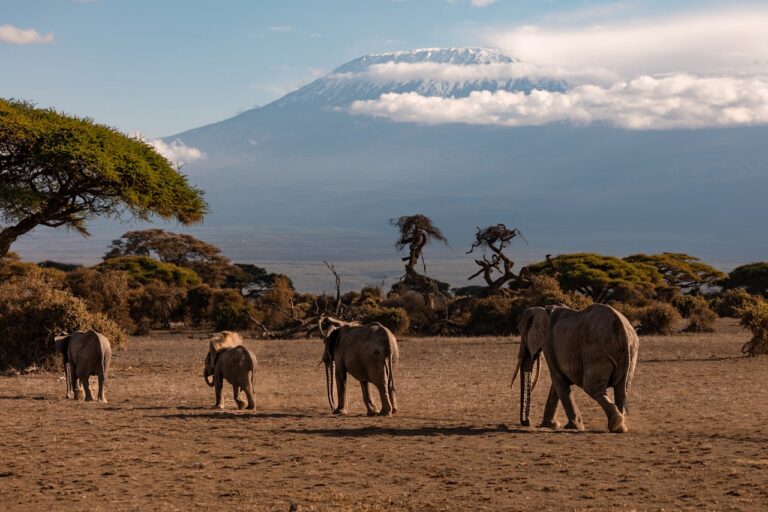
Night 1: Nairobi. Night 2–4: Maasai Mara conservancy (3 full days). Cross Isebania. Night 5–7: Serengeti — central Seronera valley and plains (3 days). Night 8–9: Ngorongoro Crater (2 days — includes crater descent). Cross Namanga border. Night 10: Amboseli (Kilimanjaro backdrop, elephant herds as bookend to the trip). Fly Nairobi departure. This itinerary covers the full ecosystem, includes Ngorongoro’s concentrated wildlife, and ends with one of Kenya’s most distinctive visual experiences. Ten nights is the minimum comfortable duration for this route.
14 nights — the comprehensive circuit
The 14-night version adds Lake Nakuru (flamingos, rhino) between Nairobi and the Mara; extends the Serengeti stay to include the western corridor for tree-climbing lions and forest habitat; and allows a more leisurely Ngorongoro experience with time on the crater rim as well as the descent. It also allows a 3-night beach extension (Diani, Watamu, or — if departing through Tanzania — Zanzibar) that brings the safari-and-beach balance that most Kenya-Tanzania visitors ultimately want. This is the itinerary for a once-in-a-decade trip.
Costs — Kenya vs Tanzania vs combined
Park fees have made Kenya and Tanzania roughly comparable in overall cost — a shift from a decade ago when Kenya was considered more expensive. The Mara reserve now charges $200/day in peak season; the Serengeti charges $70 + 18% VAT + a $60 concession fee for overnight stays, which totals approximately $143/day before accommodation. Ngorongoro adds a crater descent fee that currently runs to approximately $300 per vehicle plus a per-person conservation fee.
A 10-night mid-range Kenya-Tanzania combined safari (private vehicle, comfortable tented camps, all park fees included) should be budgeted at approximately $4,000–6,000 per person excluding international flights. A luxury version of the same itinerary — Angama Mara on the Kenya side, Singita Sasakwa on the Tanzania side, Ngorongoro Crater Lodge on the rim — runs $2,000–4,000 per person per night and should be considered among the finest wildlife experiences available anywhere on Earth.
The most important cost management strategy for a combined itinerary: choose one peak luxury camp (usually the Mara side) and one mid-range camp (often the Serengeti) rather than peak luxury throughout. The wildlife on both sides is the same ecosystem. The Serengeti at a comfortable mid-range camp produces the same wildebeest herds as Singita does — what you pay for at the premium level is the infrastructure around the wildlife, not the wildlife itself.
Best time for a combined Kenya Tanzania safari
Beach extensions — Zanzibar, Diani, or Lamu?
Most Kenya-Tanzania combined safaris end with 3–5 nights at the beach. The choice of beach destination depends on your departure point and what you want from the coast.
Zanzibar — Tanzania’s iconic island. Stone Town, spice tours, turquoise water, excellent diving. The obvious choice for itineraries that end in Tanzania (Arusha departure). An additional $150–200 per person in charter flight costs. Most people who do it find it worth the addition. The combination of Stone Town’s history and Zanzibar’s northern beach resorts (Nungwi, Kendwa) constitutes one of the most complete Indian Ocean experiences available.
Diani Beach — Kenya’s leading beach destination, accessible by charter flight from Wilson Airport (1 hour) or by road from Tsavo East (2.5 hours). The better choice for itineraries that end in Nairobi. White sand, protected reef lagoon, excellent water sports, the 14th-century Kongo Mosque, and Kinondo Kwetu or Sands at Nomad for accommodation. Does not require an additional international-standard flight.
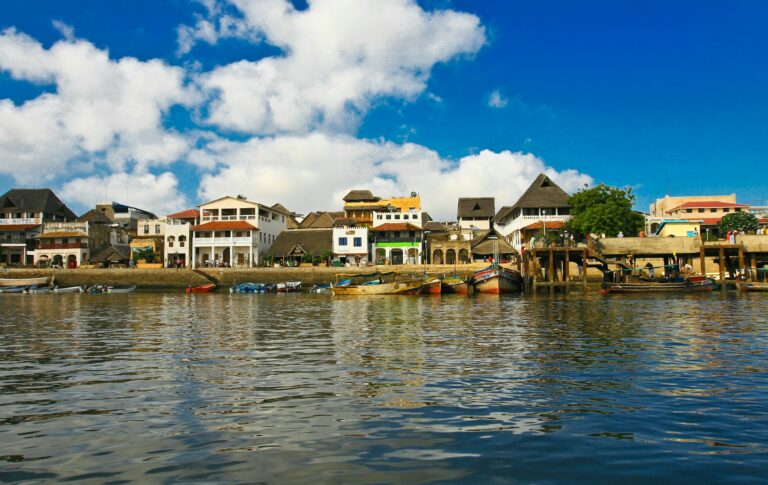
Lamu Island — Kenya’s UNESCO World Heritage Swahili town. A completely different character from either Diani or Zanzibar — no motor vehicles, 700 years of Swahili architecture, carved doors, dhow channels, and the Peponi Hotel on Shela Beach. The correct choice for travellers who want culture with their coast rather than pure beach relaxation. An additional 90-minute charter from Wilson Airport. Worth the effort for the right traveller; wrong for families with young children who want a pool and a beach.