Kenya Safari for Beginners: Everything You Need to Know (2025 Complete Guide)
The complete beginner’s guide to a Kenya safari — what happens on game drives, how to choose your destination, what it costs, how to book correctly, and the 10 mistakes to avoid.
Why Kenya is the best destination for a first safari
There is no official rule about which African country to visit first, but among experienced safari travellers Kenya appears most frequently in the answer to “where should I go first?” — and for reasons that go beyond marketing. Kenya’s wildlife infrastructure is among the most developed in Africa. Its guides are among the continent’s most formally trained, certified through the Kenya Professional Safari Guides Association (KPSGA). Its range of accommodation is wider than any comparable destination. Its domestic aviation network connects Nairobi to safari destinations in 45–90 minutes by charter flight. Most importantly, Kenya’s wildlife delivers: the Maasai Mara produces more consistent daily Big Five sightings than almost any other reserve in Africa, and Amboseli’s elephant encounters are unmatched in East Africa.
What actually happens on a safari
A Kenya safari means spending your days in a specially adapted 4×4 vehicle (typically a Land Cruiser or Land Rover with a pop-up roof for standing and photographing) guided by a trained driver-guide who knows the ecosystem and its individual animals intimately. A typical day follows a rhythm determined by wildlife activity rather than human preference:
- Dawn game drive (5:30–6:00am) — The most productive drive of the day. Predators returning from night hunts, elephants at water sources, cheetahs positioning to hunt. You will be woken with coffee or tea. It will be cold. It will absolutely be worth it.
- Mid-morning return to camp (9:00–10:00am) — Breakfast. The midday heat generally reduces animal activity; most camps offer this as a rest period.
- Afternoon game drive (3:30–4:00pm) — Wildlife begins moving again as the heat drops. The golden afternoon light is extraordinary for photography. Many of the most memorable sightings of any safari happen in this window.
- Sundowners on the plains — Your guide typically sets up drinks at a viewpoint as the sun sets — a cold Tusker, a gin and tonic, Africa going quiet around you. This ritual alone is worth the trip.
- Dinner under the stars — Most camps serve in a communal area under the African sky. The sounds of the bush at night — hippos, hyenas, lions calling in the distance — are as much a part of the experience as anything you see during the day.
In a private conservancy camp, your day also includes a night drive (after dinner, using spotlights to find nocturnal animals — serval cats, aardvarks, porcupines, and hunting predators) and an option for a morning walking safari, moving through the bush on foot with a Maasai ranger. Both of these experiences are unavailable inside the national reserve at any price.
How to choose your first destination
Maasai Mara — Choose this if your priority is seeing Kenya’s full predator range in open savannah. Lion, leopard, and cheetah sightings are among the most reliable in Africa. If visiting July–October, the Great Migration is a dramatic bonus. The open landscape makes wildlife spotting accessible for first-time guests still developing their eye for the bush. Amboseli — Choose this if elephants are your primary interest, or if the Kilimanjaro-backdrop photography is a priority. Amboseli’s elephant encounters — often within metres of vehicles, with individual animals whose 50-year histories your guide can explain — are unmatched anywhere in East Africa. The ideal first safari itinerary: Nairobi (1 night) → Maasai Mara in a private conservancy (3–4 nights) → Amboseli (2 nights) → Nairobi departure. 7–8 nights total. Covers both flagship destinations, gives one Nairobi night for acclimatisation, and is logistically straightforward from any international hub.
How long do you need?
The minimum meaningful safari is 3 nights in a single location — giving you 5–6 game drives and a reasonable chance of seeing the full range of resident wildlife. Two nights is possible but usually leaves guests feeling they had just found their rhythm when it was time to leave. The ideal first Kenya safari is 7–10 nights total covering 2–3 destinations. A 4-night stay in the Mara gives you far better odds of witnessing a leopard kill or migration crossing than a 2-night stay — the wildlife does not perform on your timetable.
What does a Kenya safari cost?
- Budget ($800–1,500 per person per night all-in) — Basic lodge or camping. Same game drives, same wildlife access. The difference from luxury is in comfort, food quality, and service level.
- Mid-range ($1,500–3,500 per person per night) — Comfortable tented camps, en-suite bathrooms, good food, professional guiding. The sweet spot for most first-time safari guests — excellent experience at a manageable price.
- Luxury ($3,500–8,000 per person per night) — Private conservancy camps, superior guiding, outstanding cuisine, the full conservancy activities programme including night drives and walking safaris.
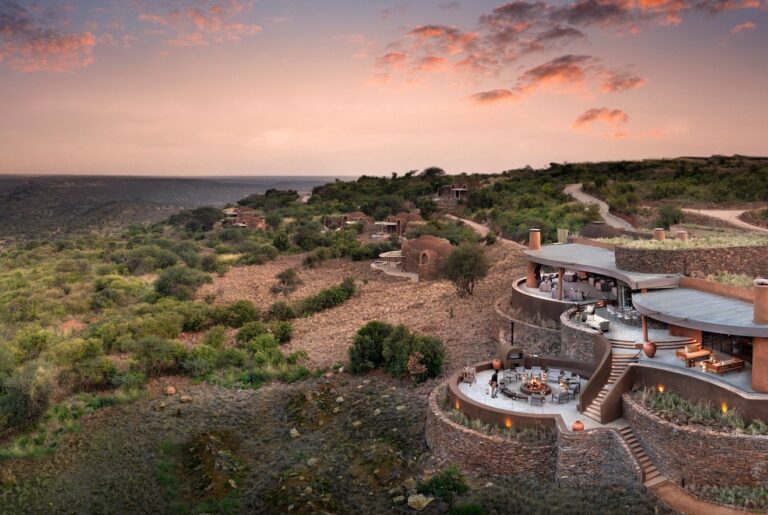
- Ultra-luxury ($8,000–15,000+ per person per night) — Angama Mara, andBeyond Bateleur, Mahali Mzuri. Private butler, exceptional design, the very best guiding available anywhere in East Africa.
For a 7-night safari (Nairobi 1 night + Mara 3 nights + Amboseli 2 nights) with charter flights and full board, budget approximately $5,000–8,000 per person at mid-range. Luxury takes this to $12,000–20,000+. Budget options start around $3,000 per person with basic accommodation and road transfers.
How to book — and what to avoid
- KATO membership — Kenya Association of Tour Operators. Membership requires meeting quality and financial standards. Ask whether your operator is KATO-certified before booking.
- KPSGA-certified guides — Kenya Professional Safari Guides Association. Certified at Bronze, Silver, or Gold level. Ask about your specific guide’s certification and years of experience.
- What is included in the price — Always confirm whether park fees, conservancy fees, activities, and meals are included. Many operators quote accommodation cost only, then add $100–200/day in park fees on top.
- The conservancy vs reserve question — Ask specifically whether your camp is inside the national reserve or a private conservancy. This single question is the most important you can ask when evaluating Mara accommodation — and the one most first-time visitors don’t know to ask.
- Avoid generic travel aggregators — Booking through an established Kenya-specialist operator or directly with camps is safer and usually better value than platforms that don’t know the product.
Essential pre-departure checklist
- Kenya eTA applied for at etakenya.go.ke (allow 3–5 business days · $30)
- Passport valid 6+ months beyond travel dates · at least 2 blank pages
- Malaria prophylaxis prescribed and started as directed
- Yellow fever certificate if arriving from a yellow fever-risk country
- Travel insurance with medical evacuation cover (AMREF Flying Doctors widely recognised)
- USD cash for tips and emergencies (small denominations)
- Soft-sided duffel bag — strict 15kg limit for charter flights
- Neutral-coloured clothing only (no bright colours, absolutely no camouflage)
- Binoculars (8×42 or 10×42 — your own, not lodge-supplied)
- Camera with longest available zoom + double your expected memory cards and batteries
- UK-type plug adapter (Type G — same as UK)
- DEET insect repellent (50%+) · SPF50+ sunscreen
- No plastic bags (illegal in Kenya — use fabric alternatives throughout)
10 mistakes first-time safari guests make
- Packing a rigid suitcase. Charter flights have a 15kg soft-bag-only limit. Many first-timers discover this at Wilson Airport and leave their hard-shell cases in Nairobi storage for the duration of the safari.
- Wearing bright colours or white clothing on game drives. These colours attract insects, make animals nervous on walking safaris, and mark you as conspicuously tourist. Pack earth tones only.
- Expecting wildlife on a schedule. Animals do not perform to order. Patient curiosity — not a checklist mentality — produces the best experiences. The guests who arrive most prepared are often the least satisfied.
- Not bringing binoculars. Lodge-supplied binoculars are almost universally poor quality. Your own 8×42 binoculars transform every single game drive by revealing detail invisible to the naked eye.
- Underestimating how cold dawn drives are. The Mara at 5:30am can reach 10°C. Pack a proper fleece regardless of what the weather app says about daytime temperatures.
- Booking too short a stay. Two nights is not enough to genuinely experience any Kenyan wildlife destination. Three nights is the minimum; four or more is ideal for first-time visitors still developing their safari eye.
- Not asking about conservancy vs reserve status. The most impactful single question when booking Mara accommodation — and the one most new visitors don’t know to ask. It determines whether you can go on night drives, walk in the bush, and follow predators off the track.
- Running out of camera storage. You will photograph far more than you expect — often more than you have on all previous international trips combined. Bring double the memory cards and batteries you think you need.
- Underbudgeting for tips. Budget $15–25 per guide per day and $5–10 per camp staff per day in USD cash. This matters a great deal to the people who made your experience extraordinary — and it is separate from any service charge on your invoice.
- Not allowing an acclimatisation day in Nairobi. Nairobi is at 1,700 metres above sea level. International travellers arriving on overnight flights and heading directly to the bush often feel the altitude and jet lag acutely on their first game drive. A single Nairobi night — at the Giraffe Manor, the Karen Blixen Coffee Garden, or even a simple Karen suburb hotel — transforms the quality of your first morning in the bush.

One Comment