
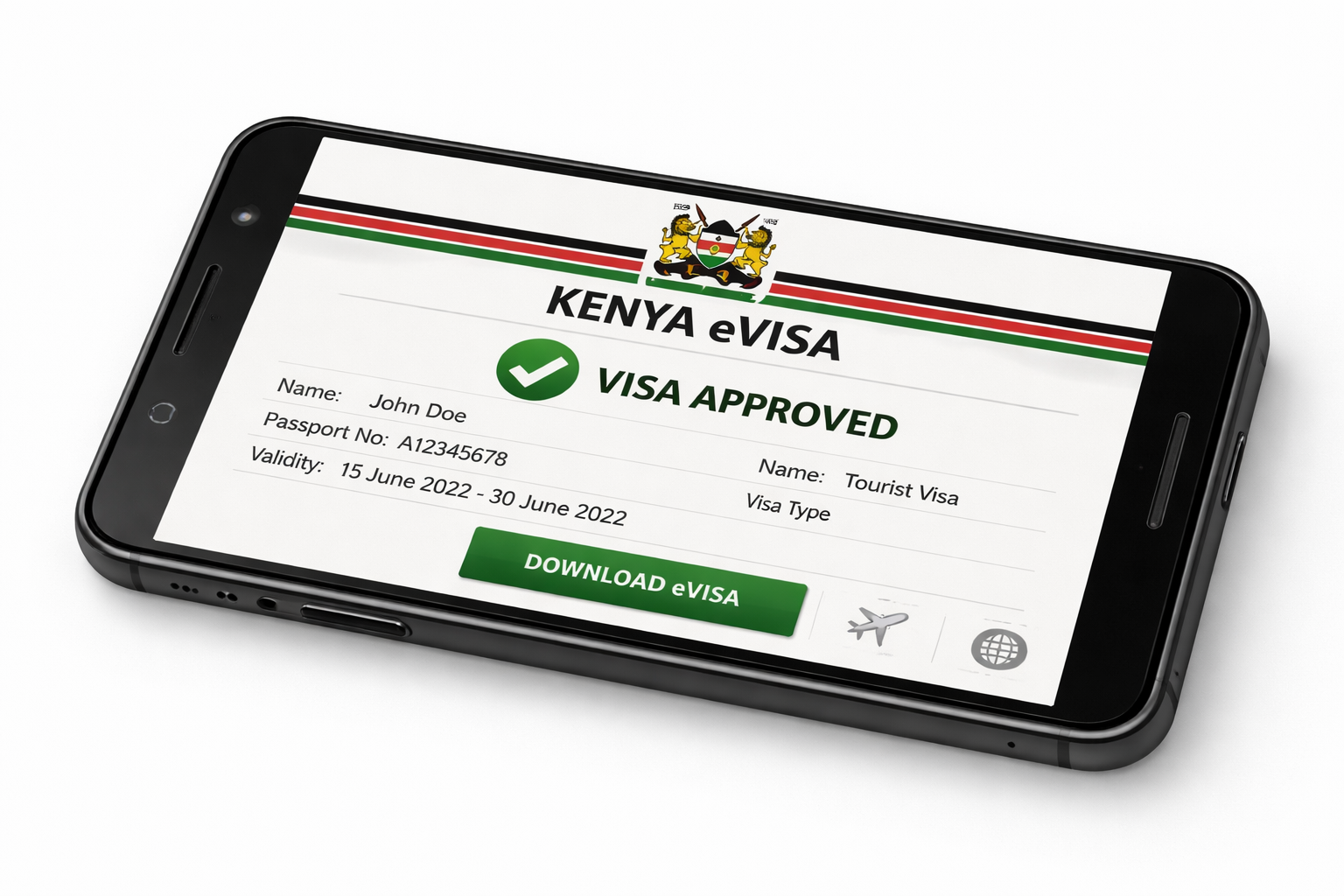

Kenya eVisa: How to Apply Step by Step (2026 Guide)
Many travellers still search for Kenya eVisa, but the most important thing to understand in 2026 is that Kenya now operates an Electronic Travel Authorisation (eTA) system rather than the old eVisa model. That distinction matters because a traveller who follows outdated visa advice can easily prepare the wrong documents, use the wrong website, or assume a visa-on-arrival option still exists when it does not.
If you searched for Kenya eVisa, you are in the right place. You just need the updated process.
The short answer
In 2026, most eligible visitors travelling to Kenya need to apply online for a Kenya eTA before departure, unless they fall under an exemption. The official application requires a valid passport, a passport-style photo or selfie, contact details, travel information, accommodation details, and payment. The official guidance states that processing is typically three working days, although delays are possible.
Kenya eVisa vs Kenya eTA: what changed?
The old way many travellers described Kenya entry was the Kenya eVisa. The current official system is the Kenya eTA. In practical terms, this means travellers should focus less on outdated terminology and more on using the correct government platform and current rules.
This is more than a technical wording change. It affects where you apply, what you should expect to upload, and how you plan your trip timeline. A traveller relying on an old blog post can easily end up confused, especially because search results still mix the old language with the new process.
Who needs to apply?
According to the official Kenya eTA guidance, all visitors, including infants and children, generally require an approved travel authorisation before starting their journey unless they are exempt. The official exemptions include citizens of East African partner states, a list of other exempt nationalities for defined periods, certain permit and pass holders, and some transit passengers who do not leave the airport.
This is why travellers should never rely on nationality assumptions or old embassy pages alone. Some people do not need to apply, while others do. The safest approach is to verify your exact status using the current official rules before booking final travel.
Step 1: Use the official Kenya platform
The first and most important step is using the official Kenya eTA website. This protects you from overpaying third-party agencies, submitting information on an unofficial platform, or following outdated procedures. Many travellers lose time and money because they use a commercial intermediary site that imitates an official portal.
When in doubt, confirm that you are applying through the current official Kenya travel authorisation page rather than a general visa agency.
Step 2: Check your passport validity
Before you begin the application, confirm that your passport is valid for at least six months beyond your date of travel and that it has at least one blank page, as stated in the official requirements. If your passport does not meet the validity threshold, do not apply first and hope for the best. Renew the passport before starting the process.
This step matters because passport validity problems cause avoidable refusals and last-minute travel stress.
Step 3: Prepare the required documents
The official Kenya guidance lists the following standard items for most travellers: a valid passport, a selfie or passport-style photo, your contact details, your travel itinerary, accommodation booking confirmation, and a payment method. Depending on the purpose of travel, additional documents may be required.
Business travellers may need a company invitation letter and business registration copy. Visitors staying with family may need a host invitation letter together with the host’s identification or status documents. Medical, conference, employment, diplomatic, or relocation travel may require further supporting evidence.
The lesson here is simple: do not wait until the form is open to start collecting documents. Prepare them in advance in clean, readable digital format.
Step 4: Complete the online application carefully
When you start filling in the Kenya application, enter your personal data exactly as it appears in your passport. This includes names, passport number, nationality, and date details. Small inconsistencies create delays. Some travellers lose time because they shorten names, reverse surname order, or use travel plans that do not match their supporting documents.
You should also enter your arrival and departure details carefully, along with your intended accommodation in Kenya. If your itinerary includes more than one destination, it is generally best to use the first confirmed accommodation and ensure your supporting travel details are coherent.
Step 5: Upload clear documents
Poor uploads are one of the most common application problems. Your passport image should be clear, complete, and readable. Your photo should match the site requirements. Booking confirmations should show enough detail to support your itinerary.
If you are asked for additional supporting documents, upload exactly what is relevant to your travel purpose. More documents are not always better. The goal is not to overwhelm the application but to support it clearly.
Step 6: Pay and submit
Once the form is complete and documents are attached, pay through the accepted payment method shown on the portal and submit the application. At this point, keep a copy of your reference number, confirmation email, and any payment receipt. It is wise to store these both in your inbox and in an offline folder you can access while travelling.
Step 7: Wait for processing, but do not leave it late
The official Kenya guidance says processing is typically three working days, although it may take longer in some cases. That wording is important because it means you should not build your travel plan around the best-case scenario. Apply early enough to leave room for review, follow-up requests, or technical delays.
A sensible traveller treats three working days as a baseline, not as a guarantee.
Common mistakes to avoid
The biggest mistake is assuming that old Kenya eVisa advice is still fully accurate. Another common mistake is leaving the application until the last minute. Others include uploading poor-quality files, using inconsistent itinerary details, or misunderstanding whether you are exempt.
Travellers also create unnecessary stress by booking tightly timed departures before the authorisation is secured. If your trip includes safari flights, lodge transfers, or a fixed Great Migration window, that risk becomes even more expensive.
How this affects safari planning
For safari travellers, entry timing is not a minor detail. It is a booking foundation. Camps, conservancies, river-crossing itineraries, and domestic flights often depend on firm travel dates. If your Kenya entry process is delayed, the entire itinerary can unravel.
That is why high-trust travel companies often help clients cross-check the required application inputs, even when the traveller submits the form personally. It is not about controlling the process. It is about reducing booking friction and preventing avoidable mistakes.
Our view
The most helpful way to answer the Kenya eVisa question in 2026 is to say this plainly: most travellers should stop looking for the old eVisa process and follow the current Kenya eTA procedure instead. The official requirements are straightforward, but accuracy matters. If you prepare your documents early, use the correct platform, and apply with enough time in hand, the process is usually manageable.
That clarity is what travellers need before they commit to flights, safaris, or beach extensions.
FAQs
Is Kenya eVisa still available in 2026?
The old Kenya eVisa terminology is still widely searched, but the current official system is the Kenya eTA.
How long does Kenya eTA processing take?
Official guidance says processing is typically three working days, but it may take longer in some cases.
Do children need a Kenya eTA?
Official guidance states that infants and children are generally included in the requirement unless they fall under an exemption.
What documents do I need for Kenya entry?
For most travellers, you need a valid passport, a photo or selfie, contact details, travel itinerary, accommodation confirmation, and payment method. Additional documents may be required depending on travel purpose.
Can I apply on arrival?
Travellers should follow the current official online process before departure rather than relying on outdated assumptions about arrival procedures.
All-inclusive safari Kenya, Maasai Mara days guide, Nairobi travel guide, Diani Beach guide, and Kenya safety guide.